
The complete guide
How to Choose a Cashmere Beanie That Actually Keeps You Warm
The problem with most winter hats
Most people own a hat that looks fine and does very little. It is usually a thin acrylic knit bought in a hurry, and the first properly cold morning exposes it. Your ears sting, the top of your head feels the wind, and you end up pulling a hood over the whole thing anyway.
The reason is simple. A loose, thin knit has little body to it, so it does little against the cold.
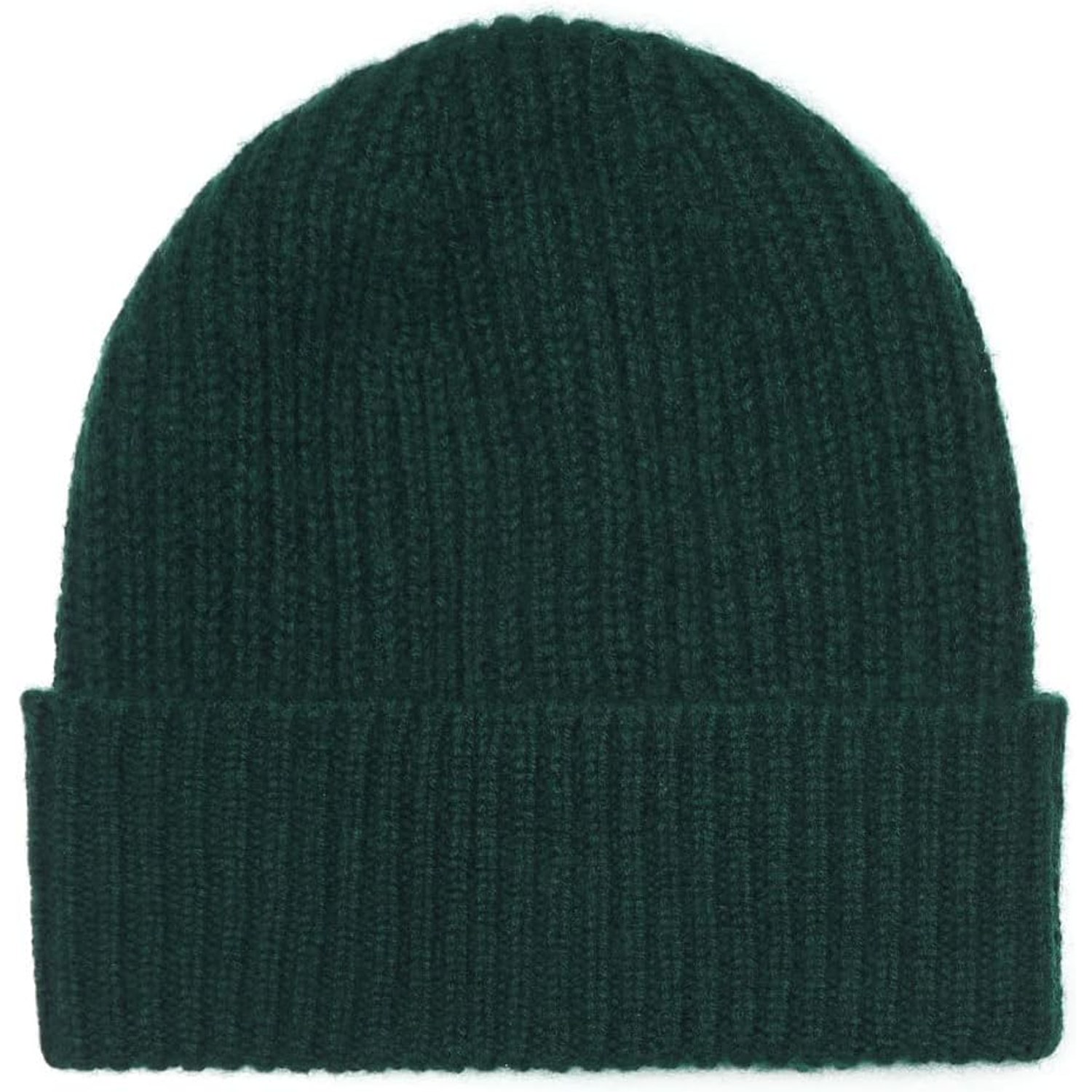
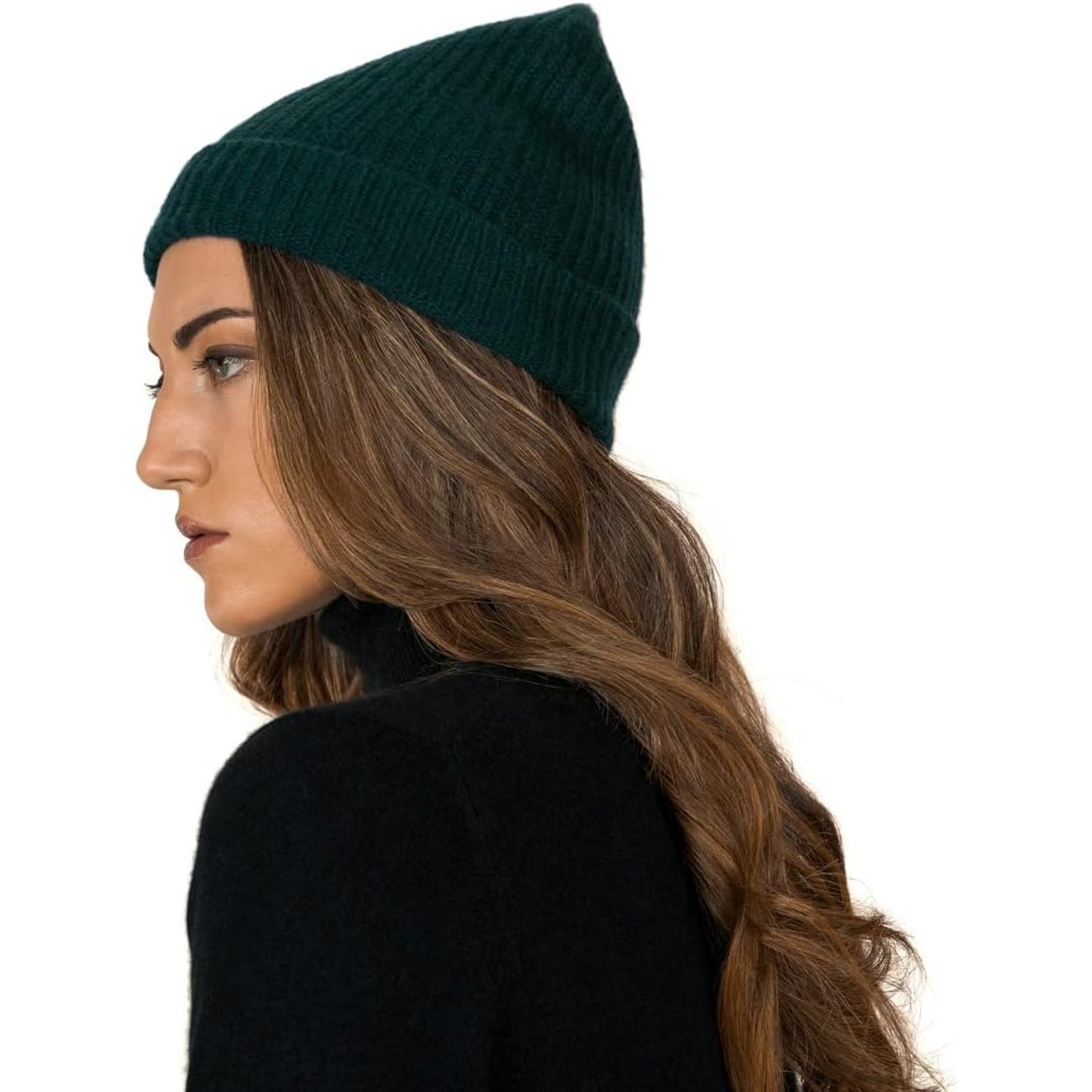
This beanie takes the opposite approach. It is a green hat knitted from 100% cashmere in a three ply construction, made in Scotland. The fibre is naturally fine, and the three ply build gives the knit real density.
What three ply really changes
Ply is one of those specifications that sounds technical and turns out to be straightforward. Before a yarn is knitted, individual strands are twisted together. One strand is single ply, three strands twisted together is three ply.
The effect on a hat is direct. Three plies put roughly three times the fibre into every stitch, so the finished fabric is thicker and denser. More fibre means more tiny pockets of still air, and still air is the thing standing between your scalp and a cold wind.
It also changes how the hat behaves over time. Single ply cashmere is lovely to touch but thin, and thin knits stretch out and thin further with wear. A three ply knit has more structure. It tends to hold its shape better through wear, which matters when a hat lives in a coat pocket for five months of the year.
The trade-off is bulk. A three ply cashmere beanie is not a paper-thin liner. If you need something invisible under a close-fitting helmet, this is not that hat. If you want something that works as your main winter hat, it is.
Why cashmere rather than wool
Cashmere comes from goats rather than sheep, and the fibres are much finer. Fineness is why it feels soft. Coarse fibres poke at the skin and trigger the itch most people associate with wool hats, especially around the forehead and the tops of the ears where the skin is thin and the hat sits tight.
Fine fibres also mean a cashmere hat can feel warm without feeling heavy on the head. You get warmth without the sensation of wearing a helmet.
Merino sits in between. It is soft, hardwearing and usually cheaper. If you are choosing between cashmere and merino accessories, merino makes sense for hard daily use, and cashmere makes sense when softness is the priority. Many people end up with both for different purposes.
Made in Scotland, and why people look for it
Scotland has been spinning and knitting cashmere for well over a century, and the mills there built their reputation on finishing. The finishing stage is where a knit is washed and softened.
The maker states that this hat is made in Scotland. That is useful information if you want to know where your money goes.
Who this hat suits
It suits anyone who spends real time outdoors in cold weather and has decided that a cheap hat is a false economy. Dog walkers, commuters standing on exposed platforms, people who work outside, people who simply feel the cold more than everyone around them.
As a gift it is close to foolproof. One unisex adult size removes the sizing worry, and cashmere carries enough weight as a material that it does not need a big box to feel generous. If you are buying for someone who already has a cashmere scarf, a matching hat is an obvious next step.
Who it is not for? If you need a hat for wet, driving rain all day, you want a waterproof shell over the top. And if you want something you can throw in the washing machine every week without thinking, this is not it. Cashmere asks for a small amount of care in return for a lot of comfort.
How to judge a cashmere hat before you buy
A few things separate good cashmere from the kind that disappoints after one winter.
Check the composition first. 100% cashmere means exactly that. Blends are not automatically bad, but a hat sold at a cashmere price should be cashmere. The maker states this one is 100% cashmere.
Then look at the ply. Many hats sold as cashmere are single ply, which is why they can be cheap and why they feel thin in the hand. Three ply costs more because it uses more fibre.
Finally, think about where it was made. Origin is not a guarantee on its own, but it tells you where your money goes.
Caring for it properly
The care instruction is hand wash or dry clean only, and it is worth following.
For hand washing, fill a basin with cool water and add a detergent made for wool or delicates. Submerge the hat, squeeze the water through it gently for a minute or two, then rinse in clean cool water. Do not scrub, do not wring, and do not use hot water, which causes felting that cannot be undone.
To dry, press the water out between your palms or roll the hat in a clean towel and press down. Reshape it while damp and lay it flat somewhere with air moving. Keep it off radiators and out of direct sunlight.
Bobbling is normal and not a defect. It happens where the hat rubs against a scarf or collar. A cashmere comb or a fabric shaver takes the bobbles off in a couple of minutes, and the knit usually settles after the first season.
For summer storage, clean the hat first. Moths go for body oils rather than clean fibre, so a washed hat is a far less attractive target. Fold it, do not hang it, and keep it in a drawer or breathable bag with cedar or lavender.
The short version
This is a green 100% cashmere beanie, knitted three ply in Scotland, sold in one unisex adult size. The three ply build is the point, because it puts more fibre into the knit than a thin hat.
It is soft, warm enough for winter, and simple enough to gift without worrying about sizing. Wash it by hand or have it dry cleaned, dry it flat and store it clean.