
The complete guide
The Honest Buyer's Guide to Merino Wool Socks for Men
The problem with most socks
Most men do not think about socks until something goes wrong. Cold feet at a desk by three in the afternoon. A sweaty, slightly sour feeling after a day in leather shoes. A thick woolly pair that felt brilliant for ten minutes and then started to prickle around the ankle. Or that hard ridge of stitching across the toes that you can feel through every step of a long walk.
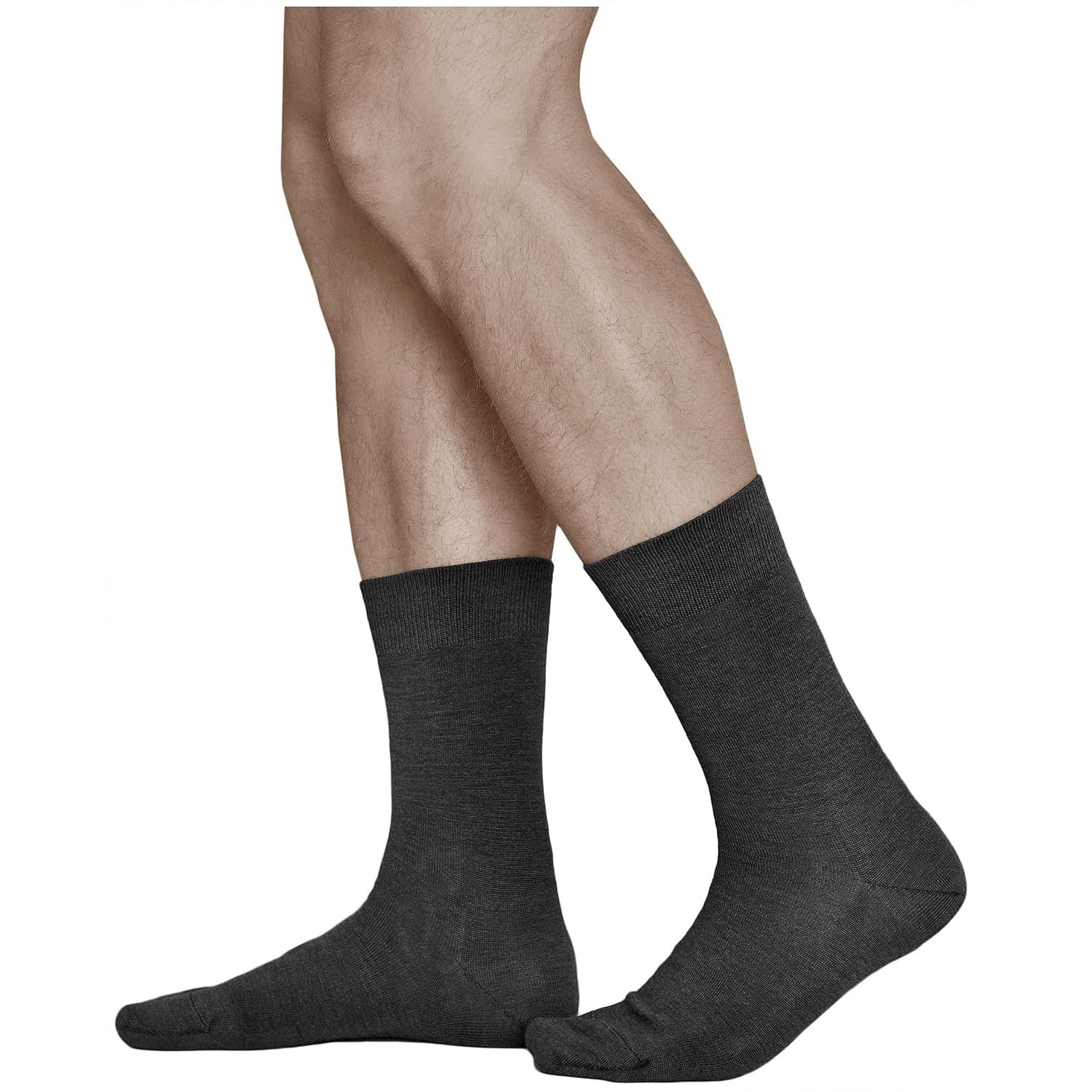
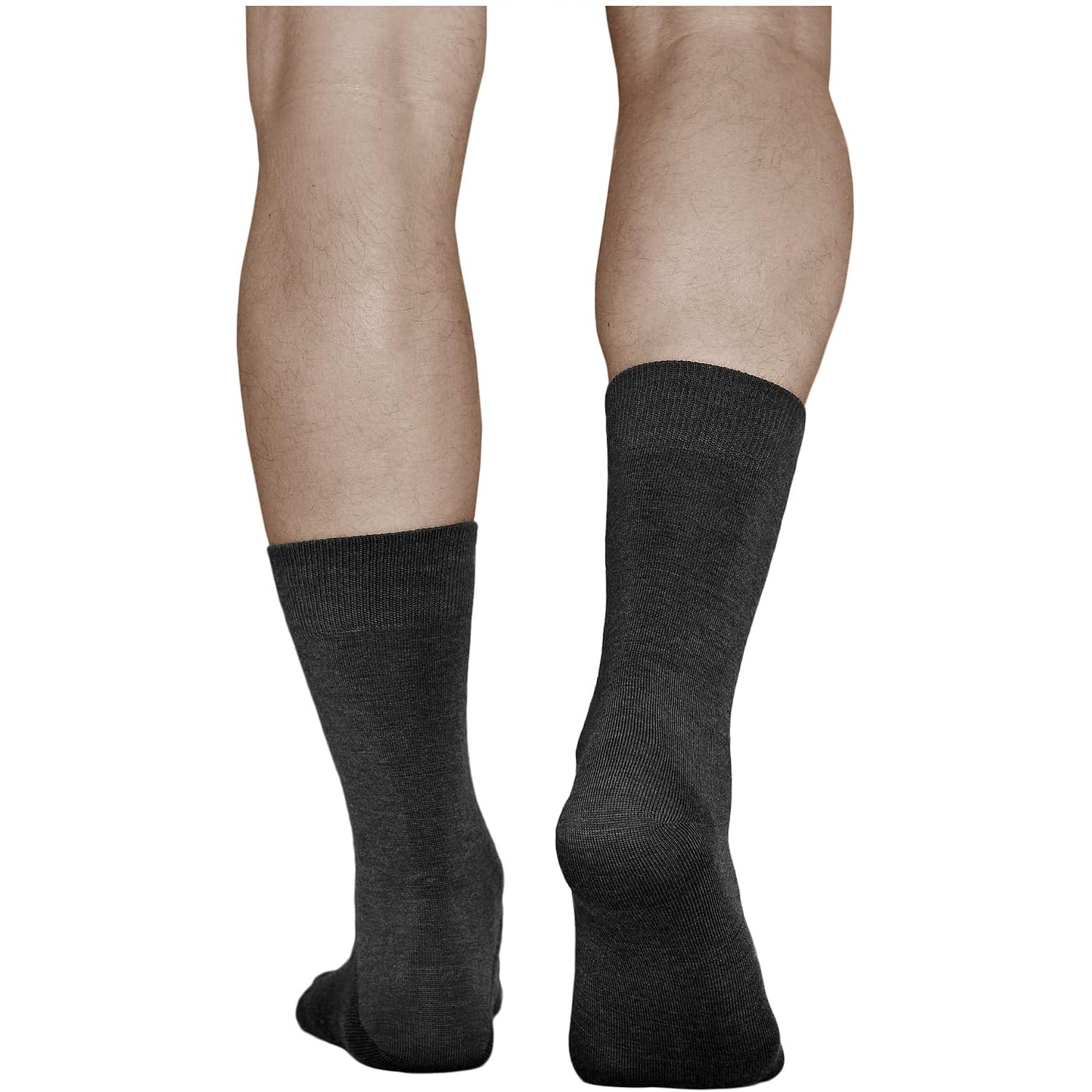
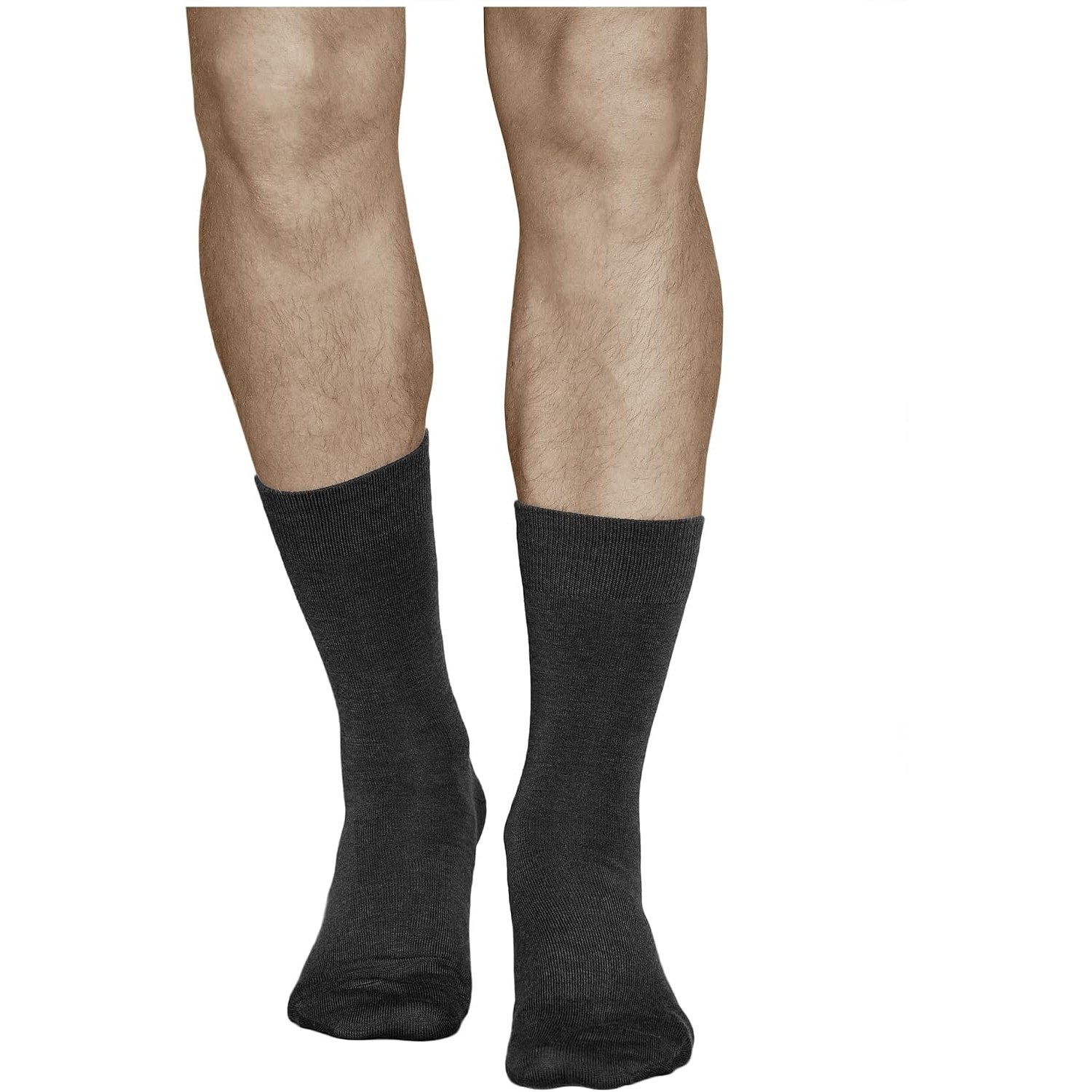
These are all solvable, and the solution is usually a better fibre rather than a thicker sock. That is what this pack is about. Three pairs of black mid-calf men's socks in UK size 12.5 to 15.5, knitted from a merino-rich blend, 80% merino wool with 17% polyamide and 3% elastane. Thin enough for normal shoes, warm enough for an ordinary cool day, and soft against the skin.
Why merino behaves differently
Wool is not one material. The diameter of the fibre changes everything about how it feels and performs, and merino sheep grow an unusually fine fleece.
Fine fibres bend more easily than coarse ones, so merino usually feels softer against the skin than the coarse wool in old work socks. It is still wool, though, so if wool bothers you, try a pair on indoors first.
The warmth comes from the wool itself. Merino fibres are not straight, they wave, and the knit holds small pockets of air. No warmth figure is given for this pair, and the maker sells it for moderately cold days rather than frost.
Then there is moisture. Cotton soaks up sweat and can sit cold against the skin. We make no moisture or odour claim for these socks. If your feet sweat, wash them inside out at 30°C and air them between wears.
What the polyamide and elastane are doing
A sock made of nothing but wool sounds purer, but it is usually a worse sock. Wool on its own has limited abrasion resistance and poor recovery. Walk in pure wool socks for a few weeks and you will see thin patches at the heel and a cuff that no longer grips.
Polyamide is a tough fibre that is commonly blended into wool socks to take the friction where shoes rub. The 3% elastane gives the knit stretch and, more importantly, the ability to spring back. That helps the sock stay up and keep its shape around the arch.
So the blend is doing honest work. Eighty percent merino gives you the feel of wool. The remaining fifth adds strength and stretch.
Who these suit
The short answer is anyone who spends their day in shoes rather than boots.
Office workers get the most out of them. The mid-calf height means no bare shin when you sit and cross your legs, which is the small detail that separates smart from scruffy. The plain knit sits neatly under tailored trousers. If you have been looking for socks to wear with a suit in something warmer than thin cotton, this weight is worth a look.
People who find coarse wool itchy may want to try fine merino, which usually feels softer. It is still wool, so it will not suit everyone.
Who should look elsewhere
The maker is refreshingly clear about the limits, and we are not going to paper over them.
These are not hiking socks. A trail sock needs real cushioning under the heel and ball, reinforcement at the toe, and enough thickness to stop boot pressure points. This knit is thin and will not do that job.
They are not for stiff leather boots either, for the same reason. Rigid boots demand padding, and a dress-weight sock will take more abrasion than it is designed for.
And they are not built for very cold or frosty weather. Moderately cold is the brief. On a genuinely freezing day you want a thicker sock, and probably a second layer of something.
Knowing this is useful rather than disappointing. A sock that tries to be everything is usually mediocre at all of it. This one picks a lane.
How to choose the right sock weight
Start with the shoe, not the sock. The shoe sets the amount of space you have, and cramming a thick sock into a fitted leather shoe makes your foot colder, not warmer, because you squeeze out the air that was doing the insulating.
For dress shoes, loafers, smart trainers and anything with a close fit, you want a thin knit like this one. For walking boots and winter boots with room in them, go up to a cushioned weight. If you are between the two, a mid-weight sock is a reasonable compromise but it will never be as neat under trousers.
Length is the second decision. Ankle socks are fine for trainers and shorts. Mid-calf is the default for trousers. Knee-high is for boots and for people who want no gap at all. Mid-calf socks cover the widest range of daily situations, which is the length here.
Last, think about how many pairs you need. Three is a sensible starting set. It lets you wear one, rest one and wash one, and resting matters with wool. Giving a pair a day to dry out fully and recover its shape is kinder to the whole set.
Looking after them
Merino is not fragile, it just dislikes heat and agitation.
Wash at 30°C maximum on a delicate cycle, with the socks turned inside out. Inside out matters because it puts the friction on the inner surface rather than the face of the knit, which cuts down on pilling.
Skip the tumble dryer entirely. Heat plus tumbling is what felts wool, and a felted sock is permanently smaller and harder. Reshape each sock while it is damp, lay it flat or hang it somewhere with airflow, and keep it off the radiator.
Do not iron and do not bleach. Avoid fabric softener too, since it coats the fibre. A wool-safe detergent or a mild general one is plenty.
If a few small bobbles appear at the instep, that is normal friction, not a fault. A fabric comb or a fabric shaver takes them off in a minute.
The short version
Three pairs of black mid-calf men's socks in UK size 12.5 to 15.5, 80% merino wool with 17% polyamide and 3% elastane. The maker gives the country of origin as Latvia. Thin knit, flat seam, built for shoes rather than boots.
The maker describes them as warm. They are not for hiking, stiff boots or hard frost, and the maker says so plainly.
If you spend your days in dress shoes or regular trainers and want a warmer sock than thin cotton, these are worth a look. Buy the right size, wash them cool, dry them flat, and rotate between the three pairs.