
The complete guide
Choosing Lumbar Cushion Covers, A Practical Buyer's Guide
The problem with a sofa full of squares
Most sofas end up with the same cushions they came with. Four squares, all the same size, all lined up like a row of pillows in a shop window. It looks tidy for about a week, then it starts to look flat. Worse, square cushions sit badly behind a lower back. They either push you forward or slump down behind you, which is why so many of them end up on the floor by eight in the evening.
A lumbar cushion fixes both problems at once. The rectangle sits lower and shallower, so it fills the space your back actually needs. And visually it breaks the rhythm of the squares, which is what stops a sofa reading as a block of matching boxes.
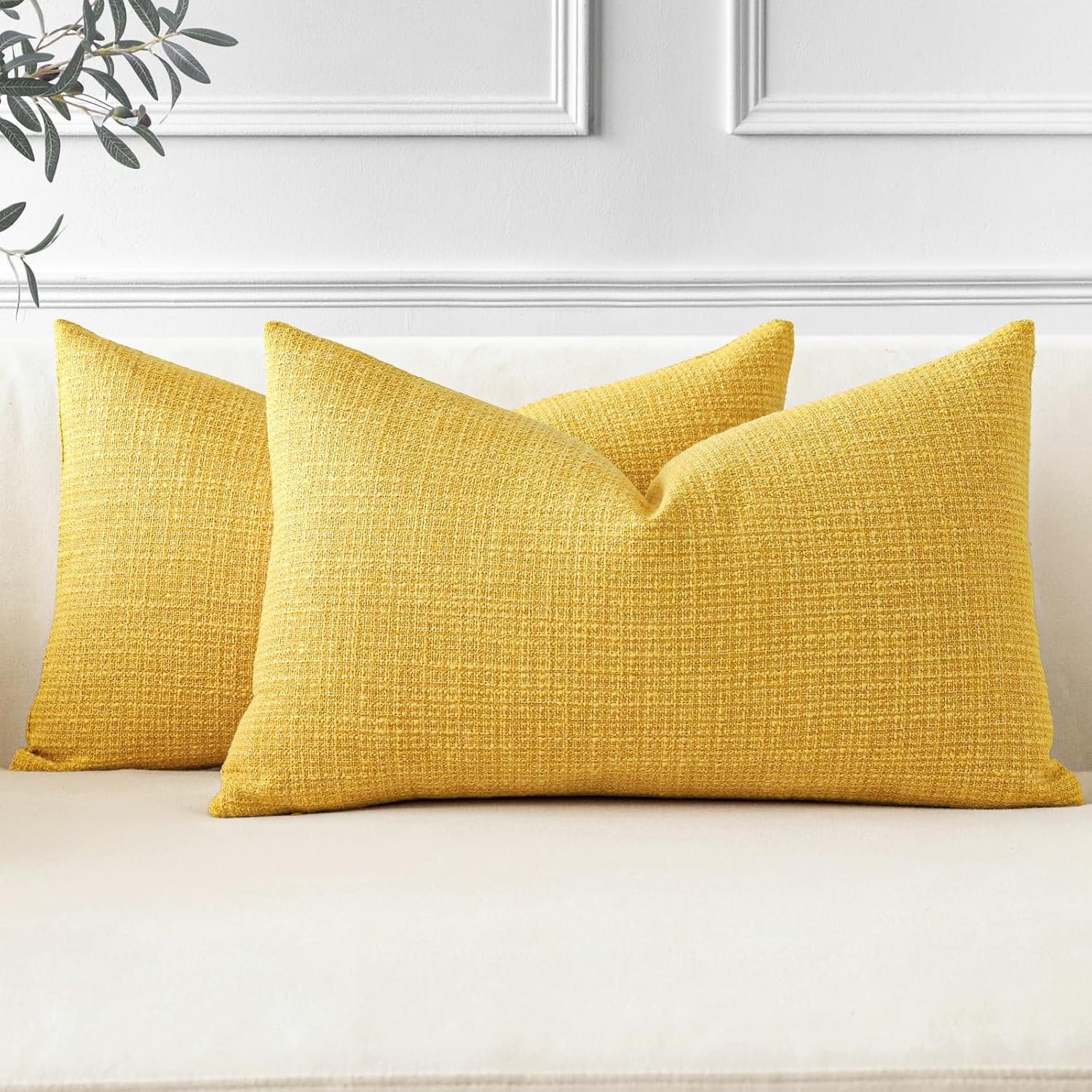
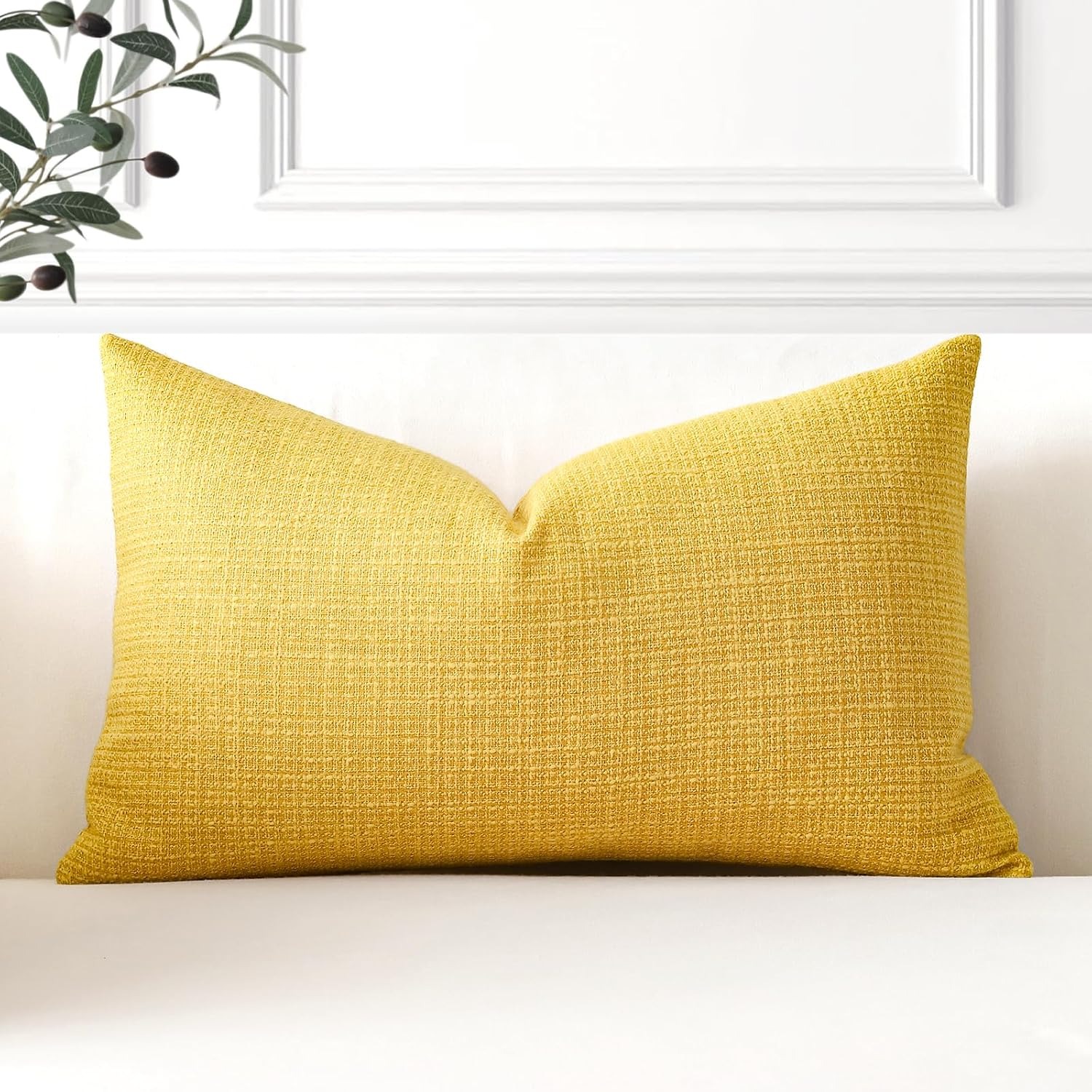
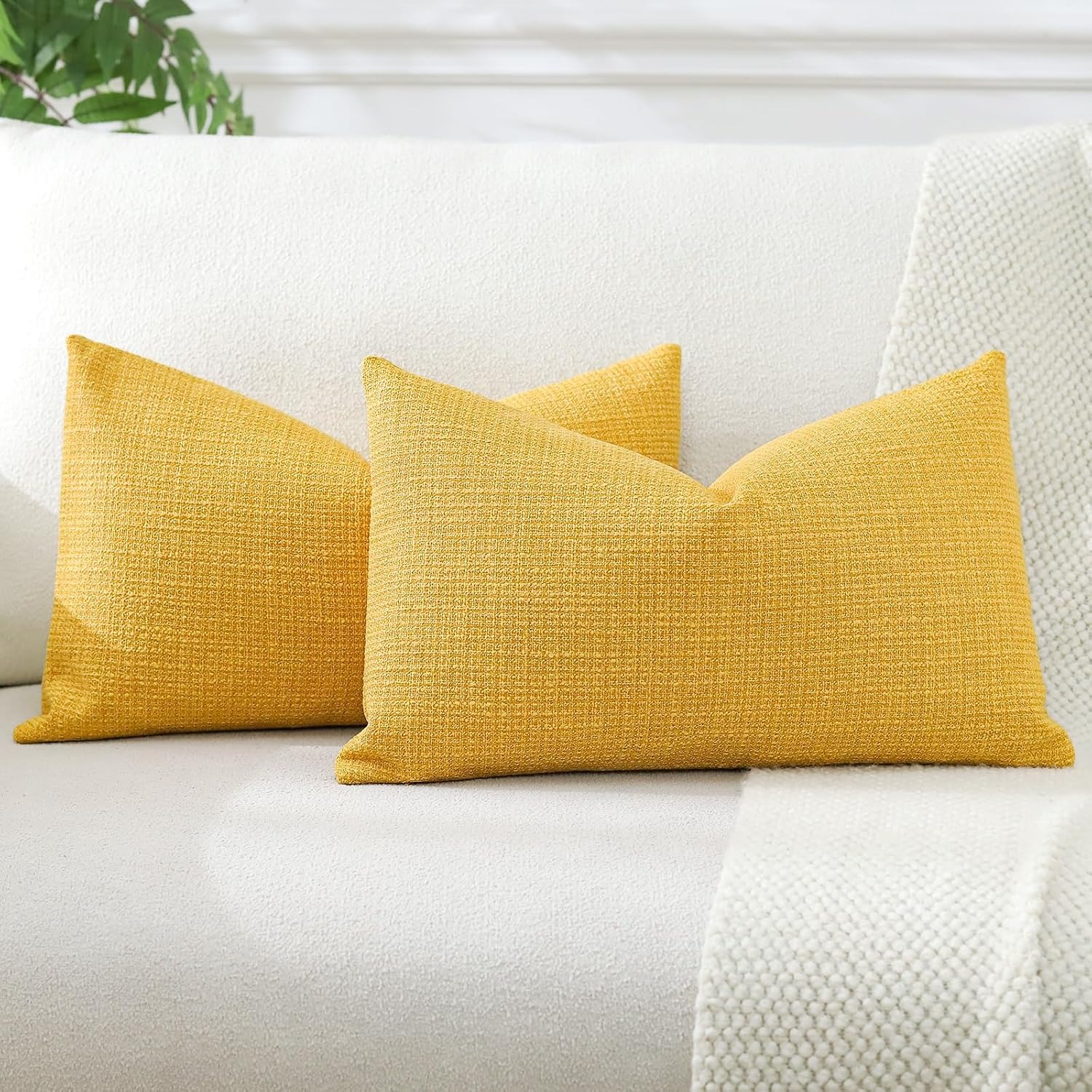
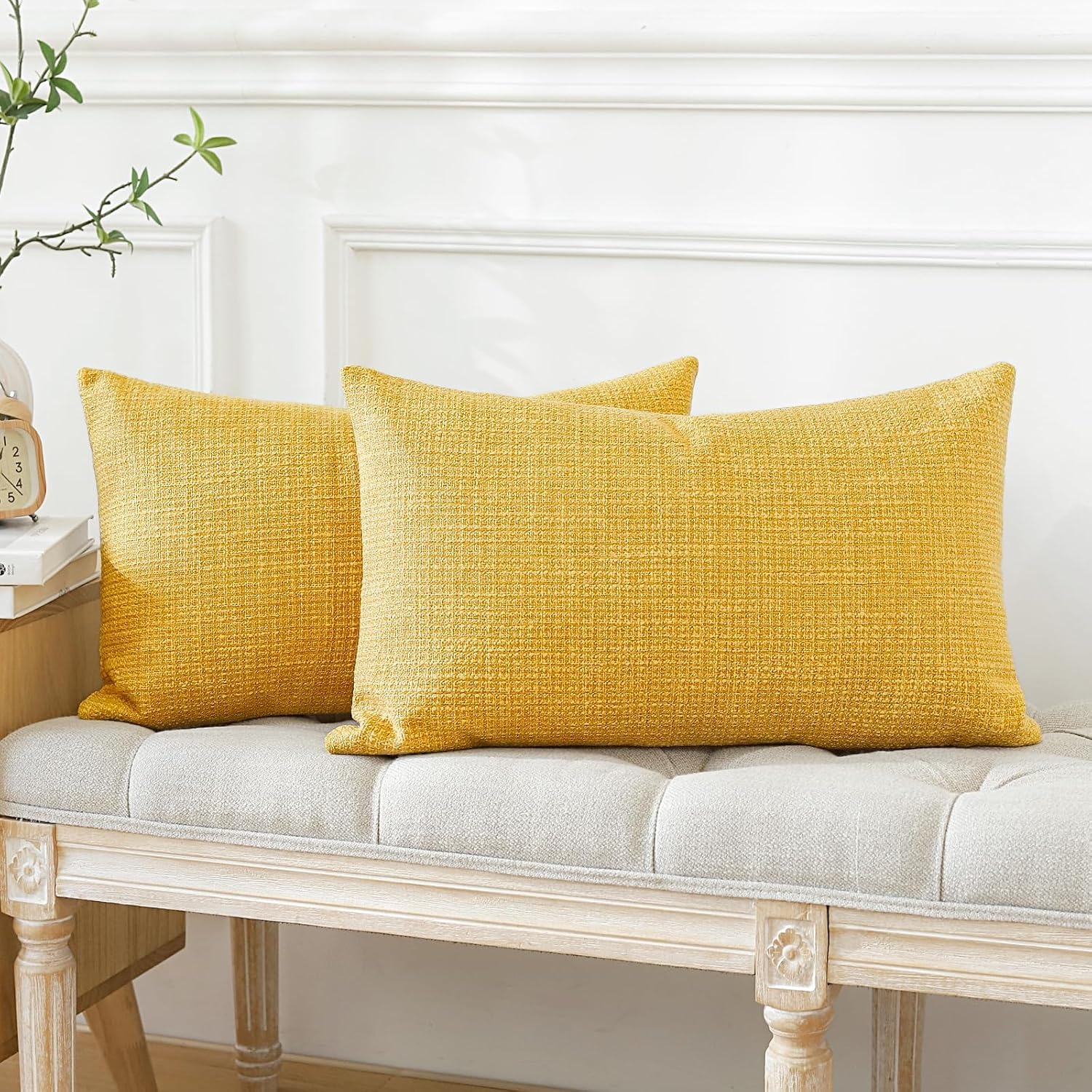
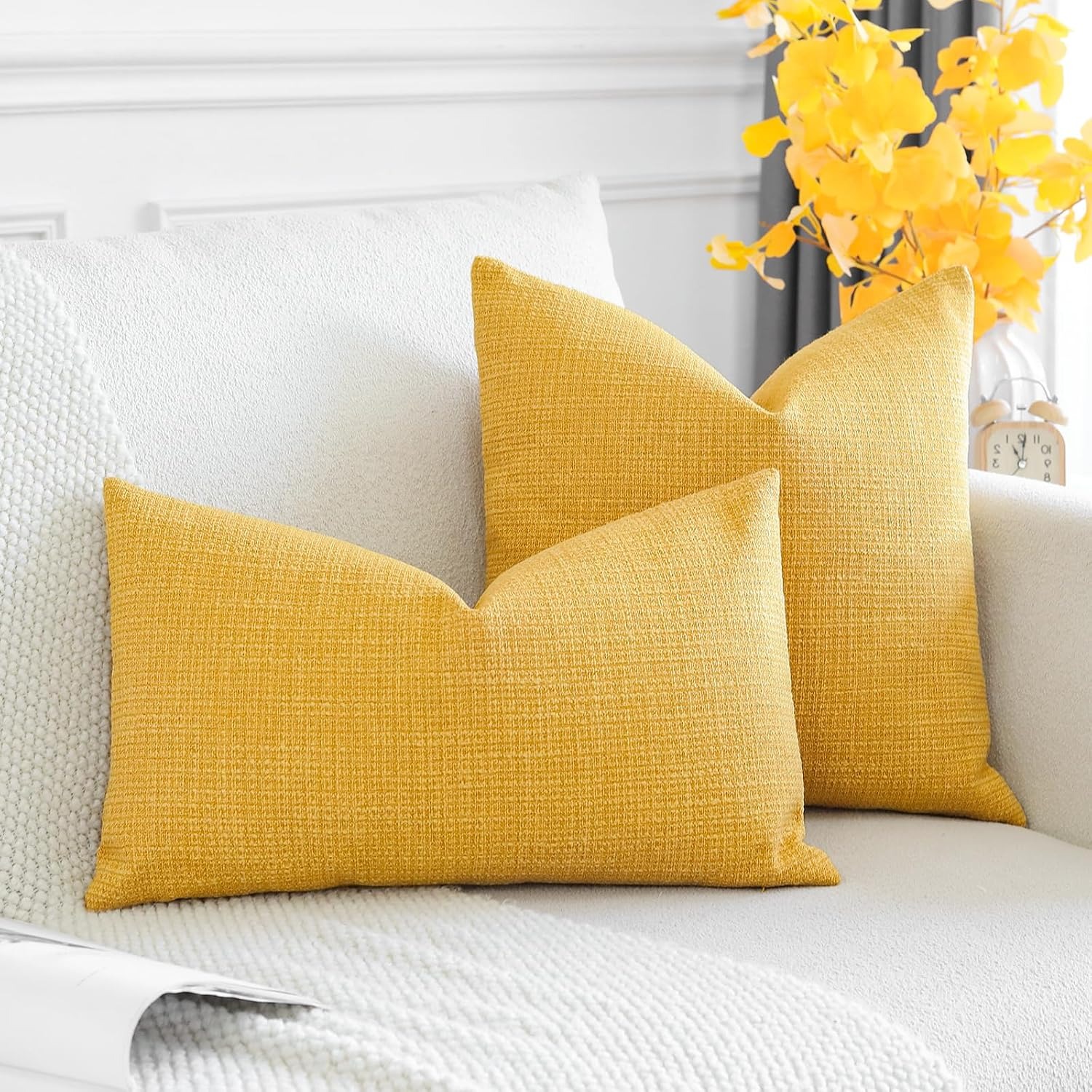
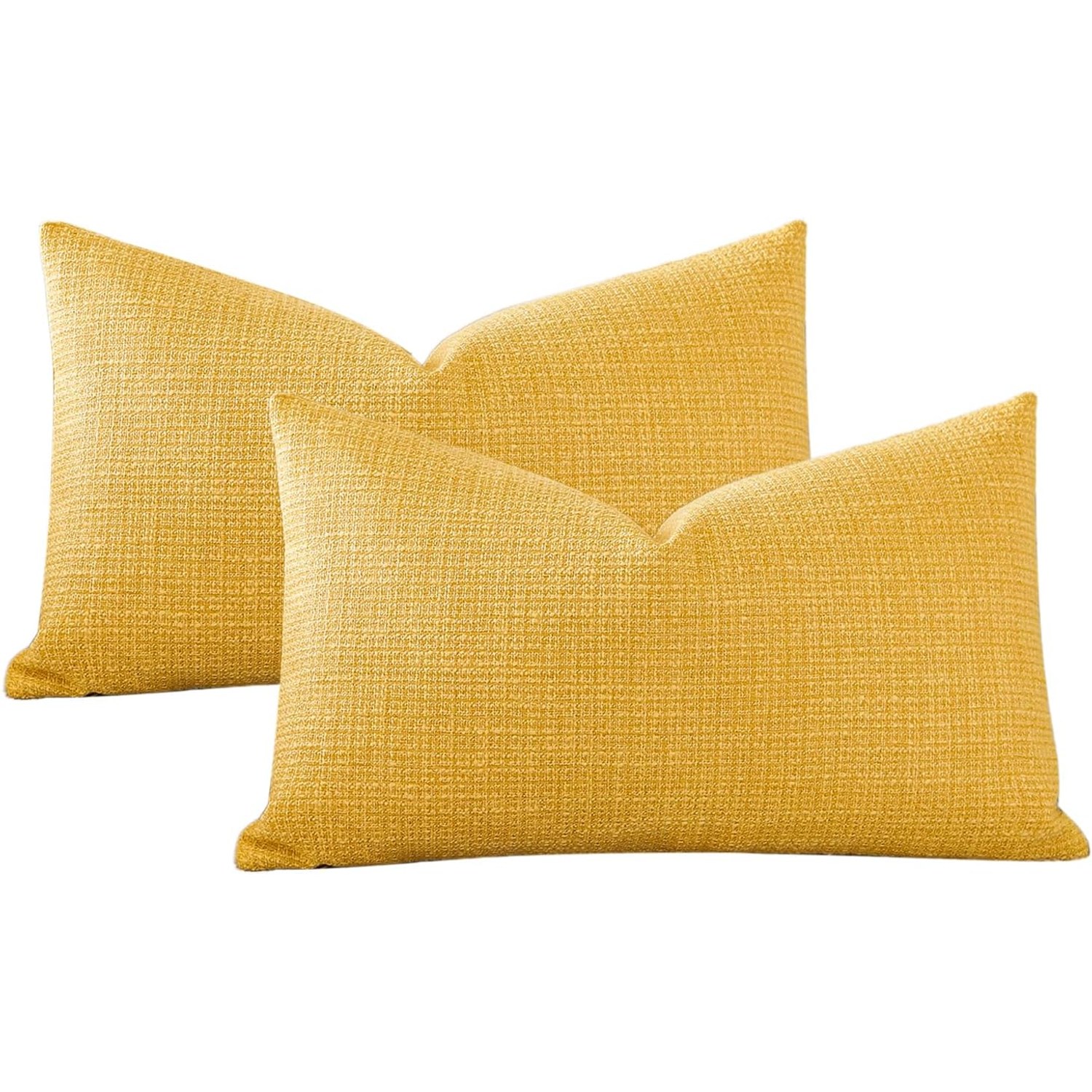
These linen blend lumbar cushion covers come in the standard 30 x 50 cm size, two to a pack, in a warm solid yellow. They are covers only, which keeps the price down and lets you reuse inners you may already have.
What the fabric actually is
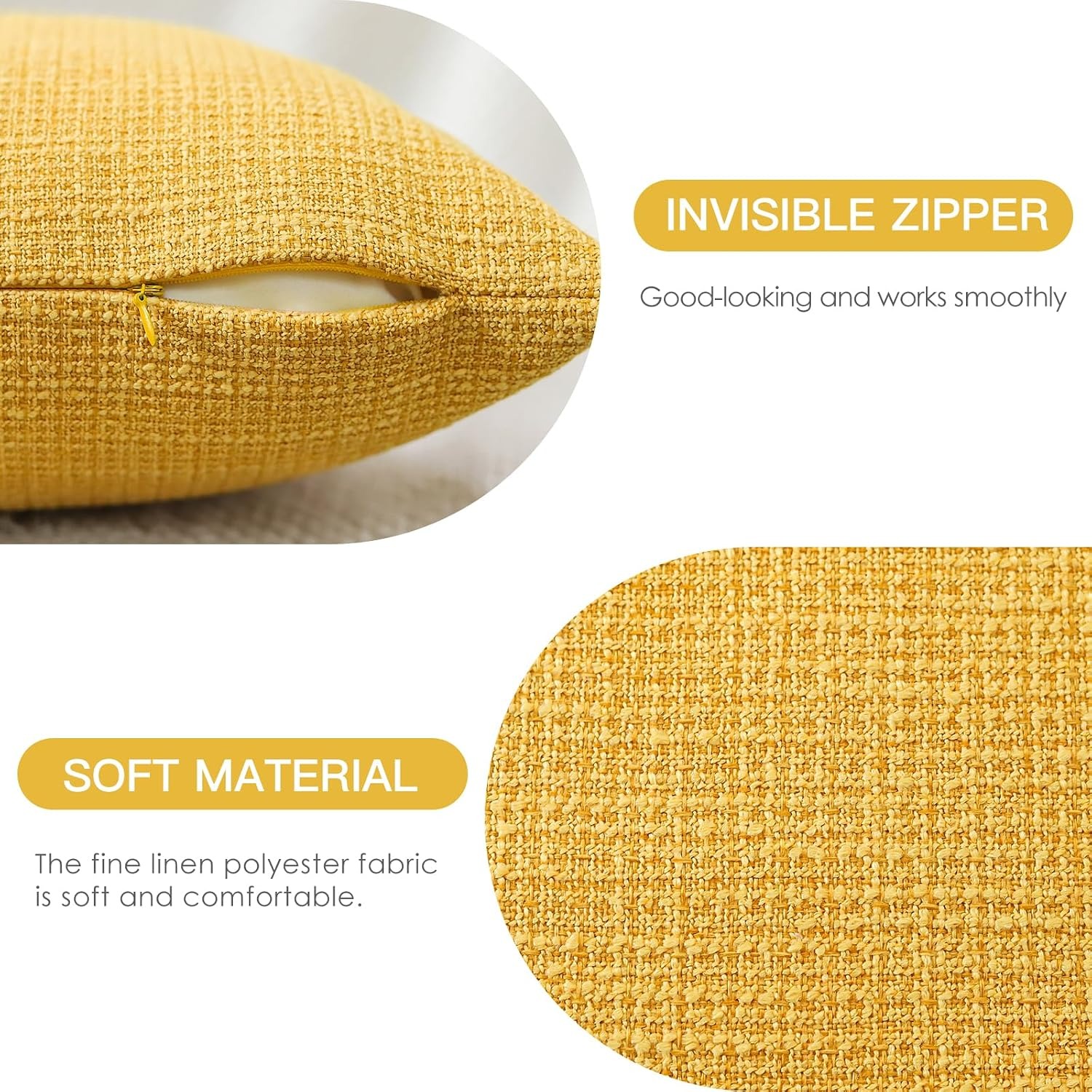
It is worth being straightforward here. The maker lists the material as a polyester linen blend. That means it is not pure linen, and the exact split between the two fibres is not stated. So think of it as a linen look weave rather than a linen heirloom.
In practice that is a reasonable trade. Pure linen has a beautiful hand and a distinctive slubby texture, but it creases if you so much as glance at it, and it usually costs more. A blend keeps a good deal of that texture and is generally less prone to deep creasing.
For a room that gets daily use, a blend is often the sensible answer. Just buy it knowing it is a blend.
How the covers are built
Two details matter in a cushion cover, and this pair has both.
The first is the closure. A hidden zip is sewn into the seam so it disappears from the front face. The alternative, an exposed zip or an envelope back, either interrupts the look or gradually gapes as the pad settles. A concealed zip keeps the panel clean and makes it quick to take the cover off at wash time.
The second is the seam finish. The maker states the edges are overlocked with tight zigzag stitching to avoid fraying. It is not glamorous and nobody sees it, but it keeps the raw edges tidy inside the cover.
Choosing the right insert
This is the part people get wrong, so take a minute over it.
The covers are 30 x 50 cm. A 30 x 50 cm pad will fit, but it will fill the cover exactly, with no give. Many people prefer to size up slightly, to around 32 x 52 cm, which pushes the fabric out into the corners and gives that plump, hotel-ish look. You will have to work a little harder to get the pad in, but the result is noticeably better.
Then there is the fill itself. Feather and feather blend pads give the softest drape and the characteristic dip in the middle when you lean on them. They need a shake every few days to stay full. Polyester fibre pads hold a firmer, more upright shape and need less plumping. Neither is better. It depends on whether you want a cushion that collapses around you or one that holds its ground.
Where to put them
The obvious home is a sofa. One lumbar at each end of a three seater, with squares in between, is the arrangement that works in almost any living room. On a two seater, a single lumbar at one end and a square at the other keeps it from looking too symmetrical.
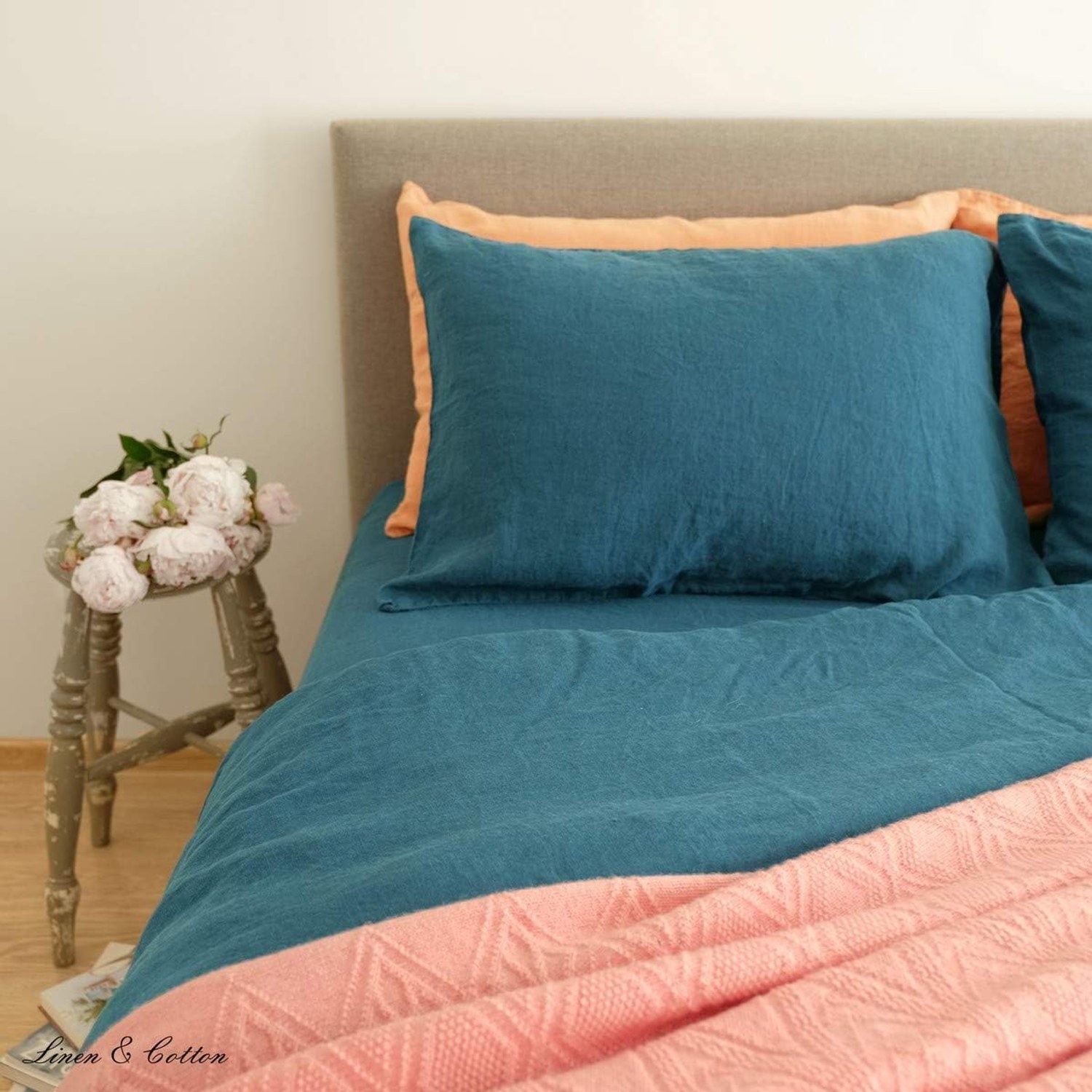
Beds are the next most common use. A 30 x 50 cushion sits in front of the sleeping pillows as a finishing layer. On a double or larger, two of them side by side read as a deliberate pair rather than a leftover single.
Then there are the quieter spots. A reading chair, where the lumbar gives you something to lean on through a long chapter. A window seat, where the rectangle matches the shape of the ledge better than a square. A desk chair, where a lumbar cushion behind the small of the back makes a long working day more bearable. And a car seat, if you drive for hours at a stretch.
Because you get two covers, you can split them between rooms rather than committing both to the same sofa.
Making yellow work
Yellow is a confident colour, but it is easier to place than people expect. It sits comfortably against grey, which is still the most common sofa colour in most homes. It warms up a white or off-white scheme without tipping it into cream. It looks natural next to timber, rattan and anything woven. And it is a classic partner for deep greens and dark blues, where it reads as a highlight rather than a clash.
What to avoid is putting it next to competing warm tones in the same strength. Yellow and orange in equal measure tends to fight. If your room already has a strong warm accent, use the yellow lumbar cushions sparingly, one on the sofa rather than two.
One more point on colour. The maker notes that the surface can show a slight silvery reflection, so the colour shifts with the angle and the brightness of the room. The same cover can look buttery in morning light and deeper in the evening. That shift is part of how the fabric behaves, not a defect.
Washing and everyday care
Close the zip before anything else. A zip left open can catch other items in the drum and chew the fabric around the slider.
The maker gives no washing instructions, so the cautious routine is to wash cool on a gentle cycle with similar colours, using a mild detergent. Skip bleach entirely, and skip fabric softener too, because it coats the fibres and gradually flattens the texture you bought the covers for in the first place.
Shade drying on a line is the gentlest option. Reshape by hand while the covers are still slightly damp, smooth the corners, and let them finish on a rail. If you want a crisper finish, test a low iron on the reverse of one corner first.
For general upkeep, a shake every few days keeps feather pads full, and a quick going-over with a lint roller handles pet hair between washes. Every couple of months in the machine is plenty for most living rooms.
The short version
You are buying two rectangular covers, 30 x 50 cm, in solid yellow, made from a linen and polyester blend, not pure linen, with a hidden zip and overlocked seams. No inserts come in the pack.
Get the insert size right, ideally a touch larger than the cover, and decide whether you want feather softness or fibre structure. Wash them cool and dry them in the shade. For a low-cost way to change the feel of a sofa or a bed without replacing anything, a good lumbar cushion cover is still one of the easiest wins in a home.