
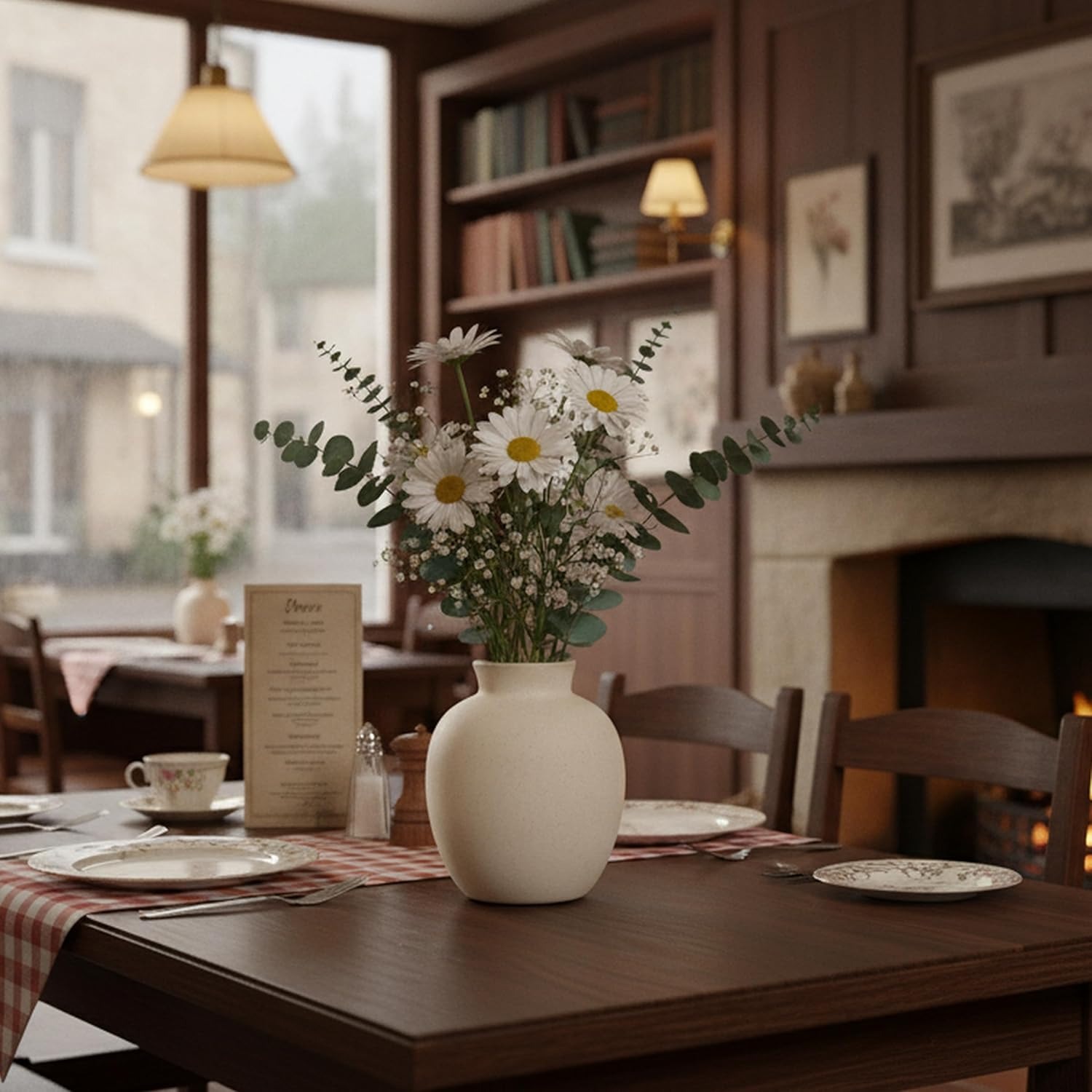
The complete guide
How to Choose a Small White Ceramic Vase That Actually Gets Used
The problem with most vases
Most people own too many tall vases and not enough short ones.
It happens by accident. Tall vases look impressive in a shop. They photograph well. So they come home, and then they sit in a cupboard for eleven months of the year, because the only time anyone has stems long enough to fill one is when a bouquet arrives.
Meanwhile the shelf above the sofa stays empty. The mantel has nothing on it. The dining table gets a candle and a salt grinder. The spaces that actually need something small and solid are the spaces that never get filled, because the vase collection is all wrong for them.
A short, wide vase solves that. It fits under wall-mounted shelves. It sits on a dining table without blocking anyone's face. It holds the kind of stems you genuinely have at home, which is usually a few sprigs cut from the garden, a cheap supermarket bunch with the ends trimmed, or a handful of dried grasses that have been there since spring.
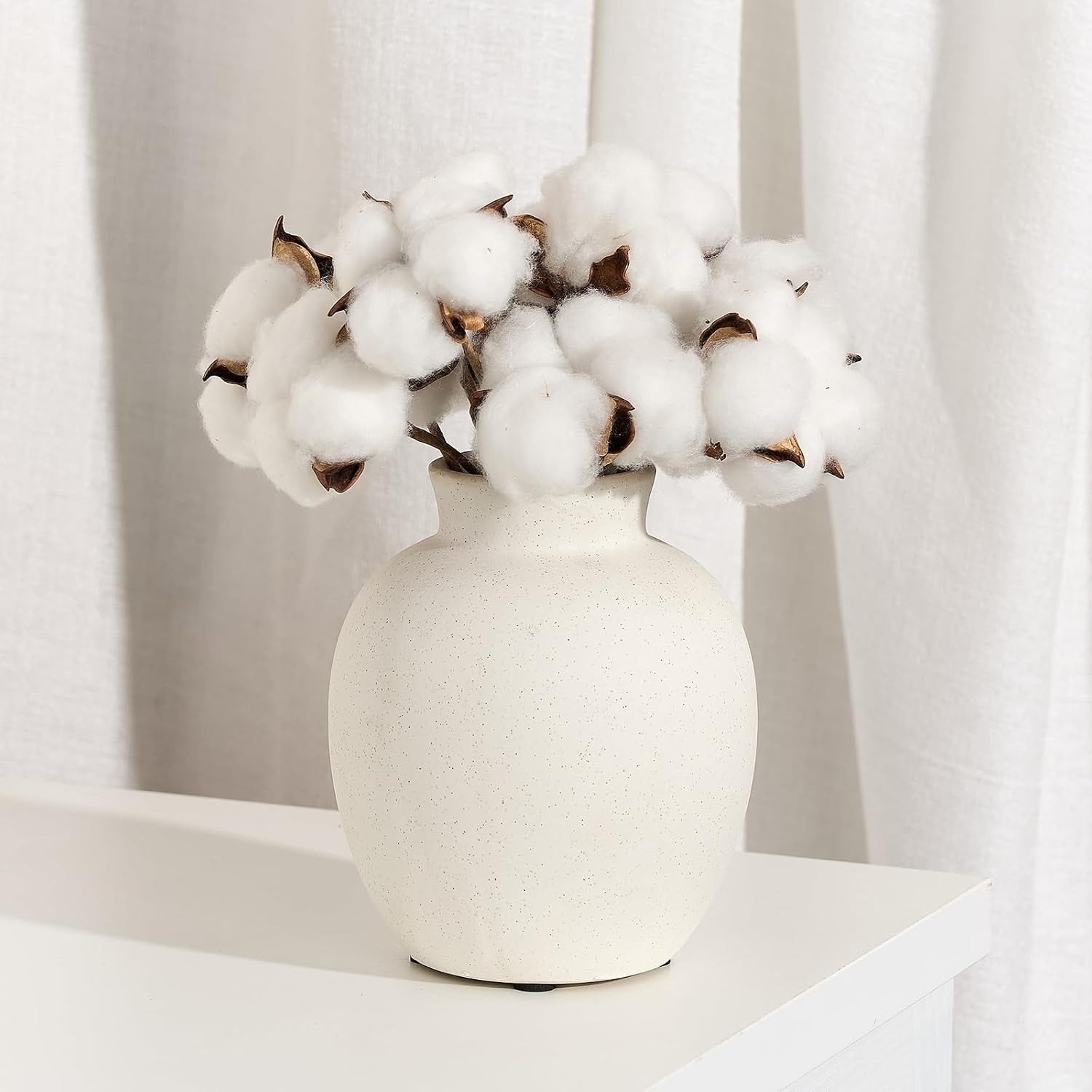
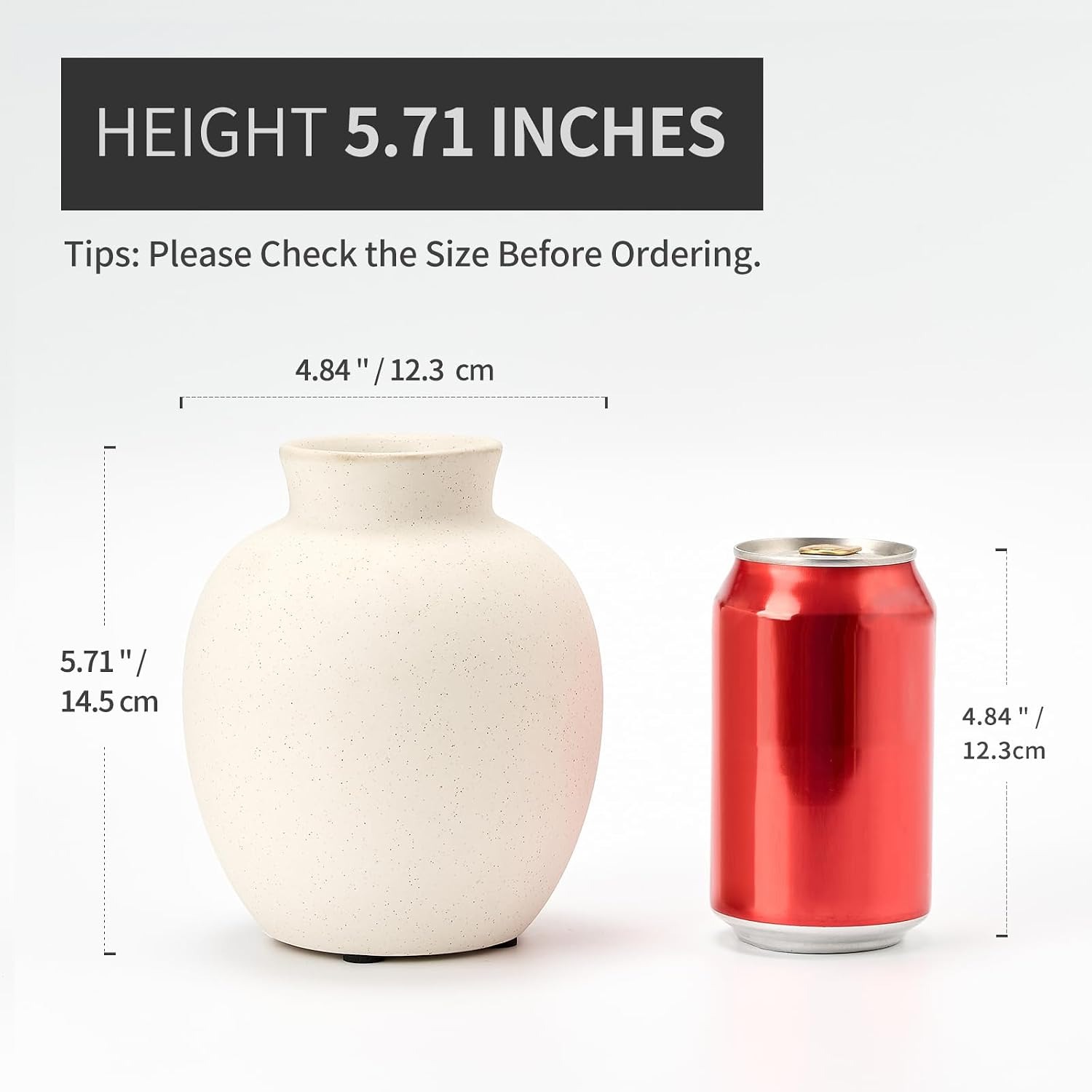
This one measures about 12.7 cm across and 15.3 cm tall. That is small enough to be useful and big enough to have presence.
What textured ceramic actually does
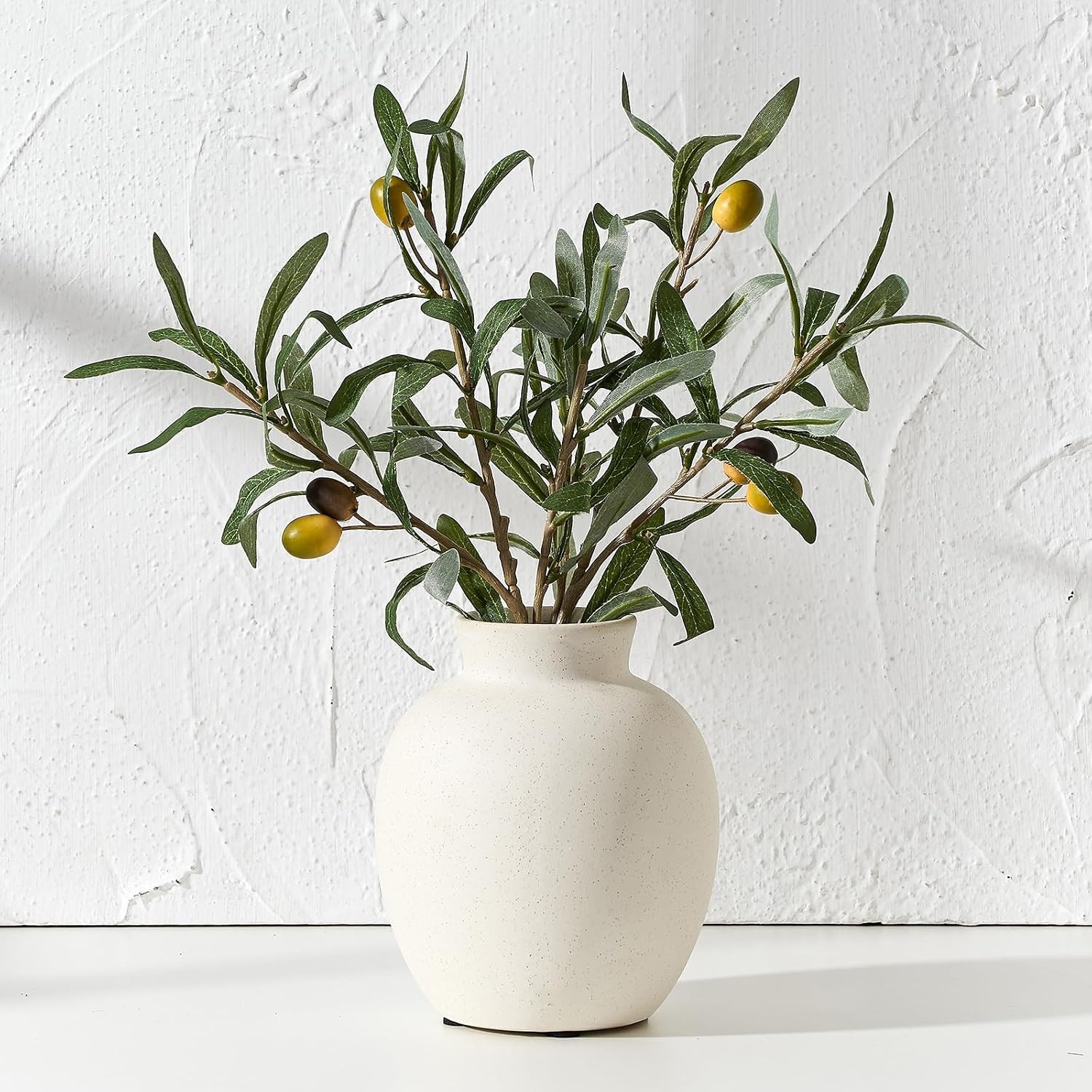
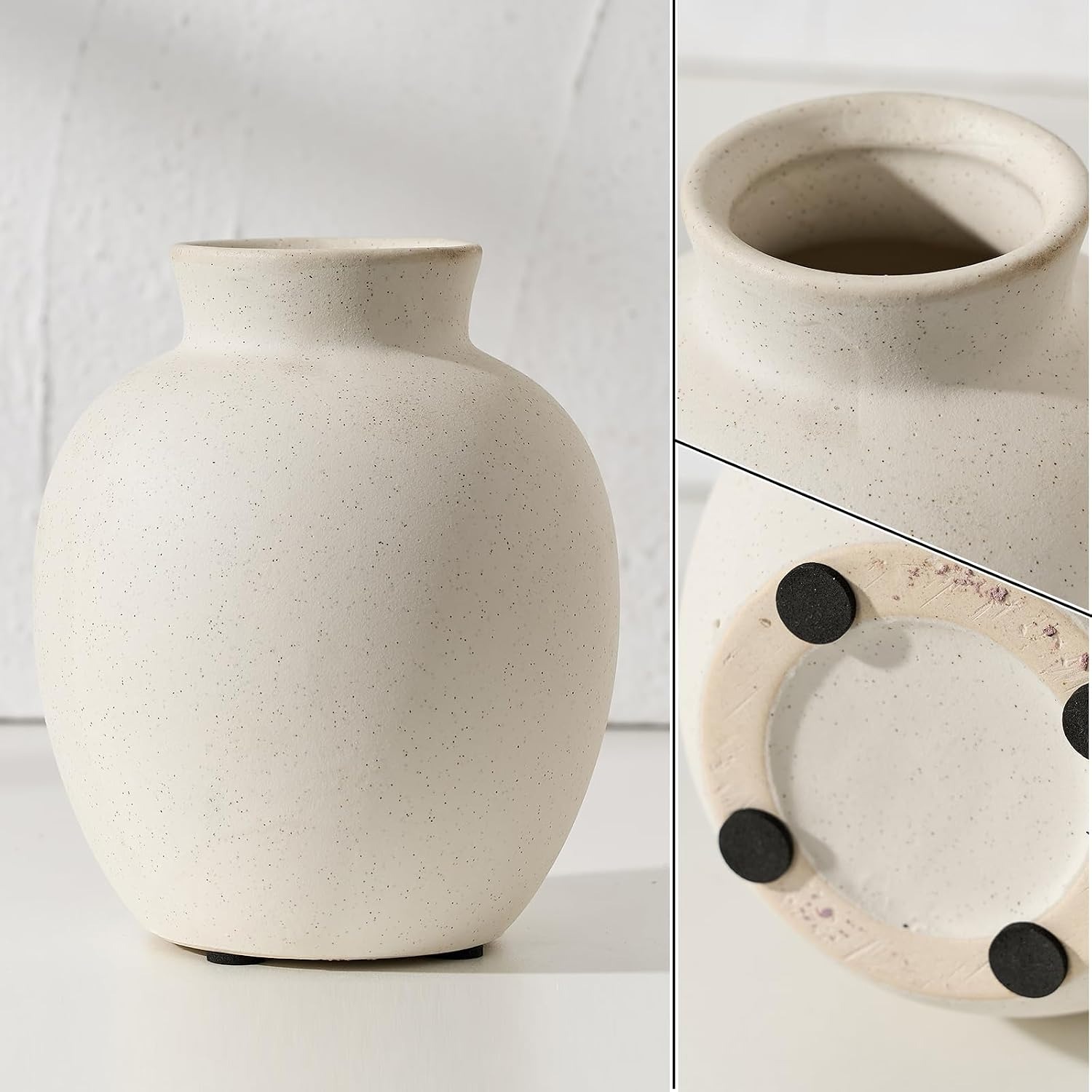
The maker lists this as terracotta ceramic with a textured surface, finished in white.
That combination matters more than it sounds. A plain white object can look flat if the surface is perfectly smooth and glossy. Light hits it evenly, there is nothing for the eye to catch on, and it reads as a blank shape. Add texture and the same white turns into something with depth. The high points catch light, the low points hold shadow, and the piece looks rustic rather than factory-smooth.
This is why a textured vase works in rooms with very different styles. In a country kitchen the roughness echoes the plaster and the timber. In a stripped-back modern room it stops the white from feeling clinical. In a coastal room it sits naturally next to rope, linen and driftwood.
Ceramic also brings weight. Pick up a glass vase of this size and it feels like nothing. Pick up a ceramic one and there is something there. That matters in practice, because a light vase tips when you push a thick stem in at an angle, and then you have water on the table.
Who it suits
This is a good fit if you want something low maintenance.
It looks fine empty. That sounds like a small thing, but it is the difference between a vase you use and a vase you store. If a vase only works when it is full, it spends most of its life hidden. A textured white shape has enough going on to stand alone on a shelf, so you never have the awkward empty-vase look.
It also suits people who buy flowers irregularly. Fill it with dried stems and it is done for a year. Swap in fresh flowers when you have them. There is no pressure either way.
If you want a statement floor vase or something to hold a full florist's bouquet, this is not it. A 15 cm vase cannot do that job and will look swamped if you try. Keep this one for posies, single-variety bunches and dried arrangements.
Where to put it
A few spots that work particularly well.
Mantels. Fireplace mantels are usually narrow, and a tall vase on a narrow ledge feels unstable. A short round one sits safely. Pair it with a candle or a small frame at a different height.
Open shelving. Most shelf gaps are 25 to 35 cm. A 15 cm vase leaves breathing room above it, which is what stops shelves looking crammed.
Dining tables. The usual rule is that a centrepiece should sit below eye level when people are seated. This clears that comfortably.
Bedside tables. Space is tight next to a lamp and a book. A small vase with two or three stems is about all that fits, and that is enough.
Kitchen windowsills. Herbs in water, a cutting from the garden, or nothing at all.
Bathrooms. Humidity is not an issue. Just keep it back from the edge of the basin.
How to style it without overthinking it
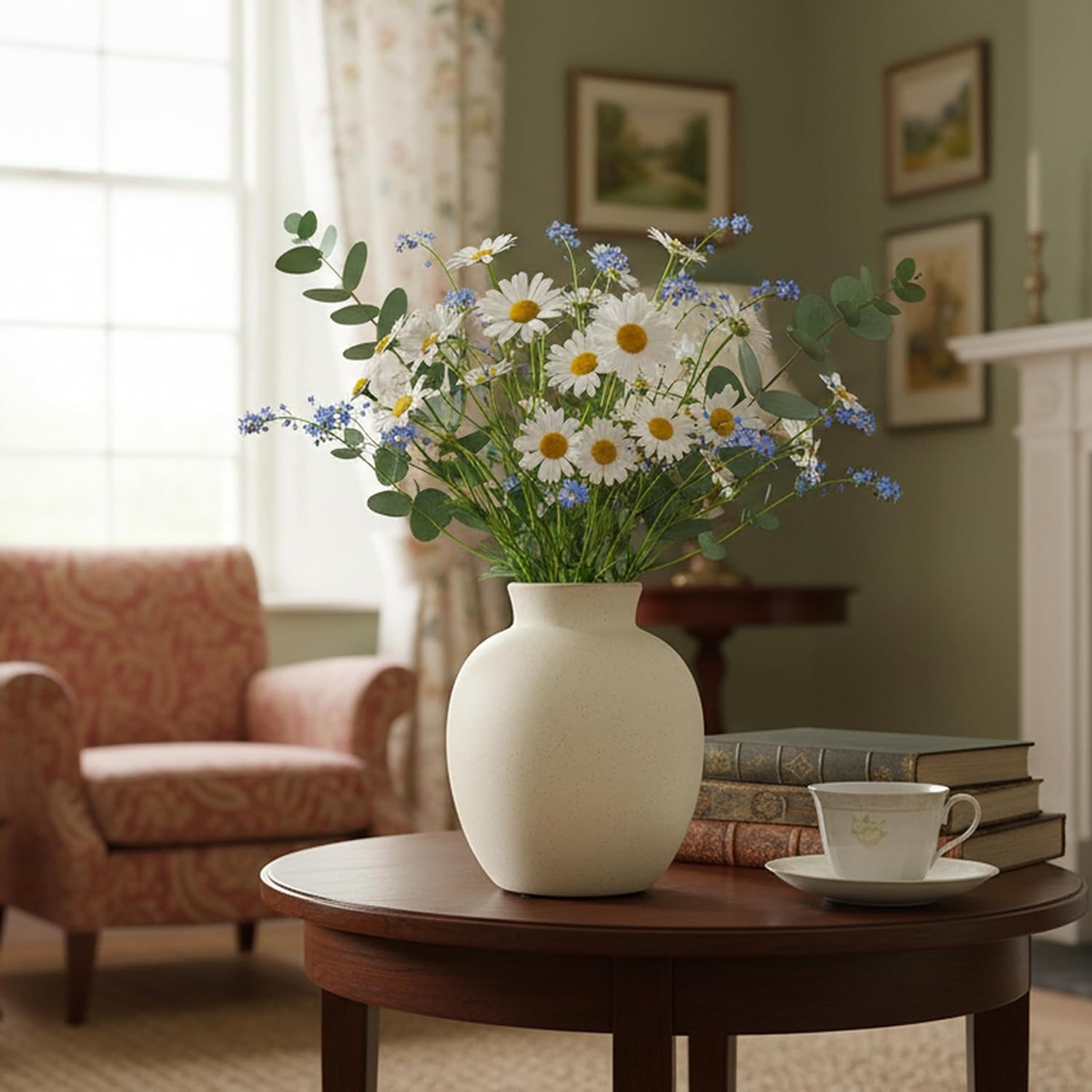
The easiest arrangement in a short vase is a single type of stem. Five stems of the same thing, roughly the same length, looks considered. A mixed bunch crammed in looks busy, because at this scale there is no room for the arrangement to breathe.
Height is the other thing people get wrong. Stems should rise about one and a half times the height of the vase above the rim. For a 15 cm vase that means trimming to around 20 to 25 cm of visible stem. Any taller and the proportions tip and the whole thing looks unstable, even if it is not.
Dried material is the low-effort option. Bunny tails, wheat, lavender, preserved eucalyptus and small pampas all suit a textured neutral vase, and none of them need water or replacing.
If you have a long shelf or a wide console, grouping beats a single piece. Two or three vases of varying heights, one filled and one bare, reads better than one lonely object in the middle.
Caring for it
This is simple and it stays simple.
Wipe the outside with a soft cloth, dry or just slightly damp. Skip the scourers and the strong cleaning sprays. Textured ceramic has lots of small surfaces, and abrasives will gradually wear the high points smooth, which flattens the look you bought it for.
If you use fresh flowers, empty the water between arrangements, rinse with warm water and let it dry completely before it goes back in a cupboard. A bottle brush deals with residue in the neck. Hard water marks come off with a little white vinegar left to sit for ten minutes.
Keep it out of the dishwasher. The heat and detergent are harder on decorative ceramic than anything you will do by hand, and hand washing takes under a minute.
Move it by lifting rather than sliding. A ceramic base dragged across a polished table will mark it. If it lives somewhere permanent on timber, small felt pads underneath solve that for good.
And the obvious one: ceramic breaks. Keep it away from table edges, high traffic routes and anywhere a cat does its rounds.
A note on measurements
The maker measures these by hand, so the stated 12.7 x 12.7 x 15.3 cm carries a small tolerance. If you are fitting it into a specific gap, a shelf with a fixed clearance or a cabinet niche, allow about a centimetre either way.
The same applies to the surface. With a textured finish, no two pieces are identical in how the texture lands. That is normal for a textured finish.
Check the opening against your stems too. The neck is narrower than the body, so thick stems take up room quickly.
As a gift
A small white vase is one of those gifts that rarely misses.
It does not depend on knowing someone's colour scheme. It is useful rather than purely decorative. It is not so large that it demands a specific spot. For a housewarming, a birthday, a thank you after a dinner, or a first-home gift, it lands well.
Add a bunch of dried stems and it becomes a complete present rather than an empty container. That small step makes a noticeable difference to how a gift is received.
The short version
This is a 15 cm round ceramic vase in white, listed by the maker as terracotta ceramic with a textured surface. It measures about 12.7 x 12.7 x 15.3 cm.
It suits short stems, dried arrangements and shelves, mantels and tables where a tall vase does not fit. The texture gives a plain white shape enough interest to stand alone when it is empty. The ceramic body gives it weight, so it stays put.
Care is easy. Wipe the outside, rinse the inside, hand wash only, lift rather than drag.
If you already own several tall vases and keep trimming stems down to use them, this is the one that fills the gap.