
The complete guide
How to Choose a Long Embroidered Tablecloth That Actually Fits Your Table
The problem with most tablecloths
Almost every tablecloth sold is cut for a medium table. That is sensible, because most households have one. The trouble starts when you extend the table for a birthday, push two tables together at Christmas, or set up a trestle along a wall for a buffet. Suddenly the cloth you own is 80 cm too short, the bare timber shows at each end, and you are rearranging serving dishes to hide the gap.
The other common problem is pattern. Table linen often arrives either completely plain, which can look flat on a long surface, or loudly printed, which fights with the food. Once you add plates, glasses, a jug and a couple of candles, a busy cloth stops being decoration and starts being noise.
A long rectangular cloth with quiet embroidery solves both problems at once. You get full coverage on a table that most cloths cannot reach, and you get visual interest that sits behind the meal rather than in front of it.
What this cloth is
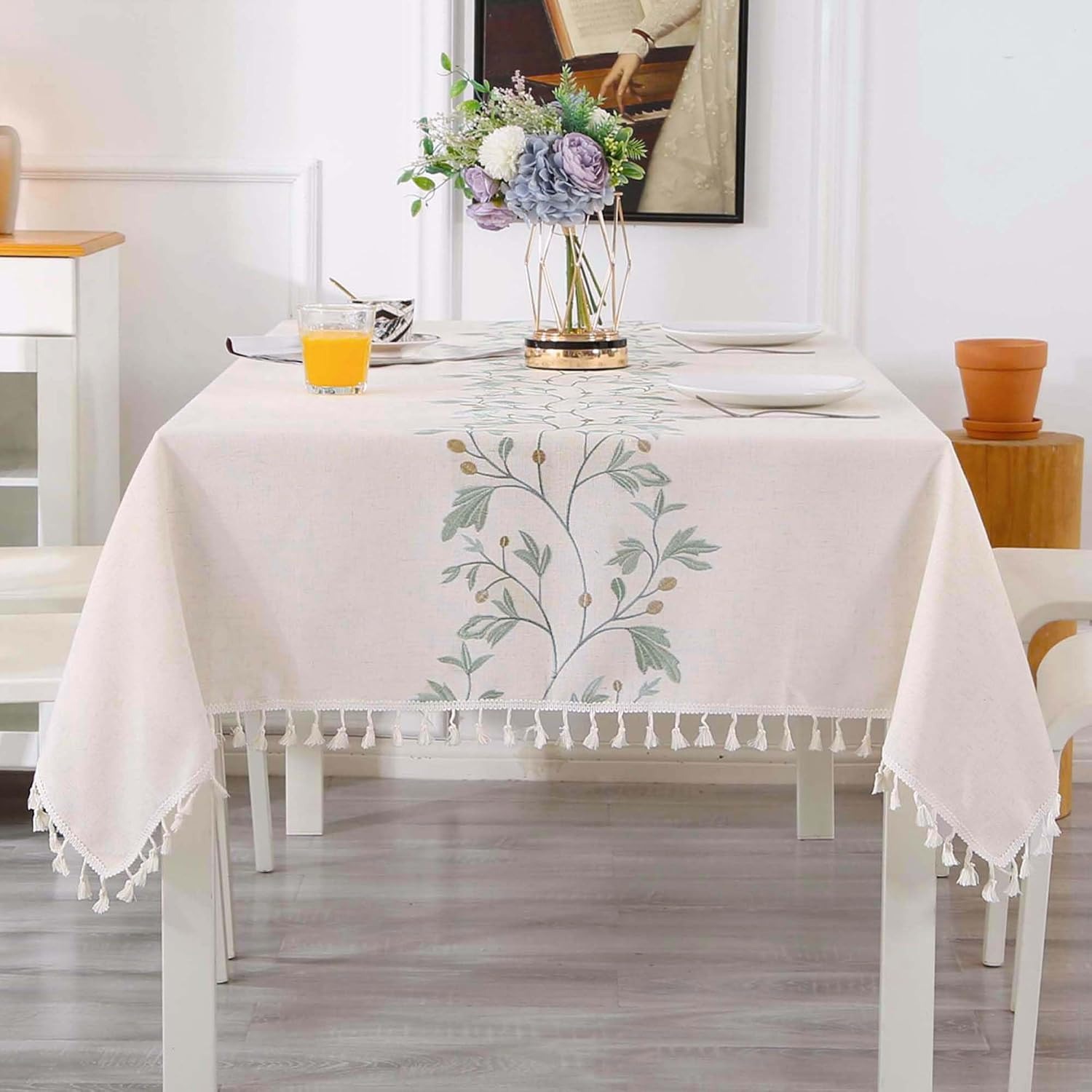
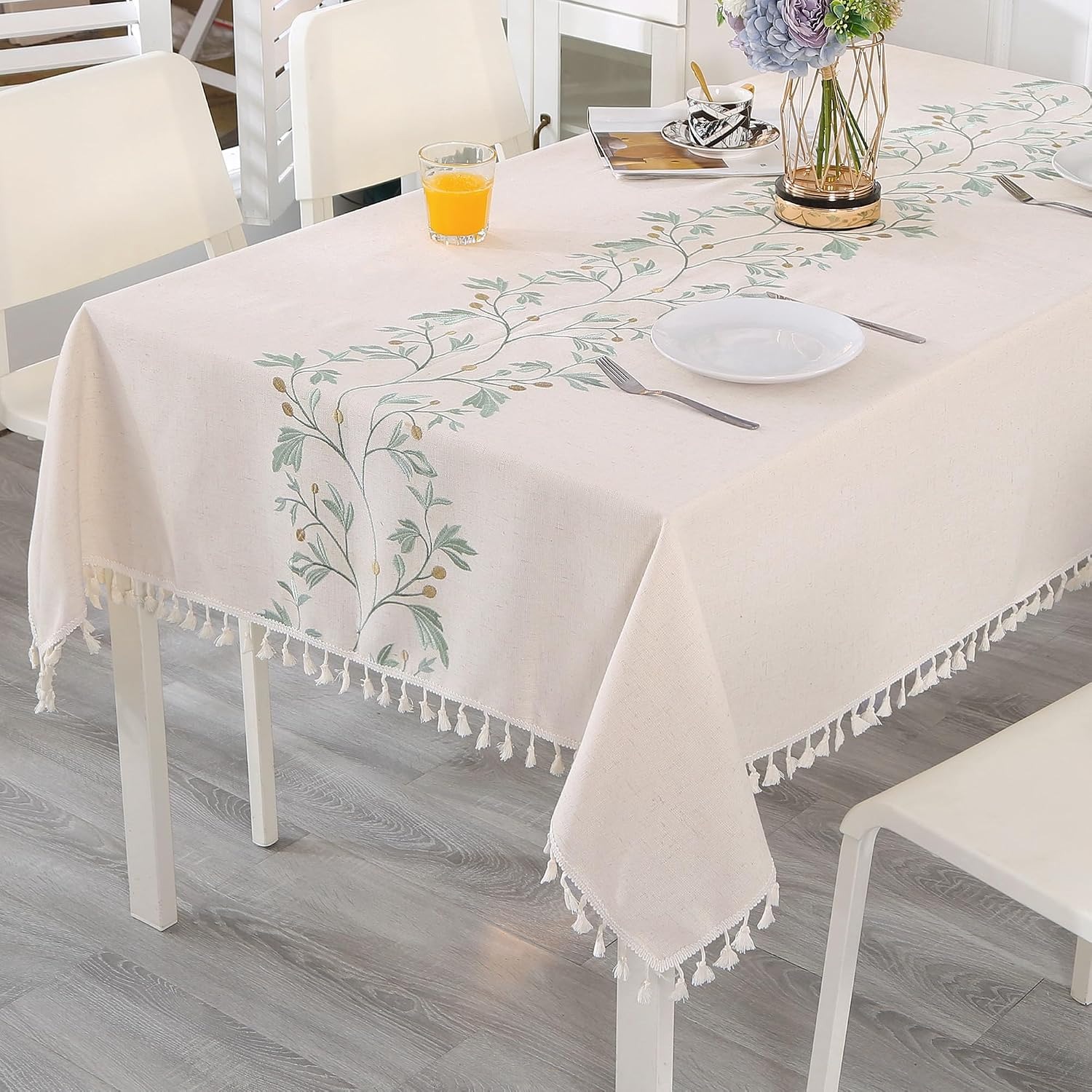
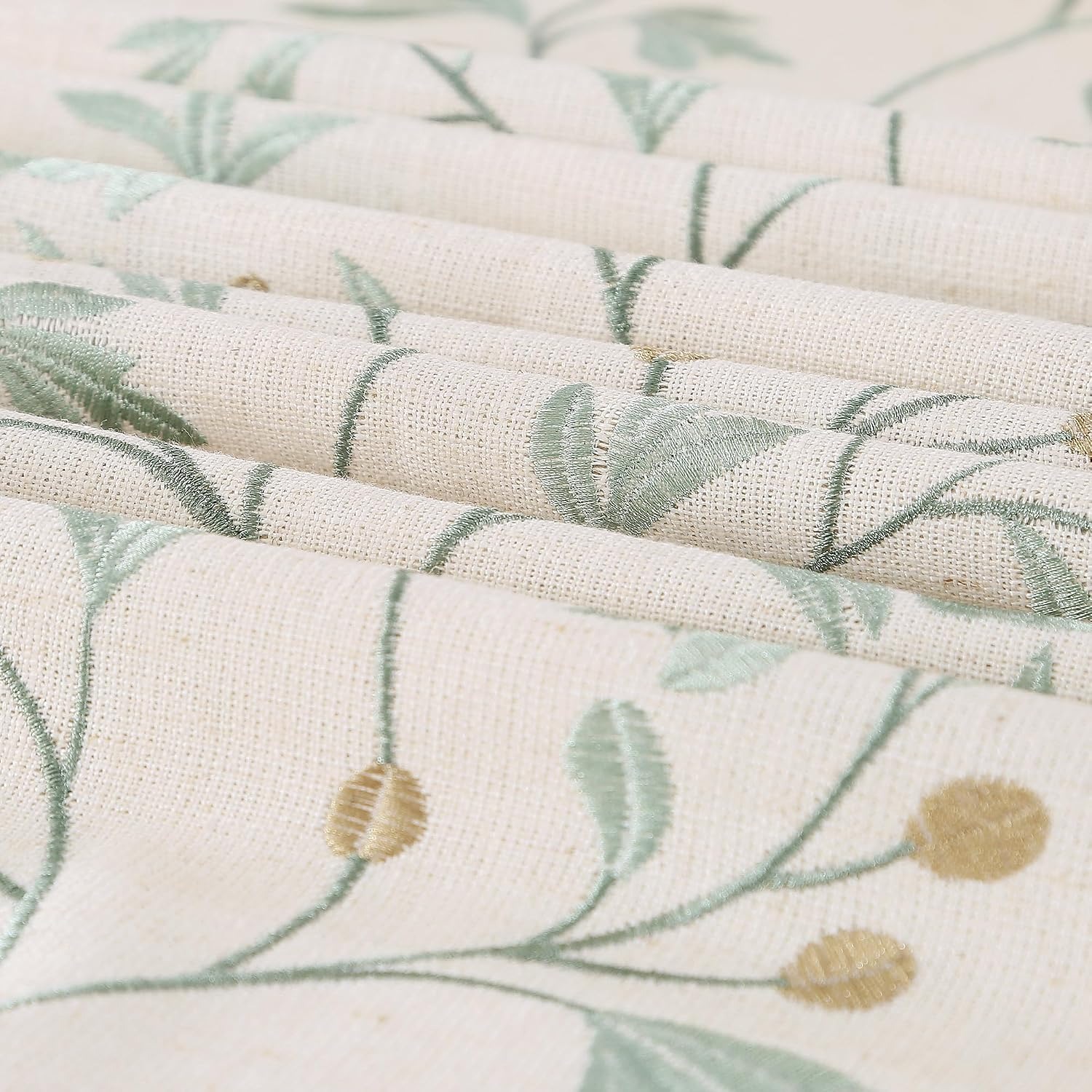
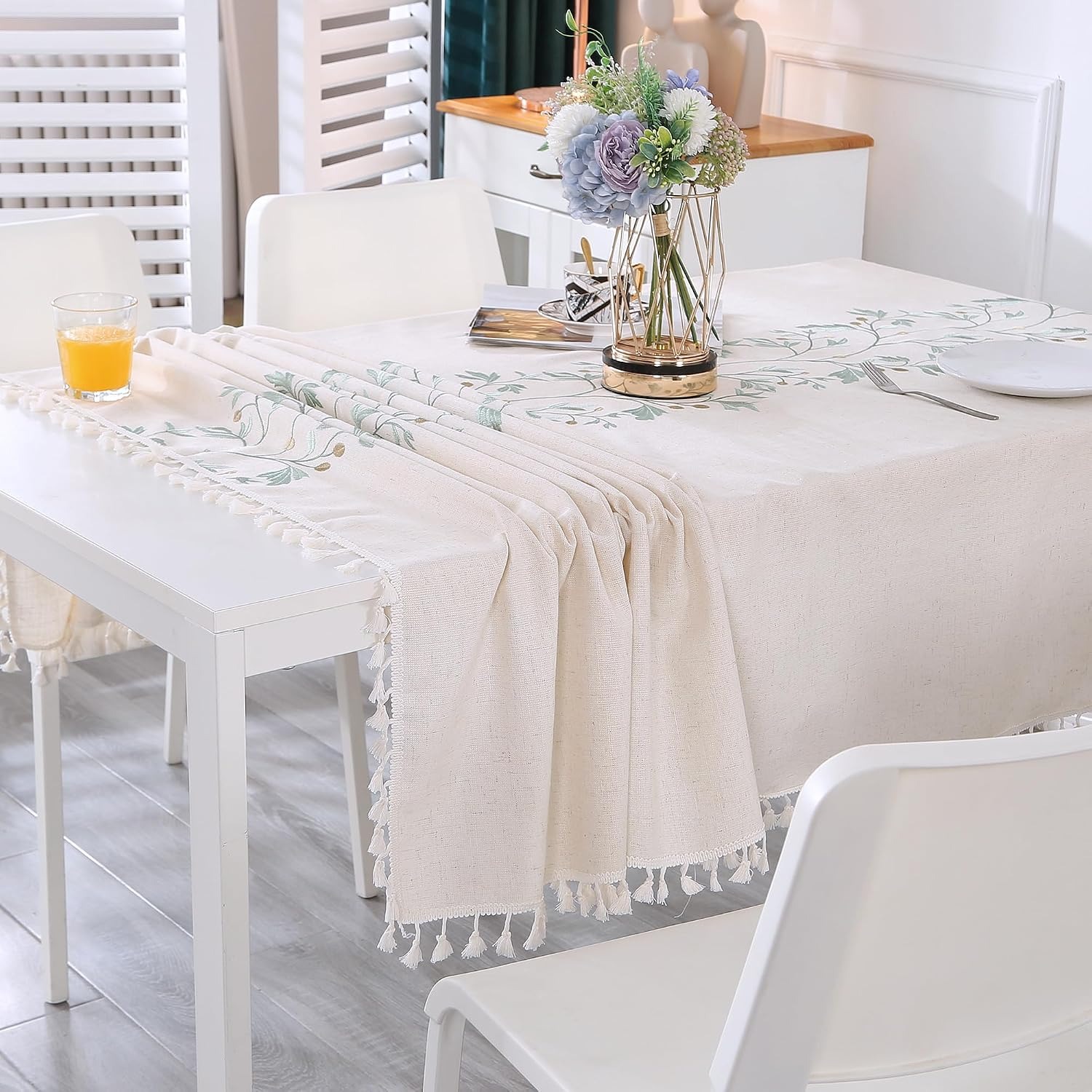
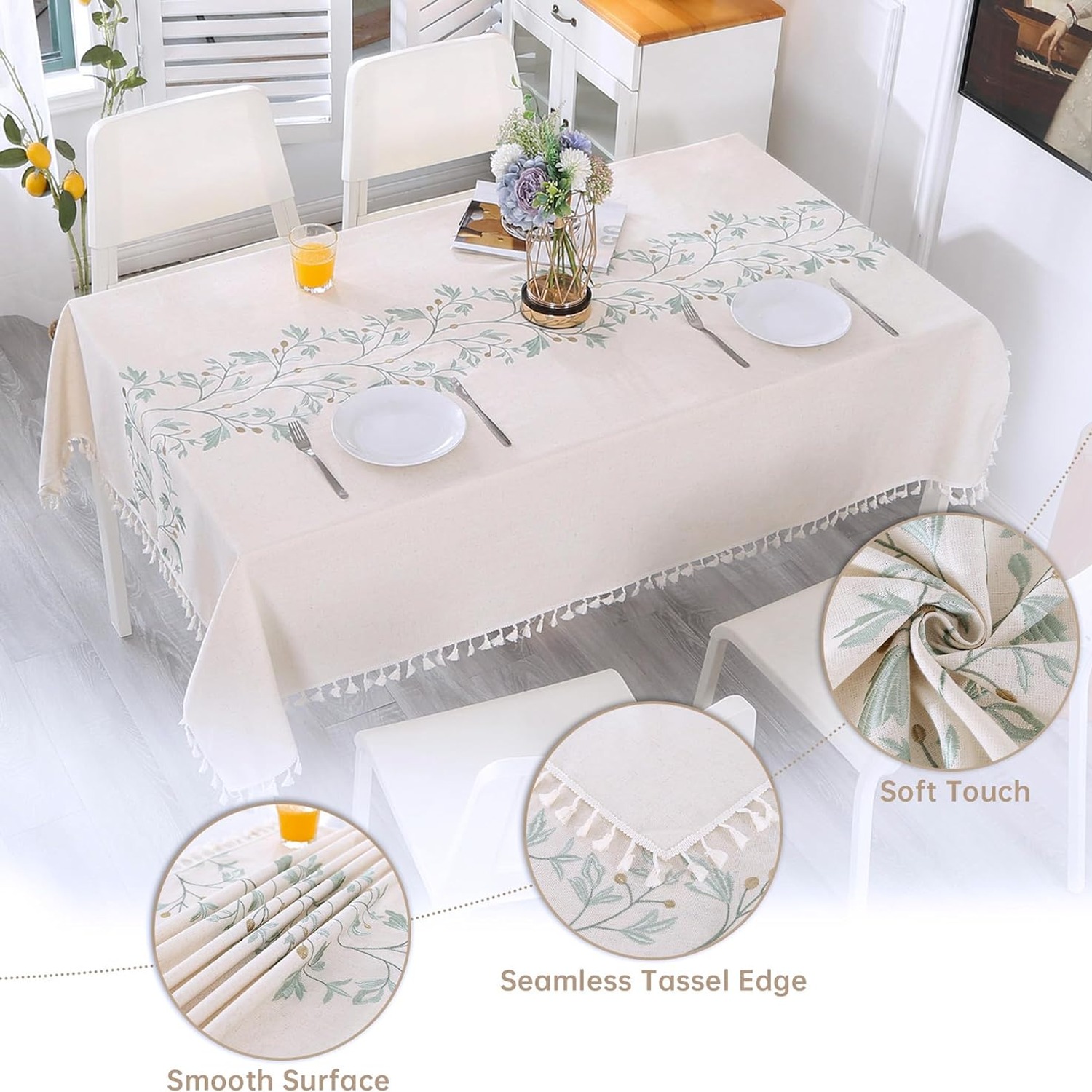
This is a rectangular tablecloth measuring 140 cm wide by 300 cm long. The ground is beige. Through the centre runs a pattern of light green vine leaf embroidery, stitched into the fabric rather than printed on it. The edges are finished with a tassel trim that drapes over the table sides.
The fabric is a blend of cotton and linen. The maker states the blend but does not publish the percentages, so we will not invent them. It is worth repeating that this is a blend and not pure linen, because the two behave differently. Pure linen creases sharply and feels crisp and dry. This cloth is a mix of cotton and linen, with a softer feel.
It is machine washable, which is the detail that decides whether a cloth gets used or stays folded in a cupboard.
How the size works in practice
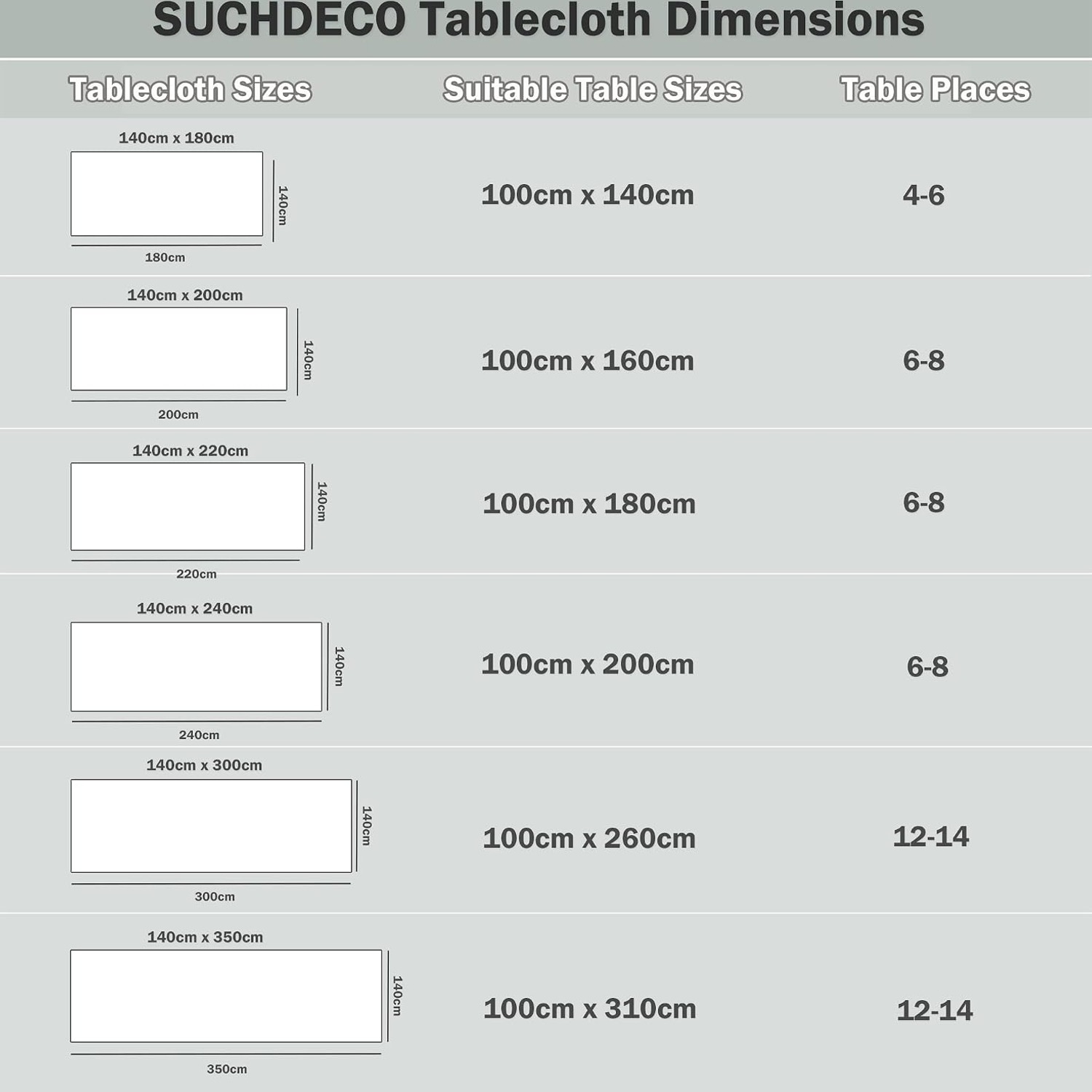
Start with your table, not the cloth. Measure the length and the width of the tabletop. Subtract those numbers from 300 cm and 140 cm, then divide each result by two. That gives you the drop at each end and each side.
A table 200 cm long leaves 50 cm hanging at each end, which is a full, formal drop. A table 240 cm long leaves 30 cm, which is the sweet spot for most dining rooms. A table 260 cm long leaves 20 cm, which is a neat everyday look. On width, a 90 cm table gives you 25 cm of drop on each side, enough to sit comfortably without fabric landing in anyone's lap.
As a rough seating guide, the maker suggests this size for a table set for twelve to fourteen people, depending on how generously you space the chairs. If you only ever host six, this is more cloth than you need. If you regularly extend the table or join two together, it is exactly the size that has been missing.
The one thing to watch is too much overhang. More than about 45 cm at the ends starts brushing knees at the head of the table and gets tugged when people shuffle their chairs. If your table is on the shorter side, you may prefer a shorter cloth and save this one for events.
Who it suits
Big families and people who host. If you are the house where everyone gathers, a long cloth earns its keep several times a year.
Anyone with an extending table. These tables are usually sold with no thought given to linen, and finding a cloth that covers them fully extended is a genuine irritation. This size solves it.
People who like neutral interiors with one soft detail. The beige and green combination is quiet. It sits with timber, rattan, cream walls, black metal and most ceramic palettes without clashing.
Event setups at home. Trestle tables for a buffet, a long table for a milestone birthday, a christening lunch, a Christmas spread. A cloth with a tassel edge turns a plain folding table into something that looks intentional.
It suits less well if you want a wipe-clean surface for toddlers, or if your table is round. Natural fibres absorb spills, and a rectangular cut will not drape evenly on a circle.
Choosing between plain, printed and embroidered
Plain cloths are the safest choice and the easiest to replace. They also do very little for a long table, where a large expanse of single colour can look empty between courses.
Printed cloths give you pattern cheaply, but print sits on the surface. On close inspection it can look flat.
Embroidery is thread worked into the cloth. It catches the light at an angle and holds a slight texture under your hand. On a neutral ground it reads as subtle detail at a distance and rewards a closer look when someone is sitting at the table.
The tassel trim does similar work at the edges. A hemmed edge is tidy. A fringed edge softens the line of the table and reads as a deliberate choice. It is a small thing that changes how finished the whole setting looks.
Styling it without overthinking
Keep the rest simple. The cloth is carrying the pattern, so let your plates, glasses and serving dishes be plain. White or cream crockery works beautifully against beige. Clear glass disappears. Timber boards and woven placemats pick up the natural texture of the fabric.
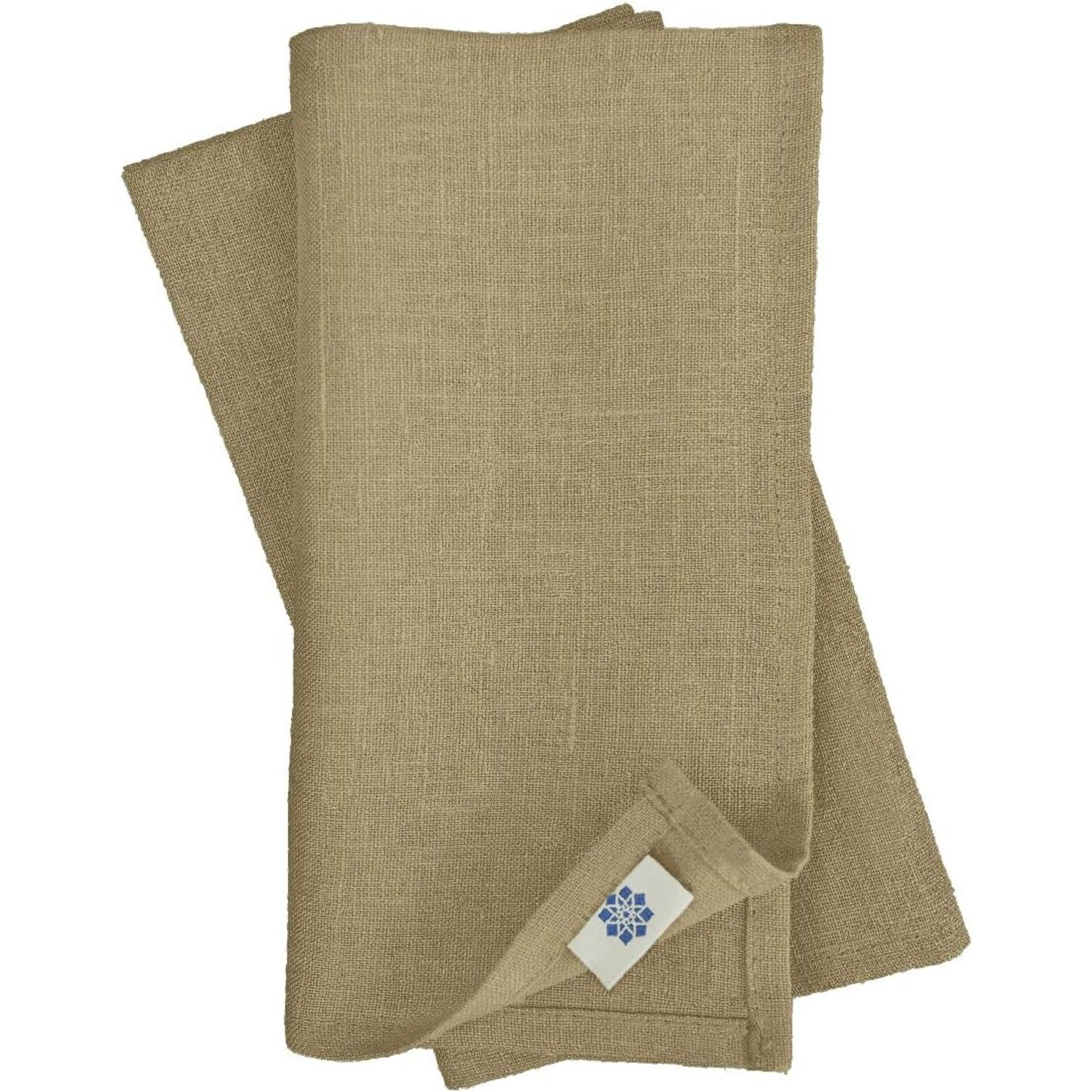
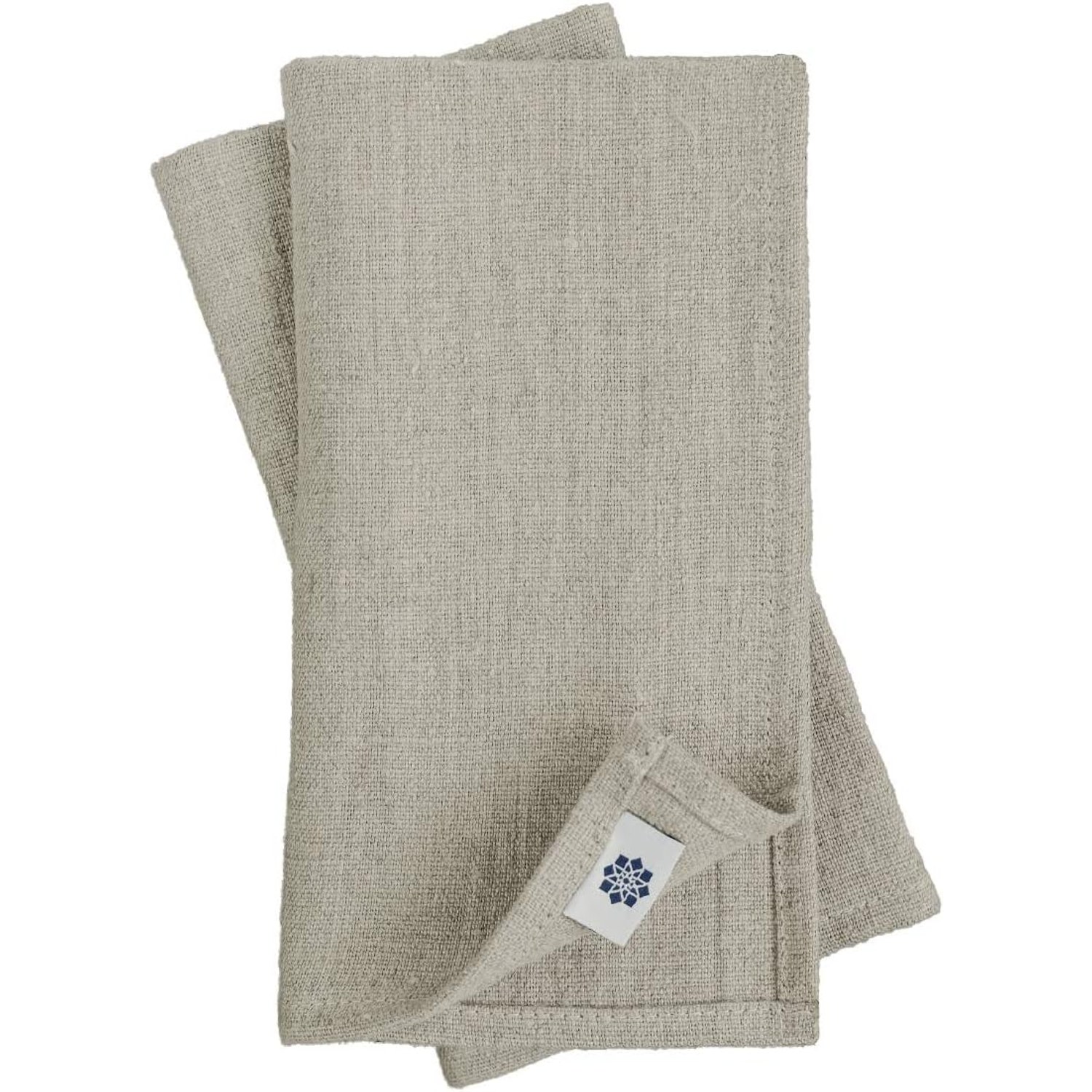
For napkins, white and cream are the safe route. If you want to echo the embroidery, sage, olive or a soft grey-green works well. Avoid strong reds and bright blues unless you are deliberately going for contrast.
Low centrepieces beat tall ones on a long table, because people need to see each other. A line of small candles or a few low bowls of greenery runs nicely along the embroidered centre rather than hiding it.
Outdoors, the cloth works happily on a garden table. Use clips or weights on a breezy day, and bring it in before the dew comes down.
Washing and keeping it looking good
The maker states the cloth is machine washable and gives no temperature, so wash cool on a gentle cycle with similar colours and a mild detergent. Skip bleach, which can affect the embroidery colour, and skip fabric softener.
Wash it separately from anything with zips, hooks or buttons. The tassel trim is the part most likely to catch, and a tangled fringe takes longer to fix than it takes to run a separate load.
Line dry in the shade where you can, and take the cloth down while it is still slightly damp. Press it damp on a medium iron, working on the reverse over the embroidered section so the stitching stays raised rather than flattening.
Deal with spills on the day. Blot, do not rub. Rinse with cool water when you get a chance, then wash as normal. Hot water sets wine and protein stains, so keep the kettle out of it.
Store it folded loosely or rolled over a cardboard tube if you have one, rather than pressed into a tight square for months. Sharp permanent fold lines are the main reason a stored cloth looks tired when you bring it out.
The short version
If your table is long, or becomes long when you extend it, this 140 x 300 cm cloth covers it properly. The cotton and linen blend, which is not pure linen, feels natural rather than plasticky, the stitched vine leaves add detail without shouting, and the tassel edge finishes the look. It is machine washable, so you can use it on a Tuesday and not just at Christmas.
Measure your table, work out your drop, and if the numbers land somewhere between 20 and 40 cm at each end, this is the right size for you.