
The complete guide
How to Choose Merino Wool Socks for Women
The problem with most winter socks
Cold feet are rarely about the weather alone. They are usually about the sock. Cotton feels fine when you pull it on in the morning, then it soaks up perspiration, holds it against your skin and turns cold. By three in the afternoon your feet feel clammy and chilled even though the room has not changed temperature.
The obvious fix is to go thicker. That works for about a day, until you realise the thick sock no longer fits inside the shoes you actually wear. You end up with cramped toes, a shoe that rubs at the heel, and a drawer full of chunky socks you only wear at home.
Merino sits in the middle of that argument: a thin sock in a warm fibre. That is the whole pitch for a pack like this one.
What merino actually does
Merino comes from a breed of sheep with unusually fine fleece. Fine merino fibres bend more easily than coarse wool, so merino usually feels softer. It is still wool, so it will not suit every skin.
This pack is 80% merino wool, 17% polyamide and 3% elastane. The merino gives the warmth and the soft feel. The polyamide is a tough synthetic, commonly blended into wool socks to help with friction. The elastane is the stretch, which helps the cuff stay up. A sock made from 100% wool tends to bag and thin out sooner.
Who these suit
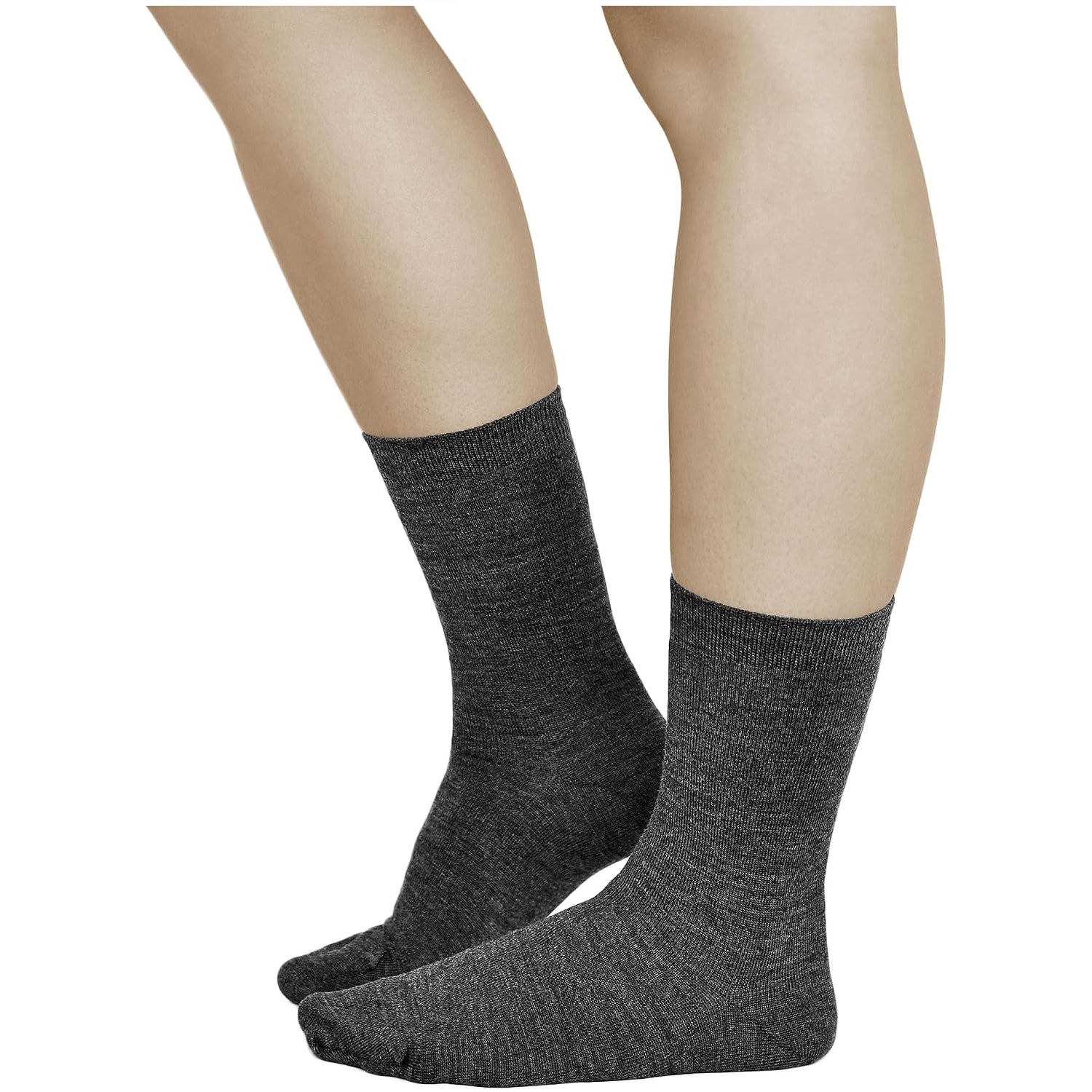
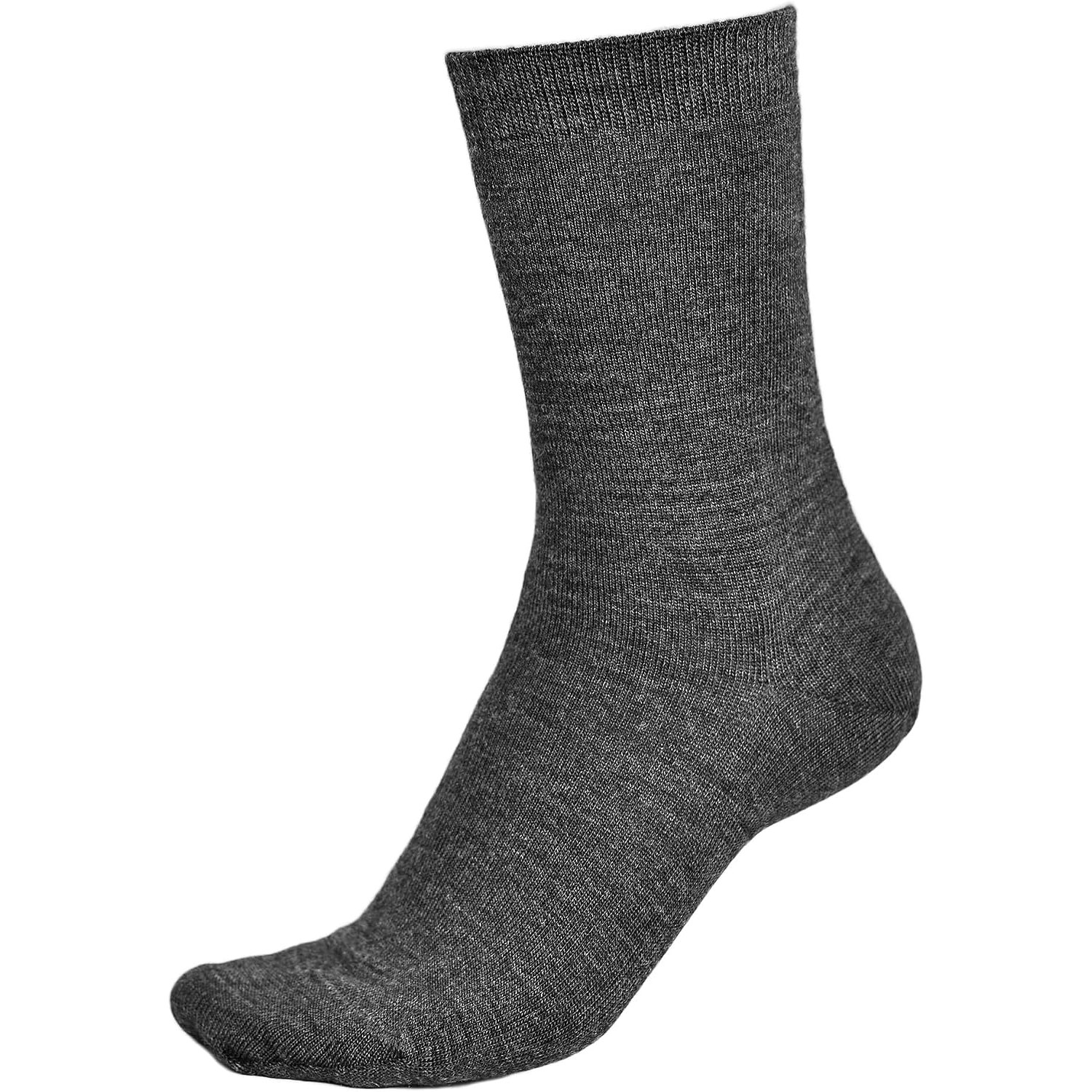
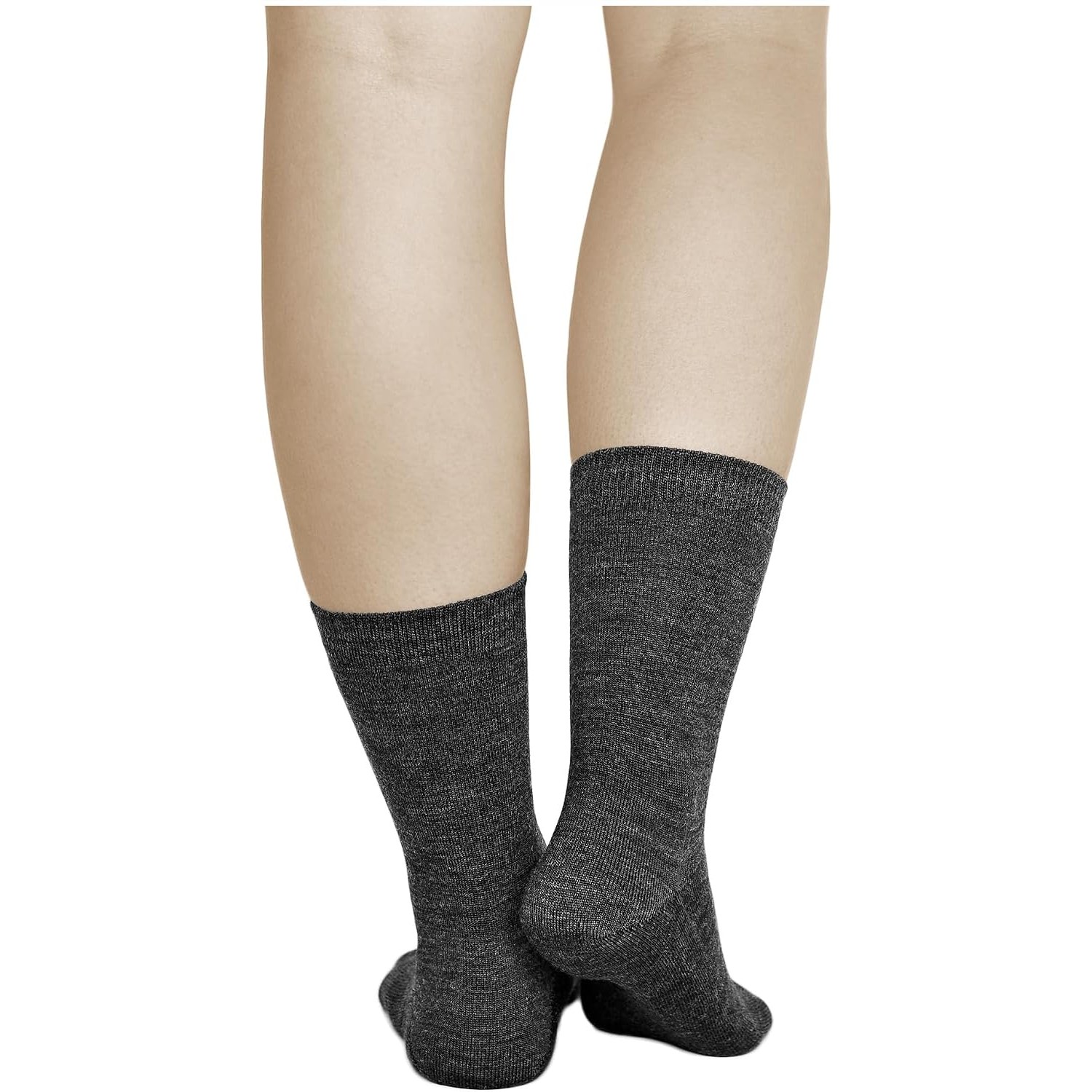
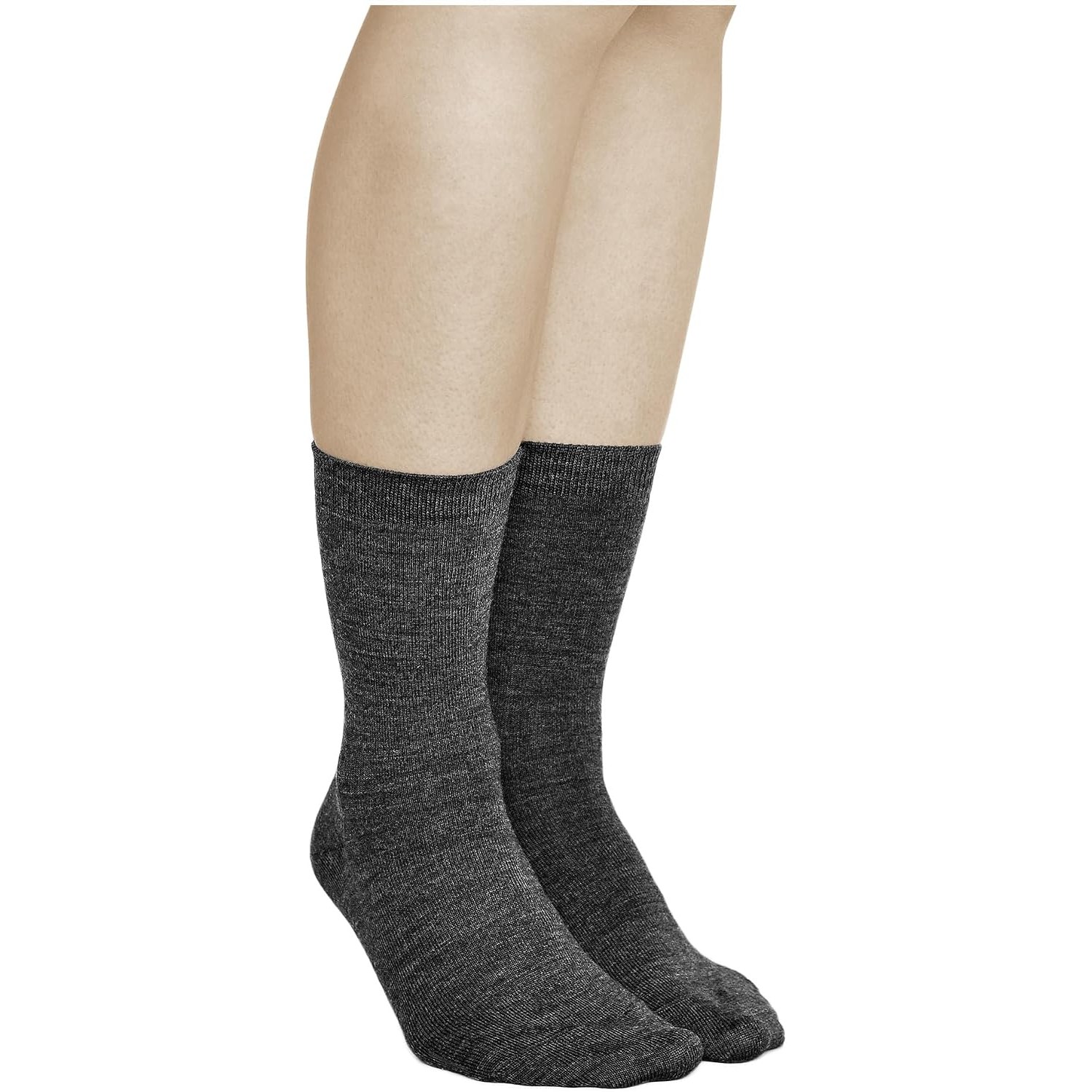
These are everyday socks. The knit is thin and the height is mid-cut, which means they slip into regular shoes without changing how those shoes fit. Office shoes, loafers, trainers, flats and soft ankle boots all work.
They suit anyone who wants warmth without bulk. They suit people whose feet get damp during the day and who are tired of cotton. They suit anyone who dislikes a ridge at the toes, thanks to the fine fibre and the flat seam. And they suit anyone who wants to stop thinking about socks for a while, since three pairs covers most of a week.
The maker is also clear about where they do not belong. These are not hiking socks. They are not meant for stiff leather boots, where you need real padding to stop the rigid upper rubbing. And they are not built for very cold or frosty weather, where you want a heavier, denser knit. Buying them for the wrong job is the main way people end up disappointed, so it is worth being honest with yourself about what you actually need.
How to choose between sock weights
Sock thickness is a trade-off with shoe fit, and it helps to think about it that way rather than chasing maximum warmth.
A thin merino sock like this one is for shoes you already own and wear daily. It adds warmth without adding volume. If your shoes are a snug fit already, this is the only category that will work.
A mid-weight merino sock adds cushioning underfoot and suits boots with a little room to spare. A heavyweight or boot sock is for cold outdoor work and loose footwear, and it will change your shoe size in practice.
If you mostly wear normal shoes and want warmer feet, the thin option is almost always the right call. The common mistake is buying heavy socks for light shoes and then never wearing them.
Getting the fit right
Socks that are too big wrinkle under the arch and rub. Socks that are too small pull the toe seam tight across your toes and wear out quickly at the tips. Neither is comfortable, so buy your actual size rather than rounding up or down.
This pack is UK size 6 to 8, which the maker's chart gives as EU 39 to 42 and a foot length of 24.5 to 26.5 cm. If your foot sits outside that range, this pack is not the one for you.
Pay attention to the flat toe seam. It sounds like marketing until you have worn a sock with a raised seam inside a firm shoe for eight hours. The ridge presses into the end of your toe and you notice it every time you take a step. A flat join is there to avoid that.
Caring for merino
Wool is not difficult, it is just particular. The two things that damage it are heat and agitation. Get those right and you give a pack of socks its best chance.
Machine wash at a maximum of 30°C on a delicate cycle, with the socks turned inside out. Turning them inside out puts the foot side, the part carrying sweat and skin oils, in direct contact with the water. Do not tumble dry, do not iron, do not bleach.
Skip the fabric softener. It leaves a film on the fibre. A gentle detergent, ideally a wool-safe one, is all you need.
Let them air dry, away from radiators or direct sun. Reshape them while they are still damp so the cuff and foot settle back into the right form. Hanging wet wool socks over a hot radiator is the quickest route to a shrunken, stiff pair.
One more habit worth adopting. Rotate your pairs rather than wearing the same one every day. Wool needs a day to fully dry out and recover its loft, and rotating three pairs across a week spreads the wear. This is the quiet advantage of buying a multipack instead of a single pair.
Storage and off-season
When the weather turns warm, wash the socks before putting them away. Moths are drawn to the traces left in worn wool, not the wool itself, so clean socks stored in a closed drawer or box with a cedar block are rarely troubled.
Fold them rather than rolling the cuff inside out over the pair. That old trick stretches the elastic over time and is why one sock in a pair often goes slack before the other.
The short version
This is a three-pair pack of thin, mid-cut women's socks in dark grey, UK size 6 to 8, in 80% merino wool, 17% polyamide and 3% elastane. The maker gives the country of origin as Latvia. The maker says the merino keeps feet warm. The flat toe seam is there for comfort. Wash them cool and inside out, let them air dry, and leave the softener on the shelf.
Buy them for everyday shoes in autumn and winter and they will quietly do their job. Do not buy them for hiking, stiff boots or hard frost, because the maker has been straightforward that those are not what this knit was built for.