
The complete guide
How to Choose a Pure Wool Throw for Your Sofa or Bed
The problem with being cold in your own living room
There is a point most evenings in autumn and winter where the room is technically warm enough, but you are not. The heating is on a timer, the sun has gone, and the cheapest fix is to put another layer over your legs rather than push the thermostat up another two degrees.
That is the entire job of a wool throw. It is a personal heating solution that costs nothing to run.
Most people reach for a fleece throw first because they are everywhere and they are cheap. Fleece works for about twenty minutes. Then it starts to feel clammy, because polyester does not let moisture out. You end up warm and slightly damp, which is a strange, uncomfortable kind of warm. You throw it off. Ten minutes later you are cold again.
Wool behaves differently, and that is the reason a blanket like this one is still being made the way it is.
How wool actually keeps you warm
Wool fibres are not straight. They have a natural crimp, a sort of permanent waviness, and when thousands of them are woven together that crimp gives the fabric loft.
The blanket on this page is 100% New Zealand wool, as stated by the maker. What you feel is the fibre.
Who this size actually suits
The measurement is 140 x 200 cm, and importantly that includes the fringe. Some throws are measured without the fringe and some with it, so check which before you compare sizes.
Here is what 140 x 200 cm does in practice.
On a two-seater sofa it covers both people with room to tuck your feet in. On a three-seater it covers most of the seat, or you can drape it lengthways over the back and one arm, which is how most people use a throw anyway. On an armchair it folds in half and sits neatly across the seat and back.
On a bed it is at its best laid across the foot of a double. That is where your feet get cold first, and adding a wool layer there is a much cheaper fix than swapping your whole duvet for a heavier tog. On a single bed it can be used on its own as a top blanket.
Folded into quarters it becomes a knee blanket for a reading chair, a desk or an outdoor seat. The size lets it work both ways, spread out or folded down.
Choosing between a wool throw and the alternatives
If you are comparing options, the honest breakdown is roughly this.
Fleece is the cheapest and the easiest to wash. It is also the least breathable, and the pile can mat down with use.
Cotton throws are cool, washable and good for summer, but cotton is a poor insulator when you want real warmth. It is lovely in July and underwhelming in December.
Acrylic knits sit in the middle. They can look good and cost little, but they build static, pill quickly and do not handle moisture well.
Pure wool costs more at the start and asks for a bit more care. In return you get a natural fibre with real warmth and body. For a household buying one good throw rather than three cheap ones, wool is worth a look.
Thinking about colour
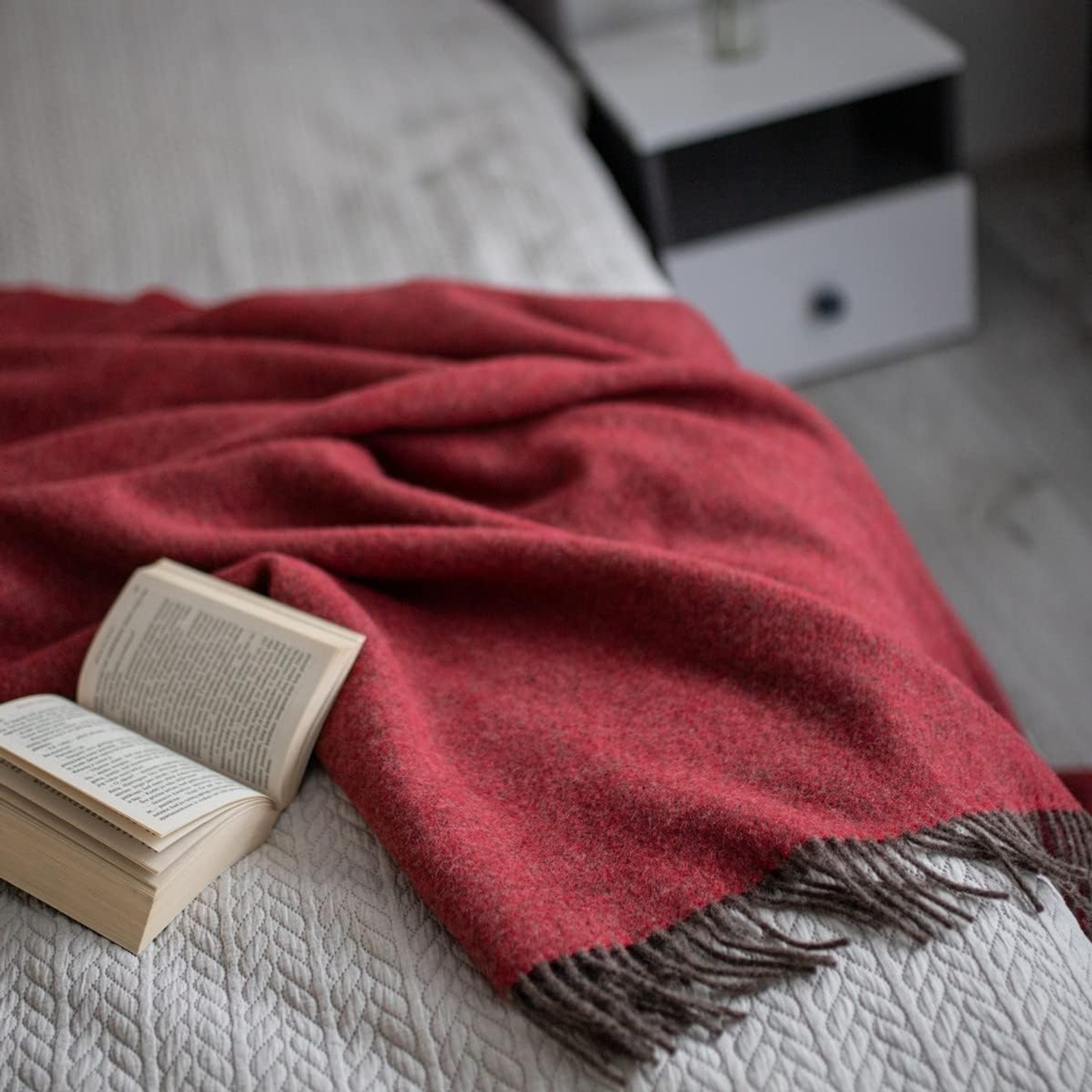
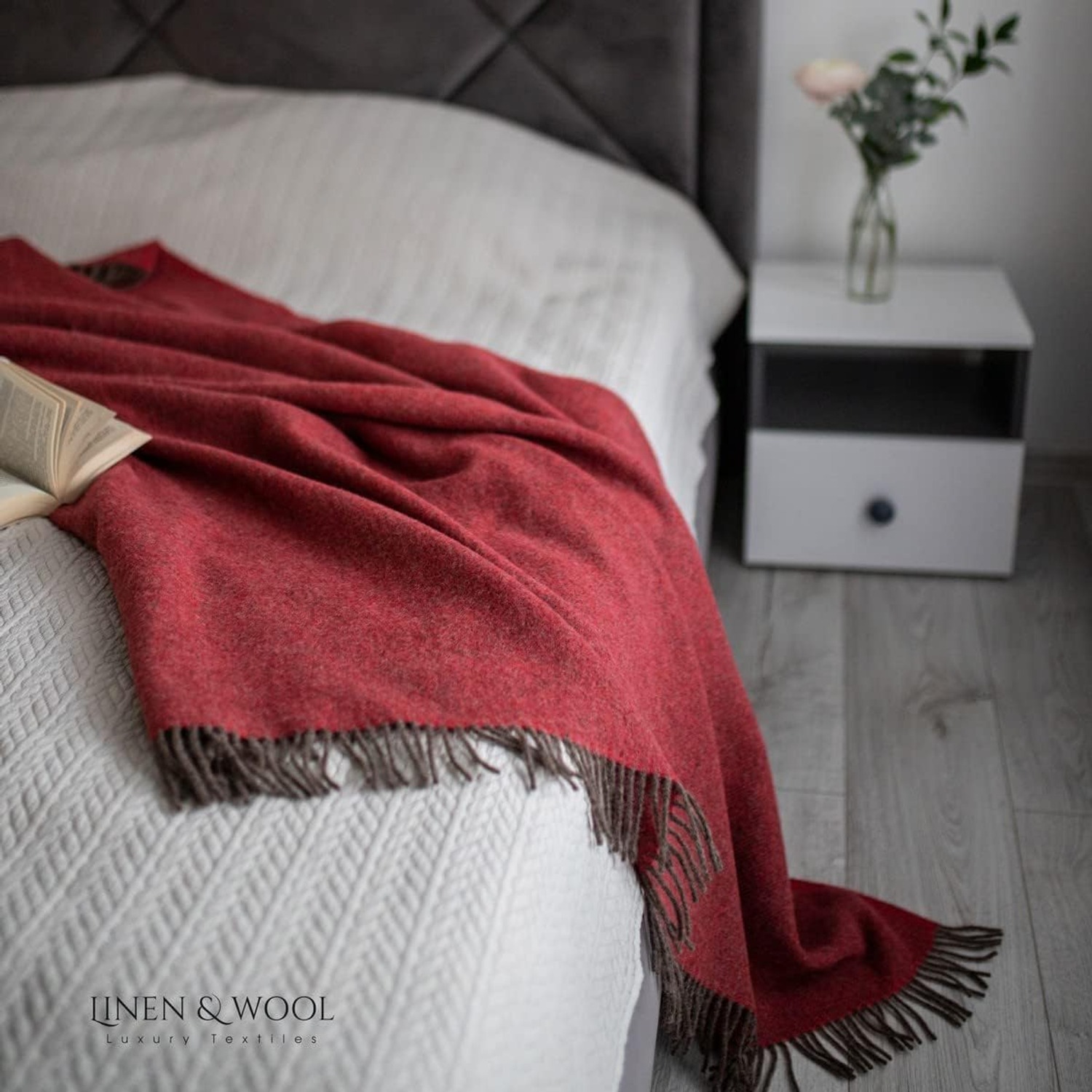
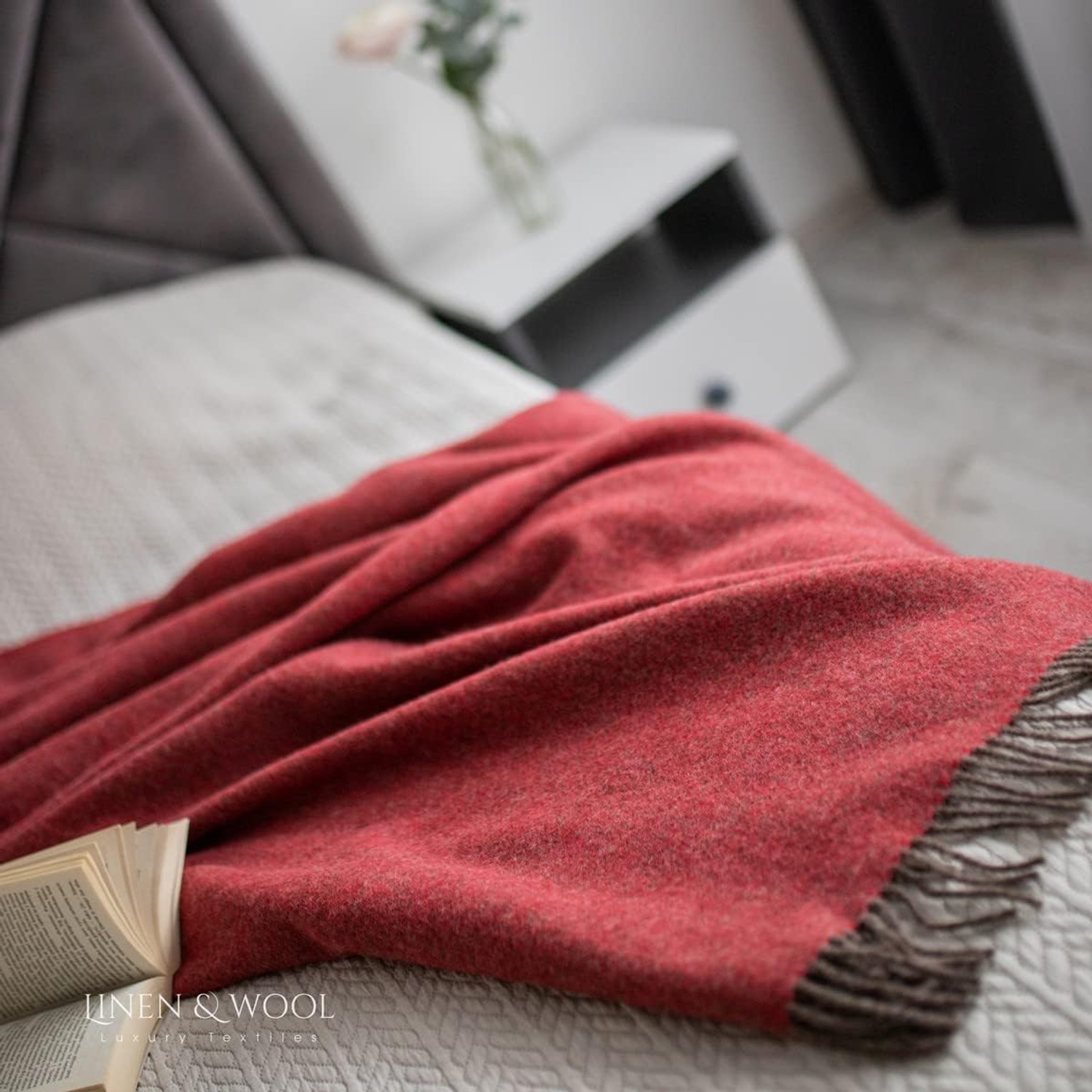
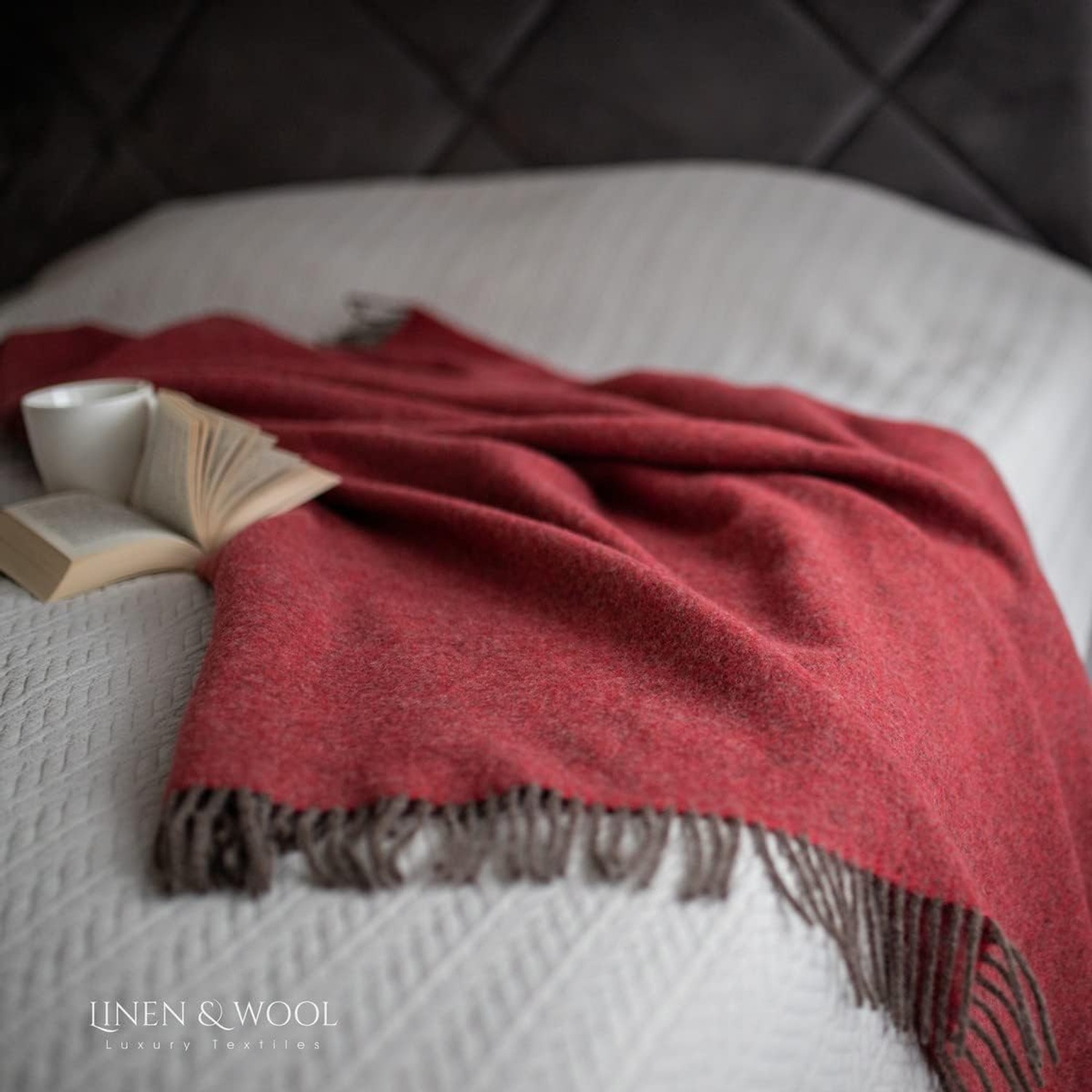
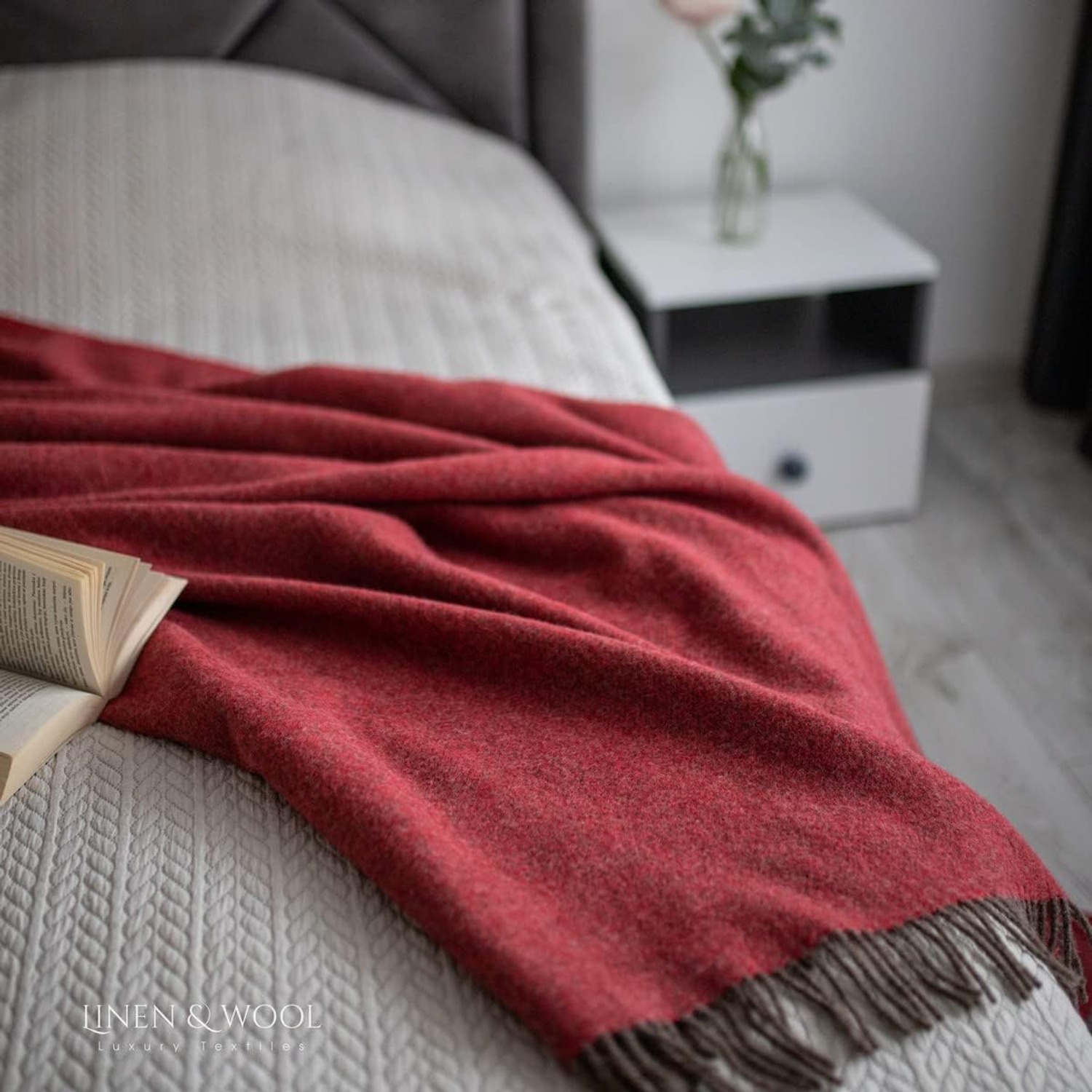
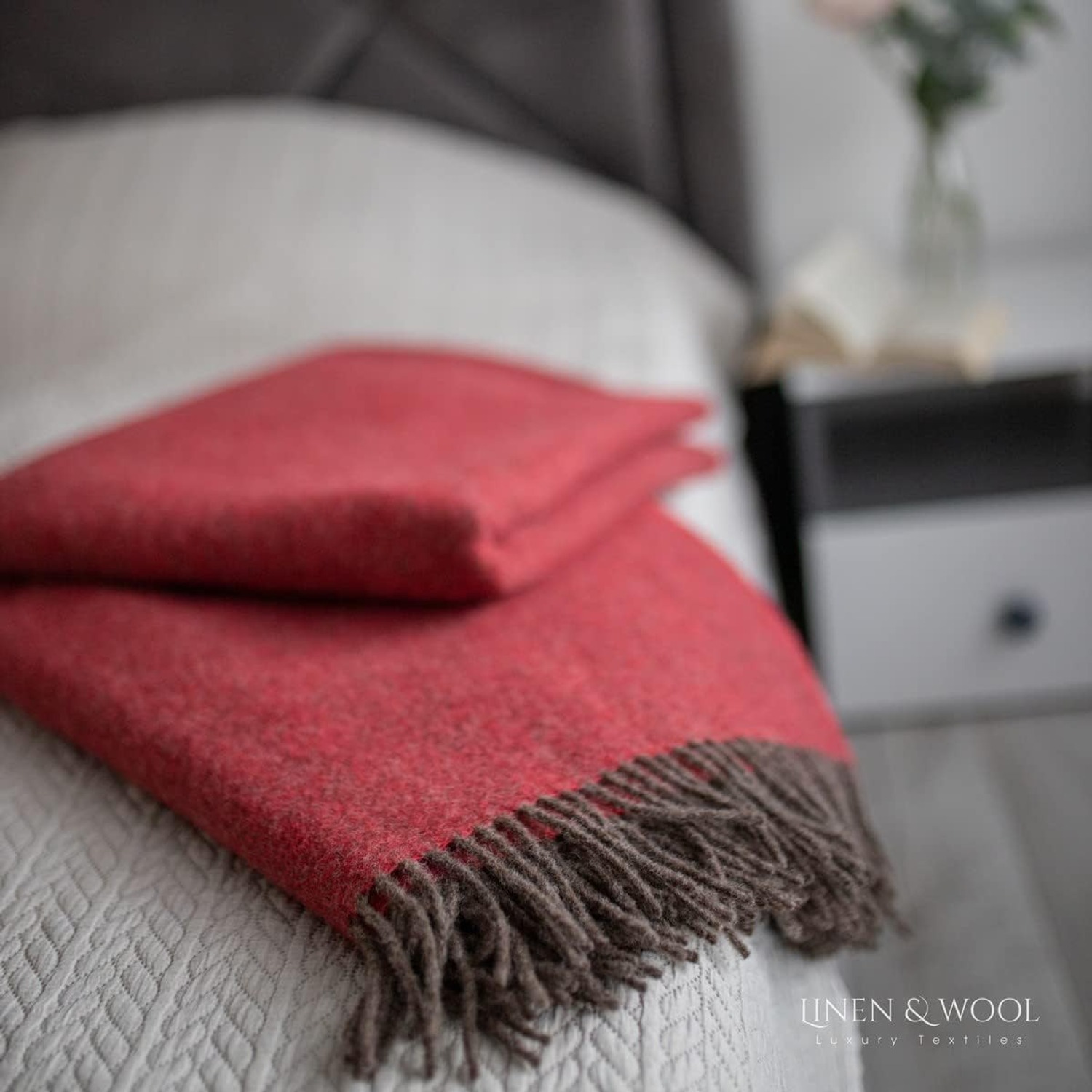
The maker names this colour Red Brown. In the photographs it is a deep red cloth flecked with brown, with a brown fringe. That is worth a moment of thought before you buy, because a throw is a large block of colour in a room.
It is a warm, strong tone. It works particularly well against grey sofas, navy, cream, natural linen and oak or walnut furniture, where it reads as a warm accent. In a room that is already full of strong colour it may be one colour too many, so check what else is going on in your space.
The flecked weave has a practical side. A deep, flecked colour hides everyday life better than a pale flat one does, which matters if the throw is going to be used daily. A plain pale throw shows every crumb.
The fringed ends give it a slightly relaxed, cottage feel rather than a sharp tailored one. If your room is very minimal and hard-edged, that softness is actually a good contrast, but it is the main stylistic decision to make here.
Looking after wool without making it a chore
People sometimes avoid wool because they imagine endless specialist washing. In practice, a wool throw needs washing far less often than you might expect, because airing does most of the work.
The maker recommends dry cleaning for this blanket. That is the safest route and the one to use for any serious stain.
If you would rather do it at home, you can. Hand wash in cool water with a detergent made for wool, or use a machine wool programme at a low temperature. The rules are simple. No hot water. No wringing. No tumble drying. Squeeze the water out gently, lay the blanket flat, and keep it away from radiators and direct sun while it dries.
For day to day care, air it. Hang it outside on a dry breezy day for an hour or two to freshen it. Spot clean spills as they happen by blotting, not rubbing. Give it a shake to lift the pile.
For summer storage, make sure it is clean and completely dry, fold it loosely and put it in a breathable cotton bag with a cedar block or lavender. Avoid plastic and avoid vacuum bags, which flatten the loft.
A few honest caveats
Wool is a natural fibre and it behaves like one. New wool items shed a few loose fibres in the first weeks. That settles.
Claws snag woven wool, so if you share the sofa with a cat, expect the throw to need the occasional pulled loop trimmed rather than yanked.
And wool has texture. It is not the slick softness of microfleece and it is not trying to be. Most people use a throw like this over clothing or bedding, where the handle is part of the point.
The short version
This is a 100% New Zealand wool blanket, 140 x 200 cm including the fringe, in red brown with a brown fringe, made in the EU as stated by the maker.
It suits you if you want real warmth on a sofa or at the end of a bed, you are tired of synthetic throws that feel clammy after half an hour, and you would rather buy one good blanket and look after it.
It is less suited to you if you need something you can throw in a hot wash twice a week, or if your room already has a lot of strong colour competing for attention.
Everything else is simple. Put it where you sit. Air it now and then. It will do the rest.