
The complete guide
How To Choose A Lambswool Tartan Scarf That You Will Actually Wear
The problem with most winter scarves
Cold air finds the neck first. The gap between a coat collar and a jaw is small, but it is the spot where body heat escapes quickest, and it is the reason you can be wearing a good coat and still feel miserable on a windy platform. A scarf fixes that gap. The trouble is that most people own the wrong kind.
The common failures are predictable. The scarf is too short, so it barely wraps once and the ends work loose by the time you reach the station. It is acrylic, so it feels warm for ten minutes and then clammy. It is itchy, so it ends up pulled away from the skin and does nothing. Or it is so bulky that it will not sit under a coat collar and has to be worn on top, where it catches the wind.
A lambswool tartan scarf solves all four of those problems at once, which is the quiet reason this style has stayed in circulation for well over a century.
What lambswool actually is
Lambswool comes from a sheep's first shearing, usually at around seven months old. Those first fibres are finer, softer and springier than the wool taken from the same animal later in life. That matters for anything worn next to skin.
The softness is the obvious benefit. Lambswool also has natural crimp, which means each fibre has a slight wave in it. That gives the cloth a light, springy feel, so a lambswool scarf can be warm without being heavy.
This scarf is 100% lambswool, as stated by the maker. No other fibre is named in the composition.
Why the length is the spec to check
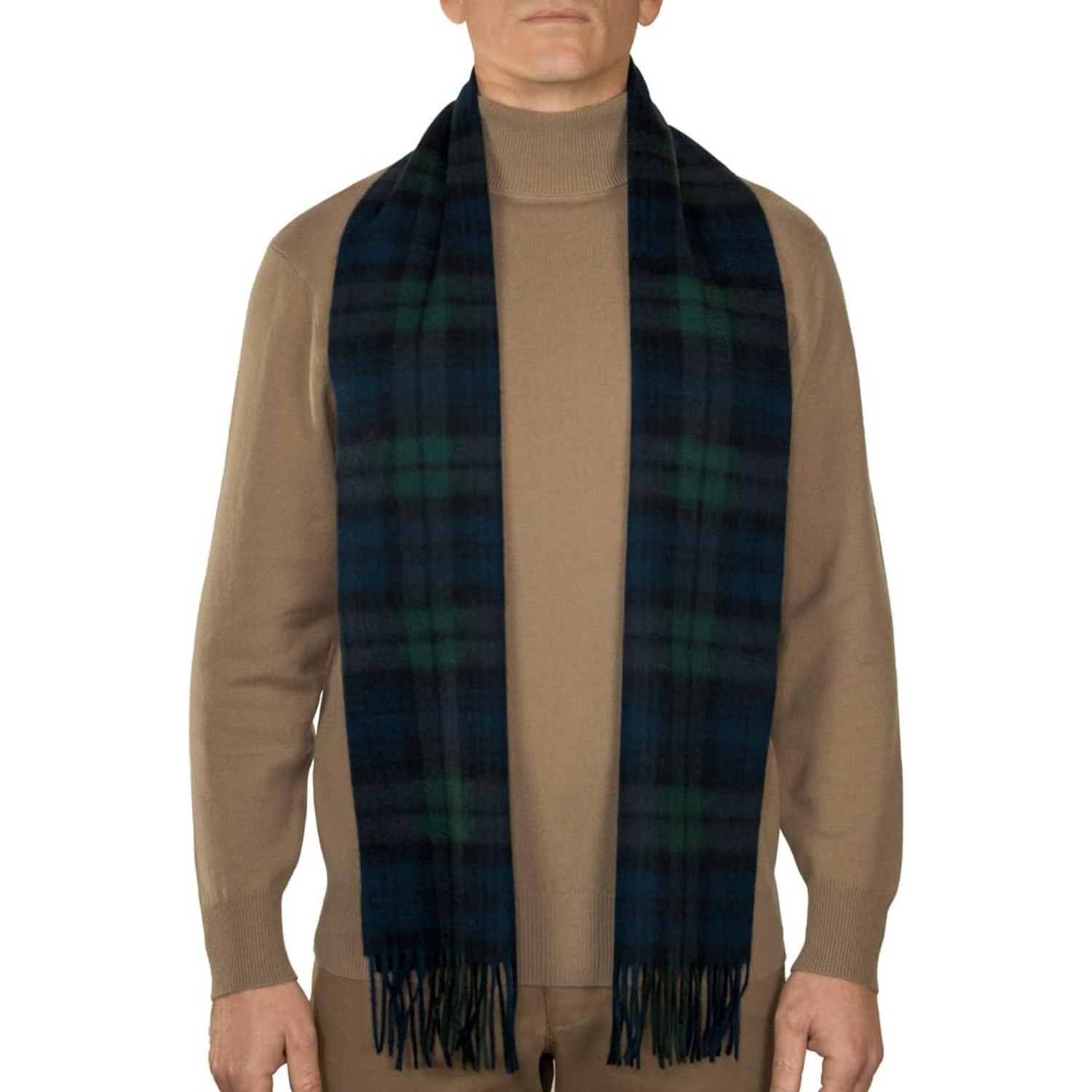
The maker gives this scarf two sets of measurements, 174 x 28 cm and 164 x 30 cm, so it is over 160 cm long either way. Length is the single most overlooked measurement when people buy a scarf online, and it is the one that decides how the thing behaves.
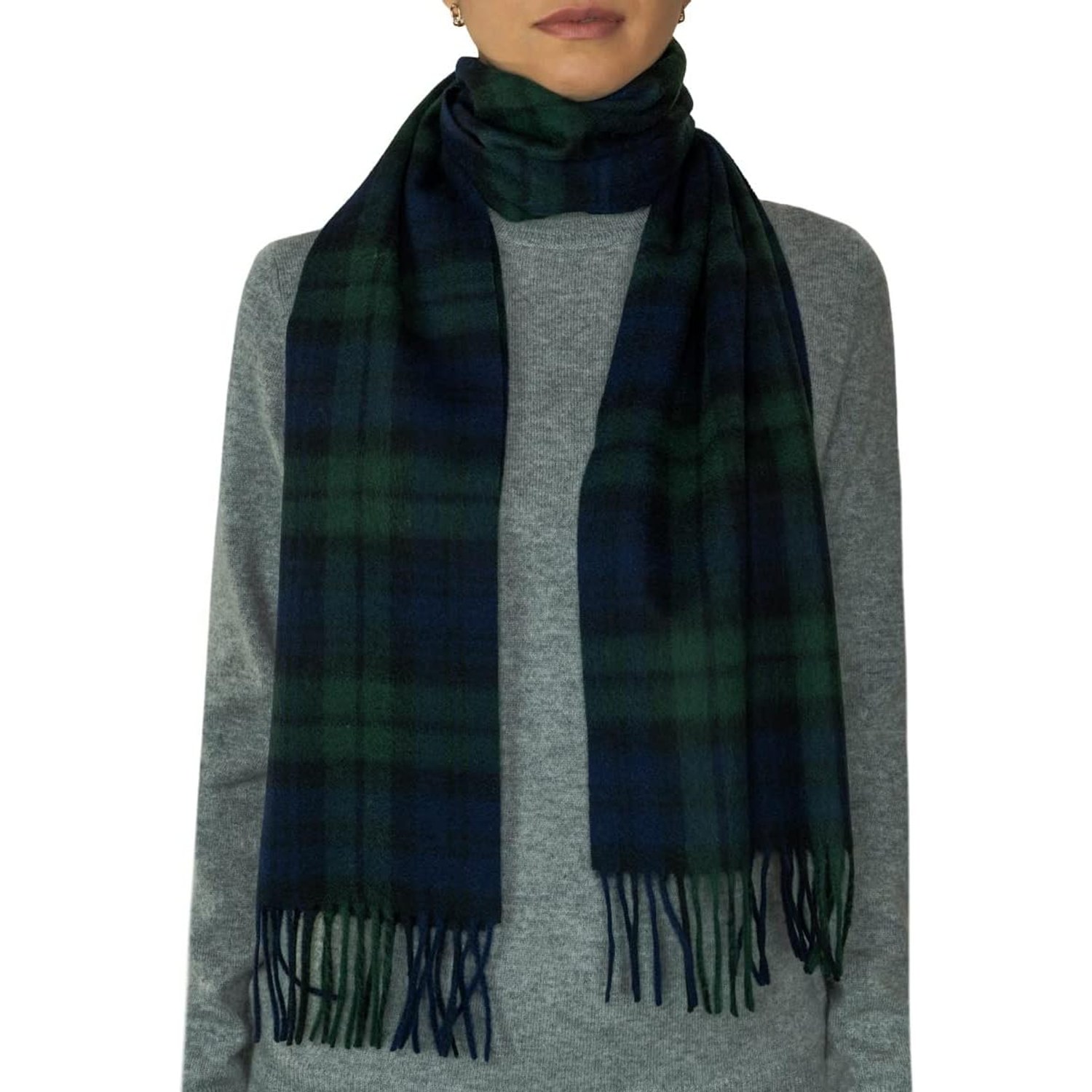
Under about 140 cm you are limited. One drape, maybe a single loose wrap, and the ends sit high on the chest. At over 160 cm you have real choice. You can fold it in half, drape it, and pull the tails through the loop, which is the fast knot almost everyone uses on a weekday morning. You can wrap it twice for genuine cold and still have enough tail to tuck into a coat. Or you can leave it hanging flat down the front of a long coat so the pattern shows properly.
The width matters too. At 28 to 30 cm it is wide enough to cover the throat and the top of the chest when folded, which is where you actually feel the cold. Narrow scarves look neat but sit like a string around the neck and let draughts through either side.
Who this scarf suits
The maker sells it as unisex, and that is not a hedge. Tartan has never been a gendered pattern, and a long woven rectangle has no fit to get wrong. This is why a tartan scarf is one of the more reliable gifts you can buy for an adult you do not shop for often.
It suits anyone who spends time outdoors in cold weather, whether that is a walk to work, a school run, a dog walk or standing on a touchline. It also suits people who want one accessory that works with several coats. A plain navy overcoat, a grey wool blazer, a green waxed jacket and a black puffer will all take the same tartan scarf without any clash.
It is less suited to people who want something very lightweight for mild autumn days, or to anyone who wants to machine wash their accessories. This one is hand wash only.
How Black Watch works with your wardrobe
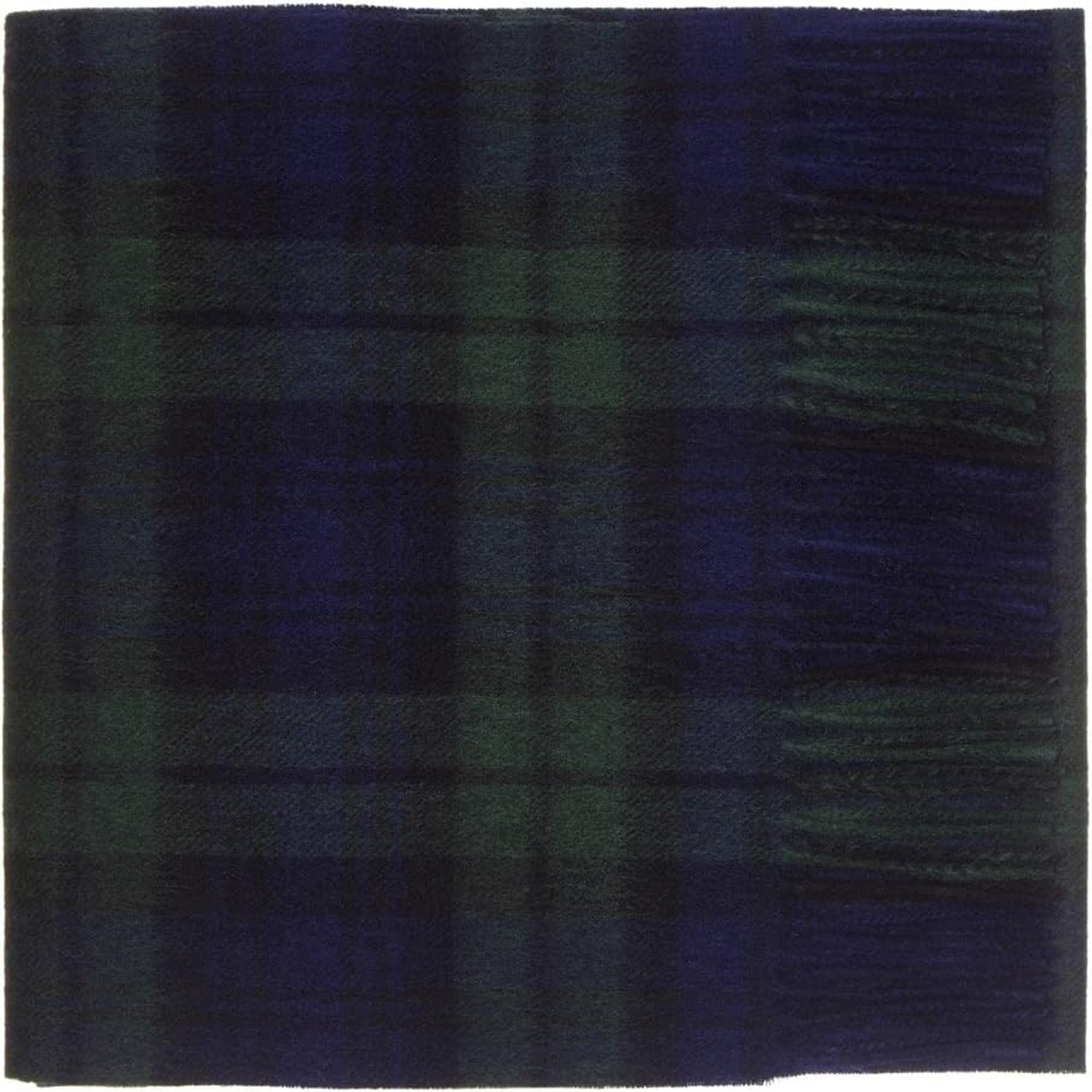
This scarf is Black Watch, a dark tartan of navy blue, deep green and black. It is one of the quietest tartans there is, which is why it is so easy to wear.
Start with the coat you wear most. That coat is the background the scarf will sit against nine times out of ten, so match to it rather than to your favourite colour in the abstract.
Solid dark coats take almost any tartan. Navy, charcoal, black and olive are all neutral enough that a bold check reads as a deliberate accent. Camel and stone coats look best with tartans that include a warm tone, something with brown, rust or deep green running through it, because a cool grey check can look washed out against beige.
If you already own a patterned coat, a herringbone or a check, keep the scarf quieter or go for a plain colourway instead. Two patterns competing at chest height rarely works.
Think about scale as well. A large, widely spaced tartan reads bolder from a distance. A tight, small-repeat check looks more traditional and sits better with tailoring. Neither is more correct, but one will suit your usual look better than the other.
Living with a wool scarf
Wool is less demanding than people expect, as long as you do not treat it like cotton.
Wash it rarely. Airing a scarf overnight on the back of a chair often does more good than a wash would. Most people get through an entire winter with one clean at the end of it.
When it does need washing, do it by hand in cool water with a detergent made for wool. Swirl it gently, rinse, then press the water out rather than wringing. Lay it flat on a towel, reshape it to its proper length, and leave it somewhere with air moving. Never on a radiator and never in a tumble dryer. Heat and agitation together are what turn wool into felt.
Store it folded, not hung. Hanging pulls a woven scarf out of shape over a summer in the wardrobe. Put it away clean, because moths are drawn to the traces of skin oil and food left on worn wool, not to the wool itself. A cedar block or a lavender sachet in the drawer is cheap insurance.
If you see small pills along the collar line after a season, that is normal friction wear, not a fault. A fabric comb or a pilling stone takes them off in a couple of minutes and the scarf looks tidy again.
A few honest limits
This is a fine woven scarf, not a chunky hand knit. It gives you warmth and good neck coverage, but it will not substitute for a proper coat in extreme conditions. Worn inside a high collar it performs best, because the collar shields it from wind and the scarf seals the gap.
Lambswool is also not cashmere. Cashmere is finer and lighter for the same warmth, and it is noticeably more expensive. Lambswool is a hardier fibre for daily outdoor wear, which is arguably the more useful trait in a scarf you put on every morning.
The short version
A 100% lambswool scarf in Black Watch tartan, with the United Kingdom given as its country of origin, over 160 cm long and 28 to 30 cm wide, unisex, hand wash only. The length gives you options in how you wear it. The lambswool gives you a soft, warm feel. The dark navy and green tartan gives you something that works against almost any plain coat.
Wear it with the coat you actually wear, wash it rarely and gently, and store it folded.