
The complete guide
Choosing Linen Napkins, A Practical Buyer's Guide
The small thing that fixes a table
Most people do not think about napkins until they are halfway through a meal with a greasy thumb and nothing to wipe it on. Then it becomes the only thing you can think about. Paper napkins solve the problem badly. They tear, they shed little flecks of white onto your trousers, and they go in the bin after ninety seconds of use. A kitchen roll torn off and folded is worse.
A set of proper cloth napkins is one of those purchases that quietly improves a lot of meals at once. It makes a Tuesday dinner feel like it was planned. It means you are not scrambling when someone drops in. And because the napkins wash at 40°C, you can use them every day.
This guide covers what to look at when you are choosing, how linen behaves, and how to look after it.
Why linen rather than cotton or polyester
Linen comes from flax. The fibres are long, strong and hollow, which gives the fabric three useful properties on a dinner table.
First, it absorbs well. Linen can take on a good amount of moisture before it feels wet, which is exactly what you want from something catching spills and damp hands. Second, it releases that moisture quickly, so it dries fast on the line and does not sit sour in a basket.
Cotton is softer out of the packet, which is why a lot of cheap napkins use it. Linen has a drier, more textured feel. Polyester table linen wipes clean but does not absorb, so it pushes liquid around rather than soaking it up, and it tends to look shiny under candlelight.
If you are weighing up pure linen napkins against a mixed-fibre option, check the label. These are 100% linen, as stated by the maker.
What stonewashing actually does
New linen, straight off the loom, is stiff. There is a reason old household manuals talk about "breaking in" a linen tablecloth. The fibre needs washing and handling before it relaxes.
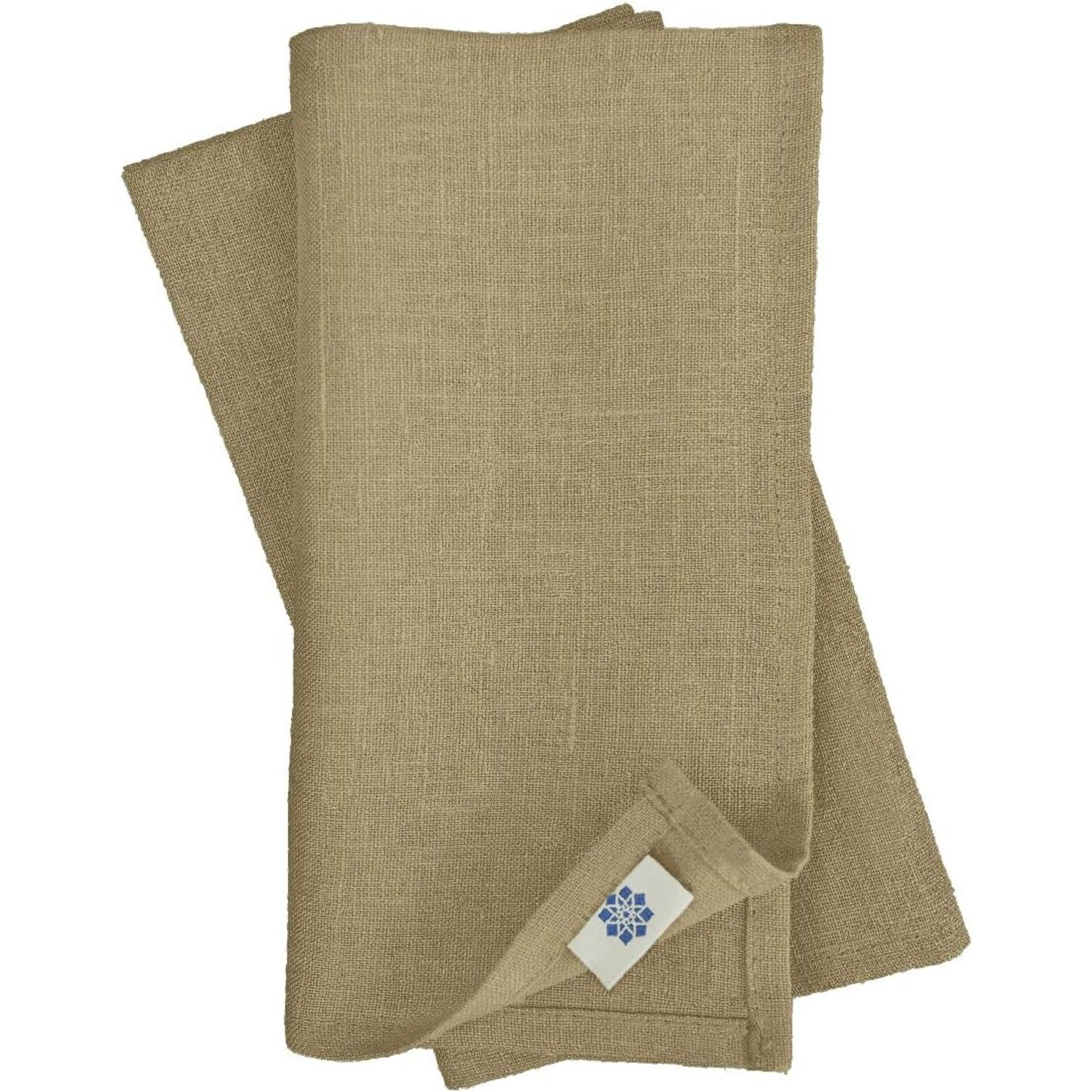
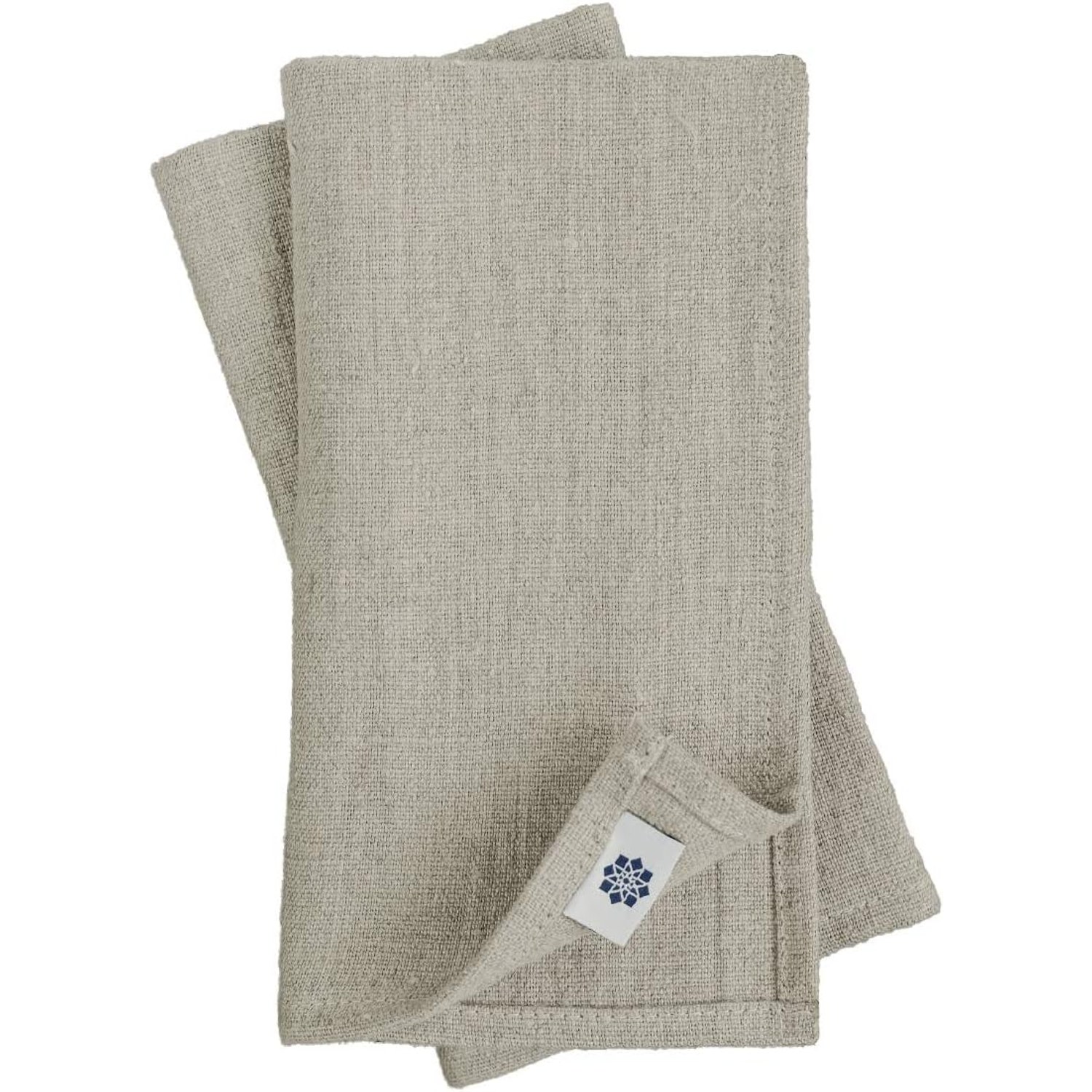
Stonewashing does that work in advance. The fabric is tumbled through a wash process that softens the fibres and relaxes the weave before the napkins are cut and sewn. You get the hand-feel of linen that has already been washed, straight away.
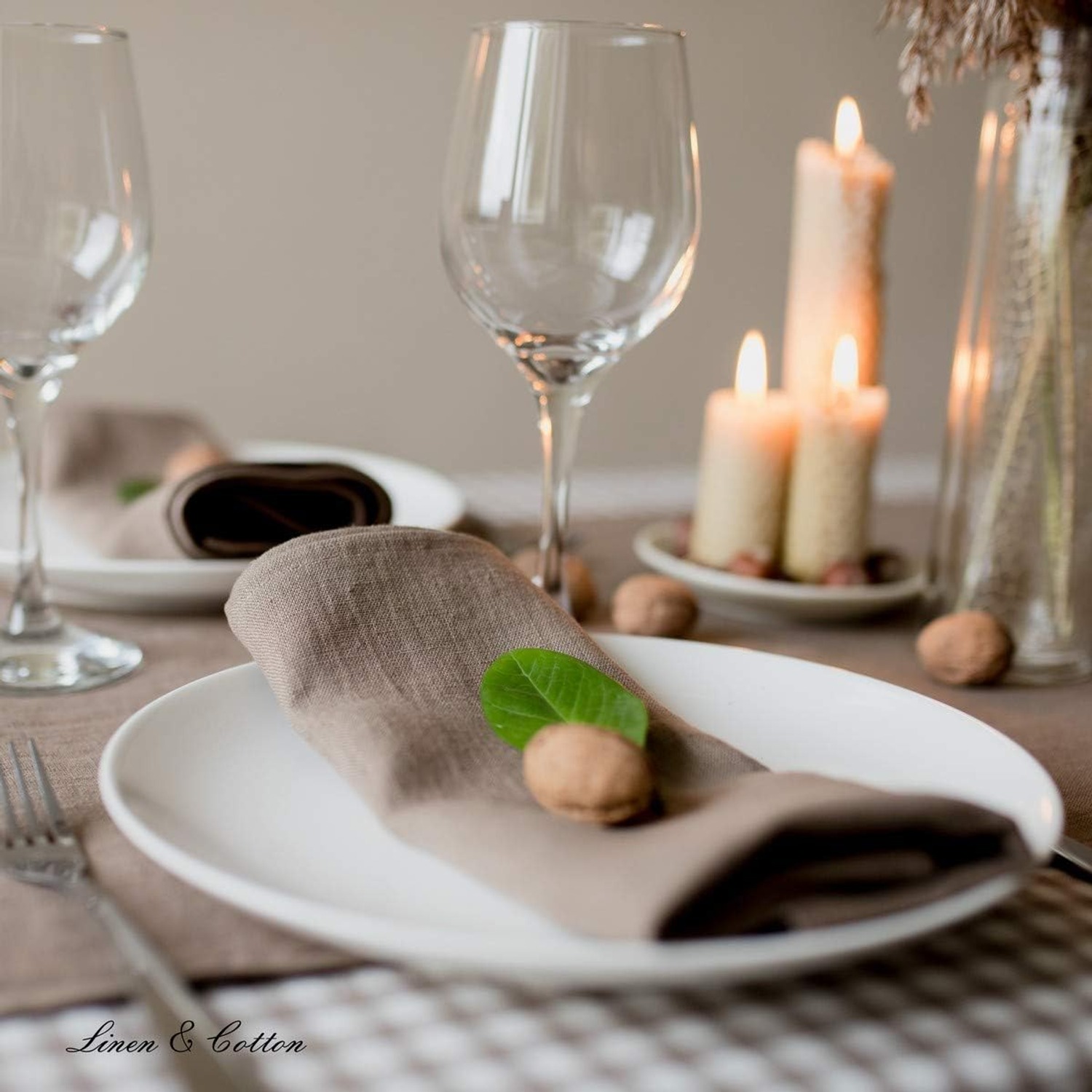
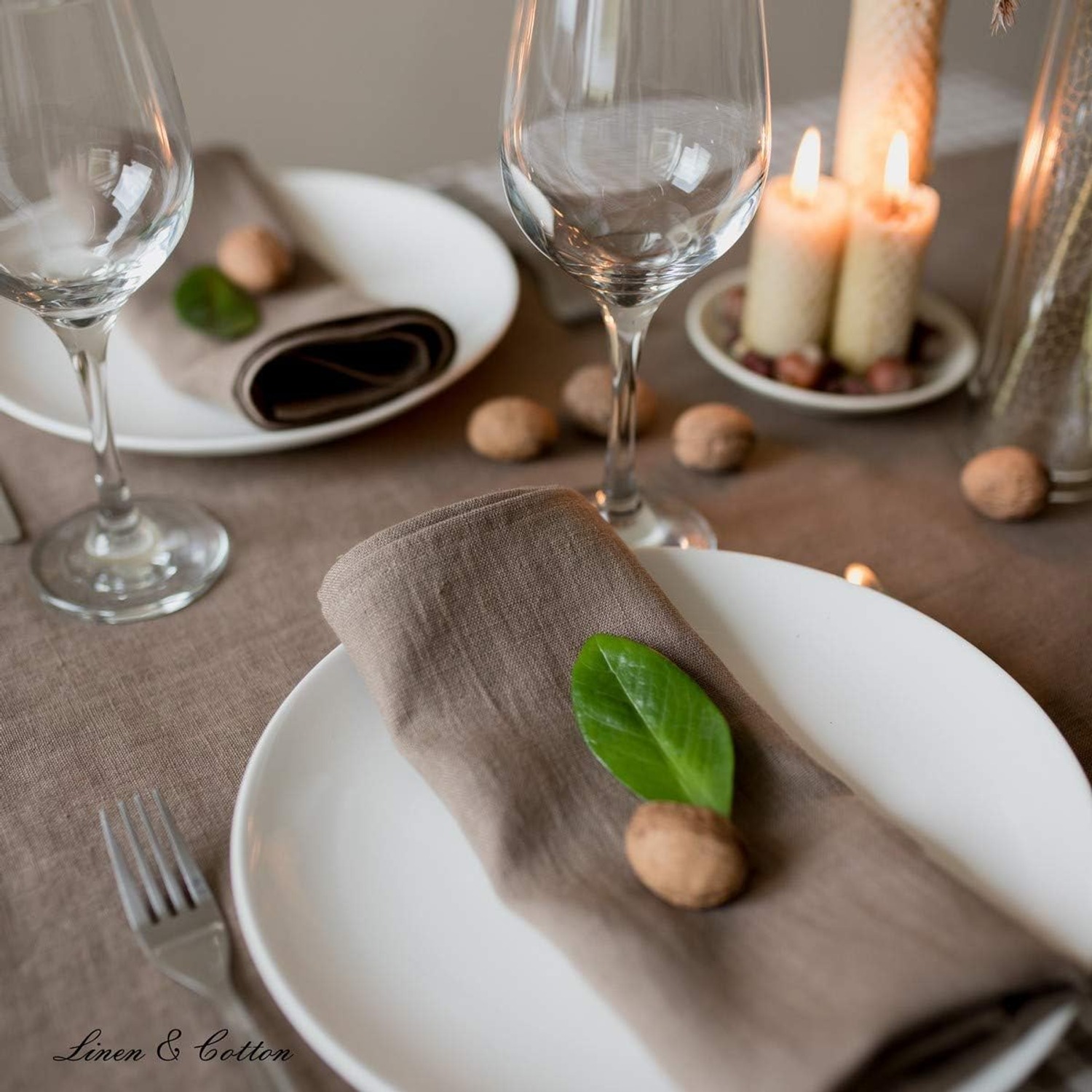
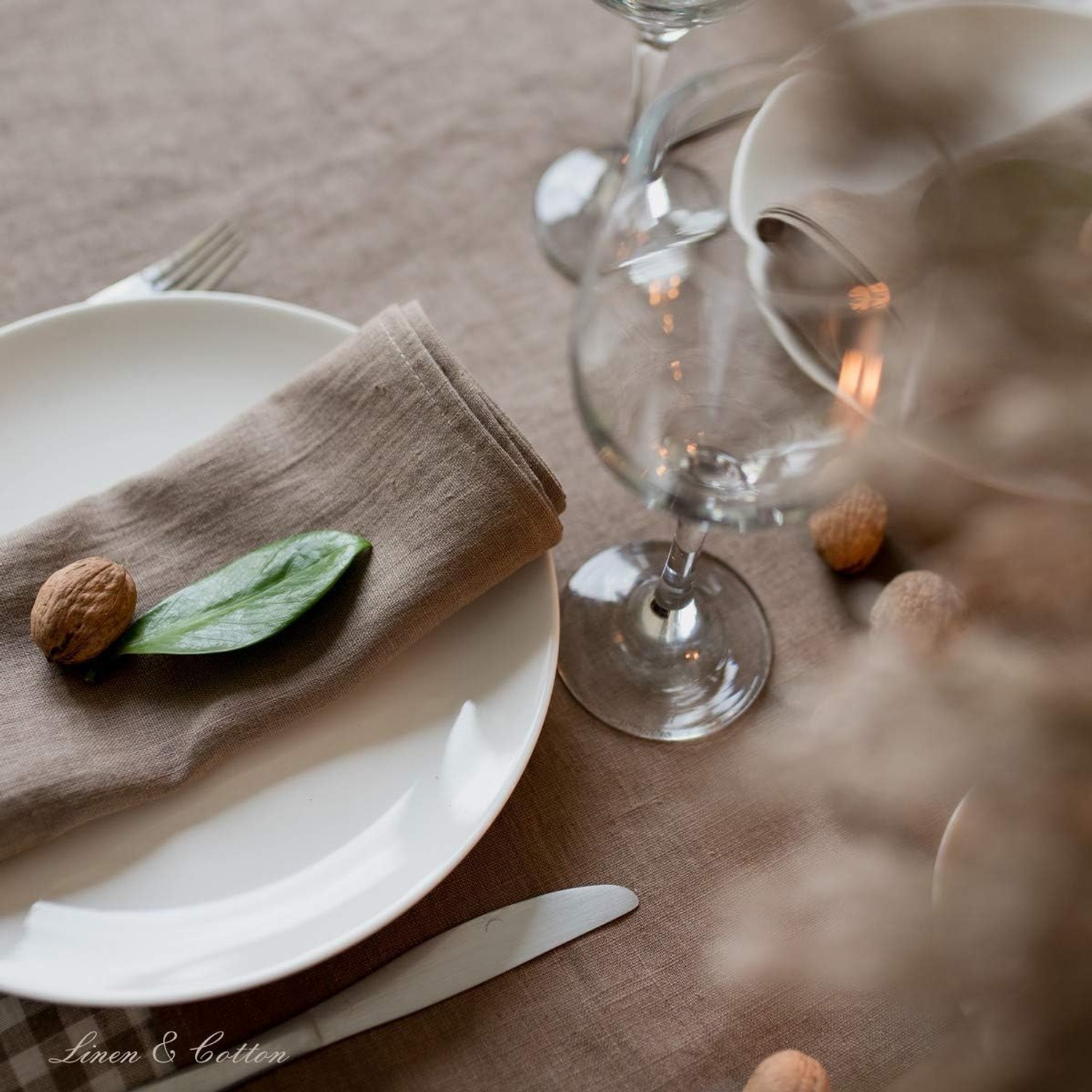
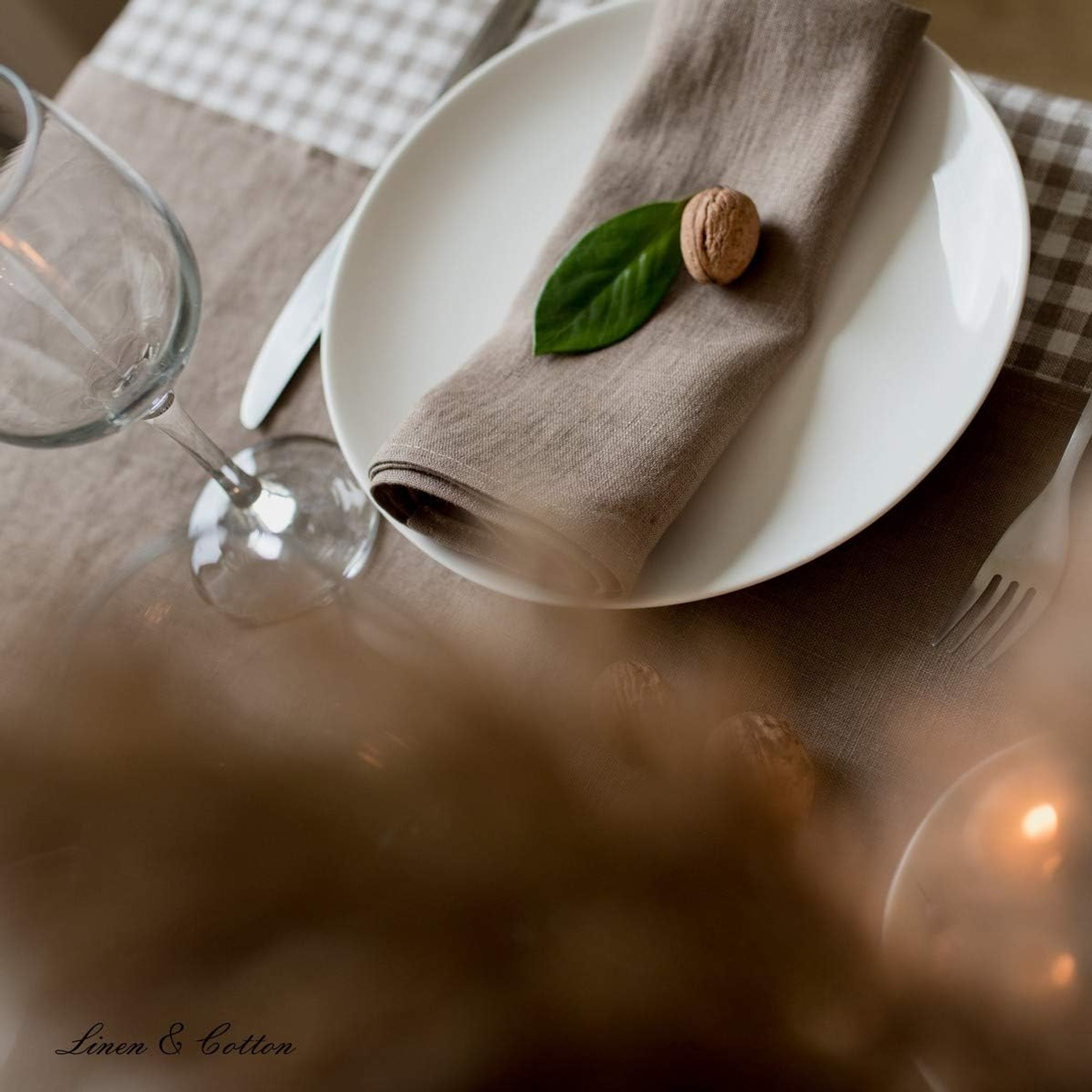
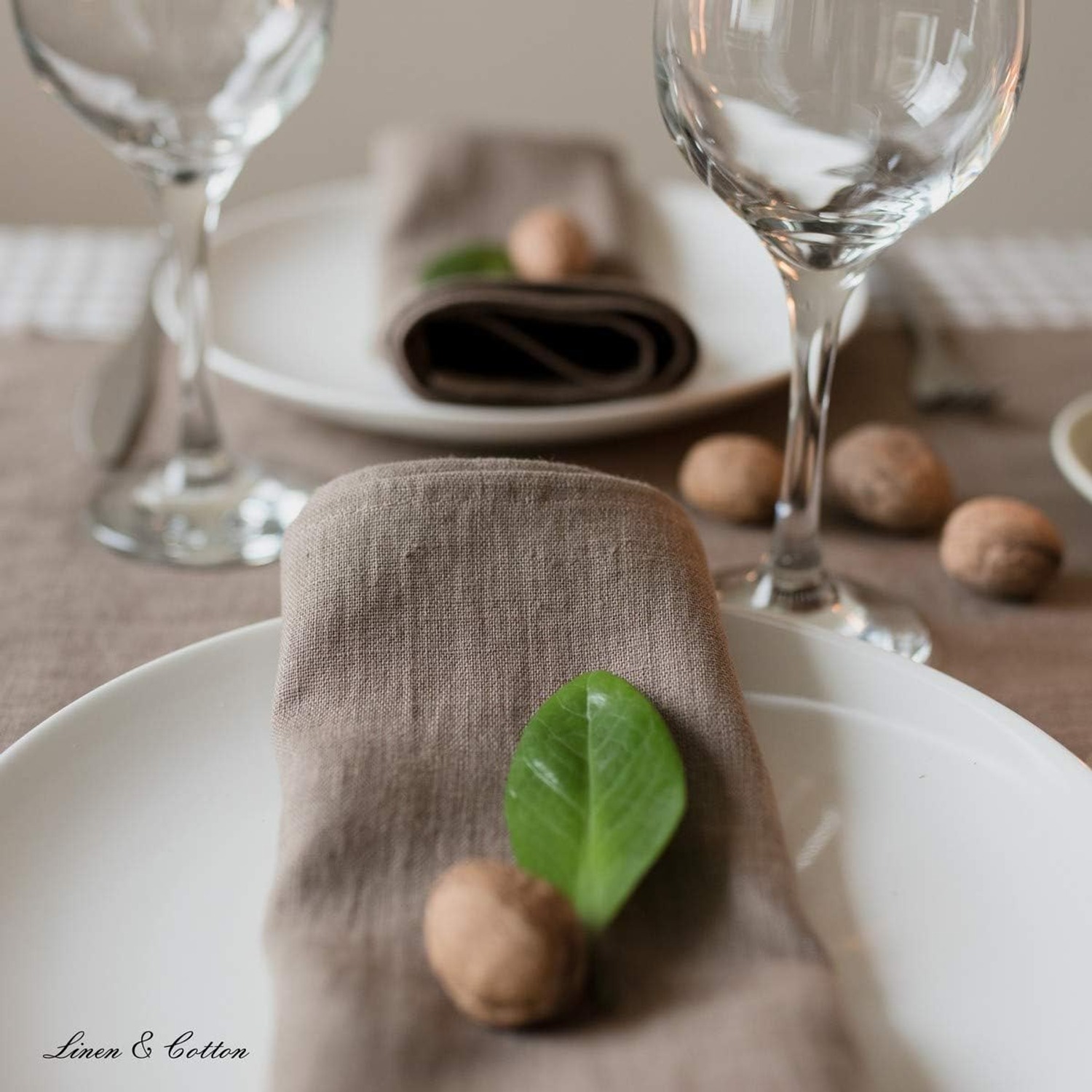
It changes the look too. Stonewashed linen has a slightly textured, matt surface rather than a flat sheen. It creases softly instead of sharply. That is why washed linen napkins have become such a common sight on relaxed tables. They look right even when they are not perfectly pressed, which removes most of the reason people leave nice napkins in a drawer.
Getting the size right
Napkin sizes range from small cocktail squares around 25 cm up to large formal napkins over 50 cm. This set sits at 45 x 45 cm, which is a sensible middle for home dining.
Here is the practical test. Unfold a napkin and lay it across your lap while sitting. A 45 cm square covers the span of your thighs and stays put under its own weight. Anything much smaller slides off the first time you lean forward, which means you spend the meal retrieving it from the floor.
The same size folds well. A simple flat rectangle under the fork looks neat. Rolled through a ring it has enough length to drape rather than stick out like a stub. For a hands-on meal, lobster, ribs, a big shared platter, you have enough cloth to actually use.
Larger formal napkins have their place at long, multi-course dinners. For everyday dinner napkins and ordinary dinner parties, this size covers it.
Why beige is the useful colour
White napkins look crisp and show every single mark. Strong colours look great until you change your plates. Beige sits between the two.
A soft beige reads as warm rather than stark. Against white crockery it stops the table looking clinical. Against dark wood or slate it lifts. With coloured glass, brass candlesticks, a linen runner or a bare table, it still works. And practically, a mid-tone hides the faint shadow of old stains that white never quite loses.
If you are building up neutral table linen piece by piece, buying in a quiet shade means every new addition matches by default. That is worth more than it sounds when you add napkin rings, a runner and a tablecloth over a few years.
How many to buy
Four napkins is the standard starting set and covers a four-seat table outright. Think about your actual pattern of use, though.
A couple who eat at the table every night will get through two napkins a day. Four gives you two days between washes, which is tight. Eight is more comfortable. A family of four should think in terms of eight to twelve so there is always a clean set while others are in the machine.
For entertaining, count your largest realistic gathering and add two. Someone always needs a spare, and a napkin doubles as a cloth for a wine drip or a hot dish handle. Two sets covers eight people, three covers twelve.
Looking after them
The maker's care instruction is a machine wash at 40°C.
Wash them before first use so the weave settles. After that, run them with similar colours on a normal cycle. Skip the fabric softener, it coats the fibres and reduces how well linen absorbs, which is the whole point of the fabric. Skip bleach too, since it weakens the fibre and can patch the colour.
Line dry, or tumble dry on a low heat. If you want a smoother result, take them out slightly damp and either smooth them flat by hand or press them with a warm iron on the linen setting. If you like the relaxed look, just fold them as they are.
Stains are the usual worry. The rule is speed and cold water. Blot rather than rub, rinse from the back of the fabric so you push the stain out rather than through, and treat before the wash rather than after. Heat sets most stains, so never put a stained napkin straight into a hot cycle or a dryer.
Store them folded in a drawer, away from damp. Linen does not need special treatment, and it does not mind being stacked.
The short version
Four square napkins, 45 x 45 cm, in 100% stonewashed linen, beige, made in the EU as stated by the maker, machine washable at 40°C.
They are soft from day one because the washing has already been done. The size is large enough to behave properly on a lap. The colour works with almost anything you already own. And they are machine washable, so they can be used every day.
Buy enough for your table plus a couple of spares, wash them before you use them, and then stop thinking about napkins.