
The complete guide
How To Choose A Merino Blend Blanket That Earns Its Keep
The blanket problem nobody talks about
Most households own too many blankets and not enough good ones. There is the thin fleece that went bobbly after two washes. The heavy wool one that nobody dares put in the machine. The novelty throw that looked lovely in the photo and feels like a tablecloth. They pile up on a chair and the same tired one gets used every night.
What actually gets used is a blanket that is big enough to matter, warm enough to notice, and simple enough to wash without a trip to the dry cleaner. That is a surprisingly short list.
A merino blend blanket 160 x 200 cm sits in that useful middle ground. It has real wool in it, so it behaves like wool when the air turns damp and cold. It has polyester and nylon in it, so you can throw it in the machine after a muddy walk and not spend the evening worrying.
What the fibre mix actually does
This blanket is 25% merino wool, 72% polyester and 3% nylon. Being honest about that ratio matters, because plenty of sellers use the word merino and leave you to assume the rest.
Here is what each part contributes.
Merino wool is a fine fibre with a natural crimp, a slight wave along each fibre. That is part of why a wool pile feels soft and lofty rather than flat.
Polyester makes up most of the fabric. It is the reason this blanket can be machine washed at home at all.
The combined result is a blanket with good recovery. Fold it tight into a bag, pull it out at the campsite, give it a shake and it opens back out instead of staying creased and flat. The maker notes it stays dimensionally stable after folding, and that springiness is where you feel it.
Why 160 x 200 cm is the size to get
Throw sizes are a mess. You will see 120 x 150 cm sold as a blanket when it is really a lap rug, and 220 x 240 cm sold as a throw when it is a bedspread.
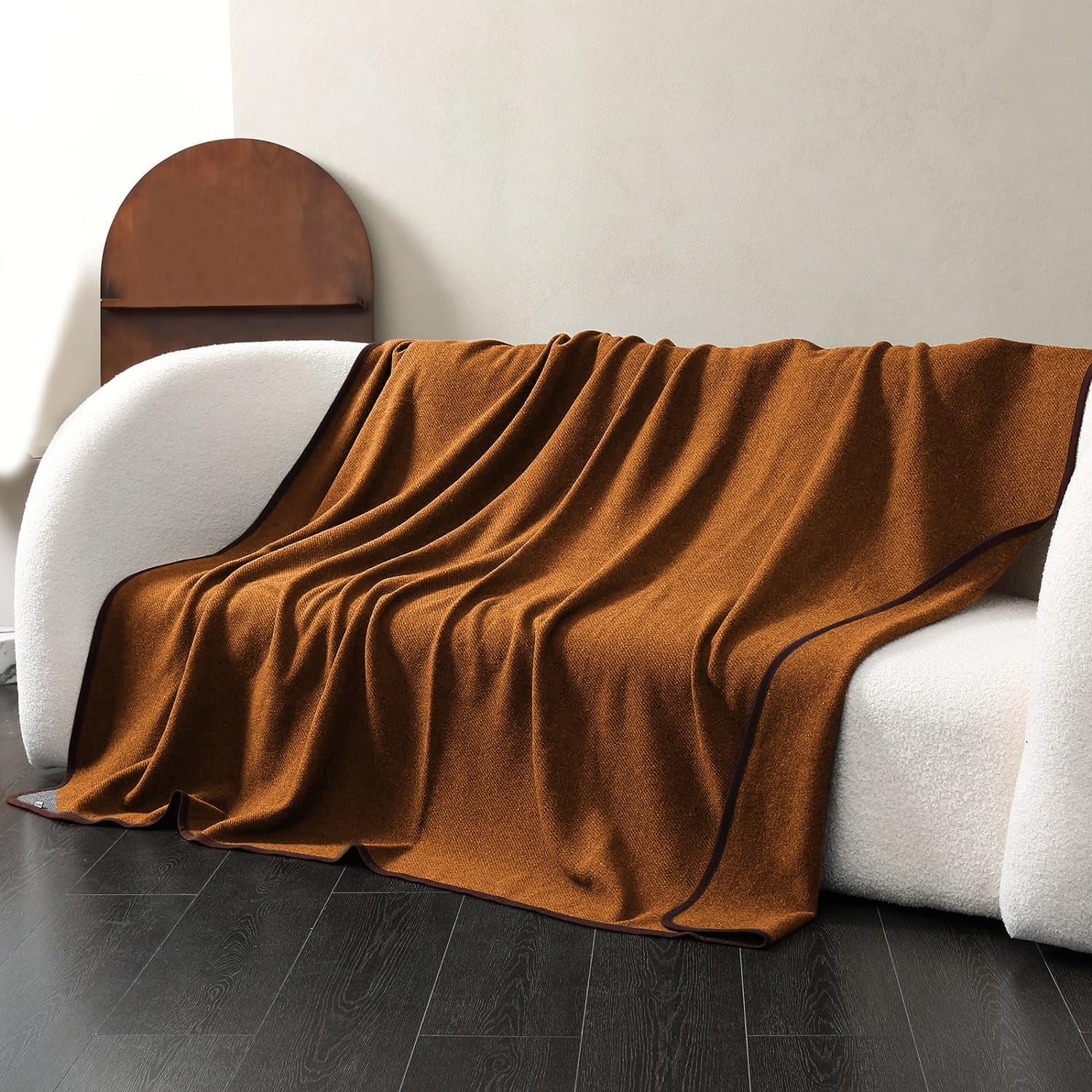
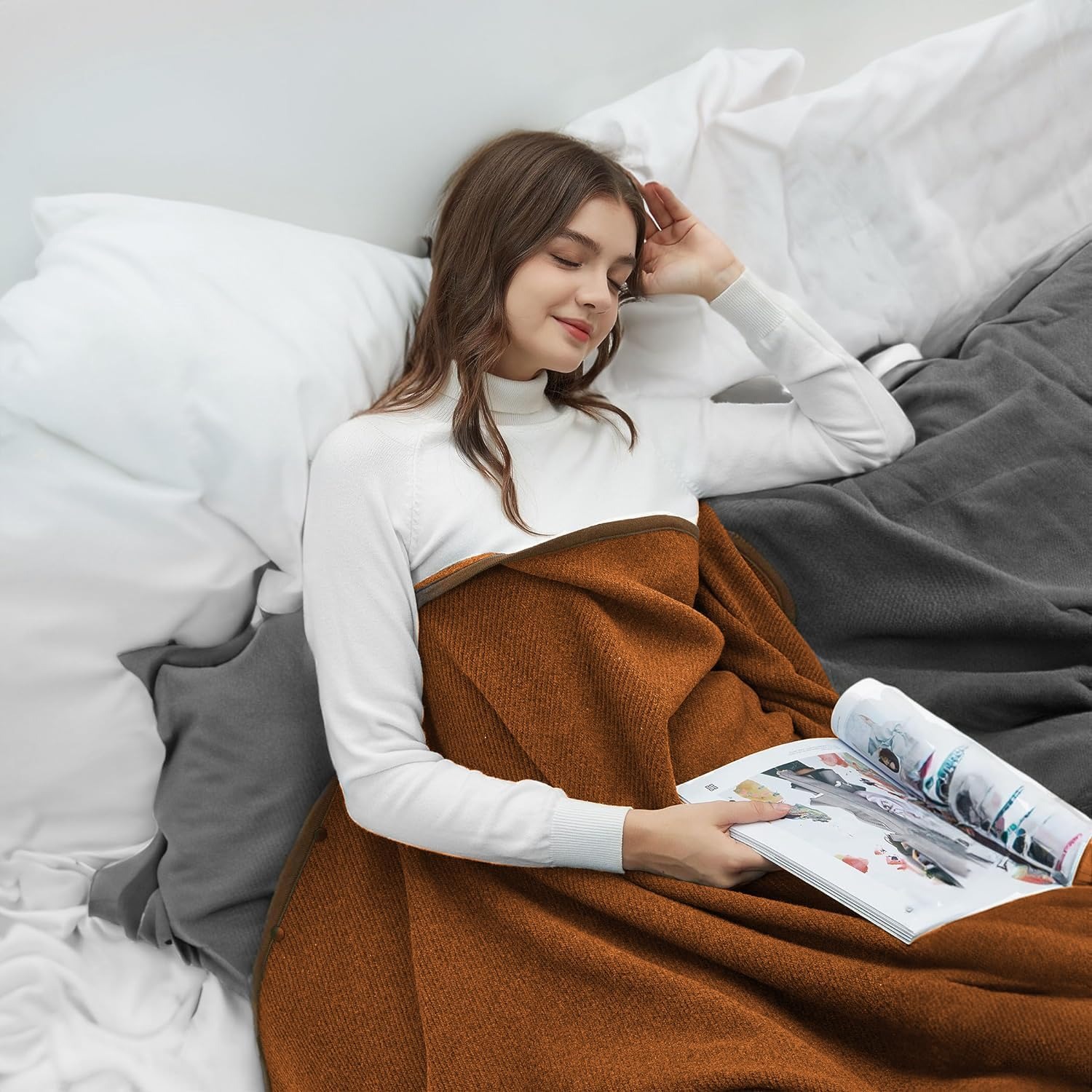
At 160 x 200 cm you get real coverage. Lying down with your feet up on a sofa, you are covered from shoulders to toes with some to spare. Two adults sitting on a bench can share it without one person tugging. Across a double bed it covers the sleeping surface and gives you a warm top layer on a cold night. Spread on grass, it is big enough for a picnic for three or four without anyone perching on the edge.
It is also still manageable. A bigger throw starts to get awkward to fold one-handed, awkward to fit in a washing machine drum, and awkward to carry. This size goes through a standard domestic machine without cramming.
If you are shopping for a large throw blanket for general household use, this is a good dimension to aim for.
Where it works best
On the sofa. This is the obvious one. A merino blend sofa blanket lives on the arm or the back of a sofa and gets grabbed every evening. The pumpkin orange reads warm against grey, navy, brown or natural linen upholstery, and it hides the inevitable marks better than a pale throw.
On the bed. Laid across the foot of a bed it adds a layer you can pull up at two in the morning without disturbing a whole duvet. In a guest room it makes the bed look finished.
In the car. Fold it in the boot and forget about it until you need it. Breakdowns, cold morning starts, a wet dog, a child who fell asleep. A good car blanket is one of those things you only appreciate the day you need one.
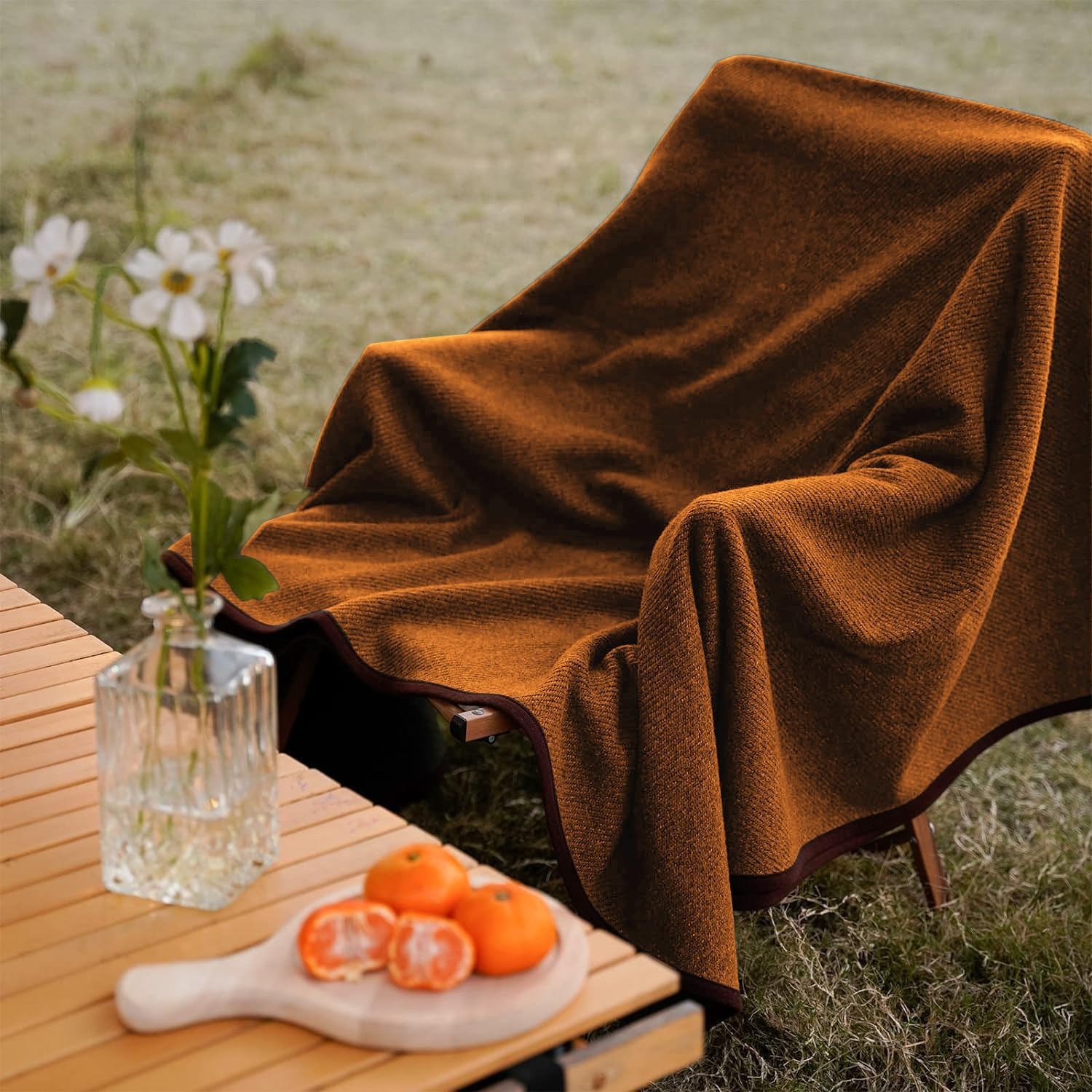
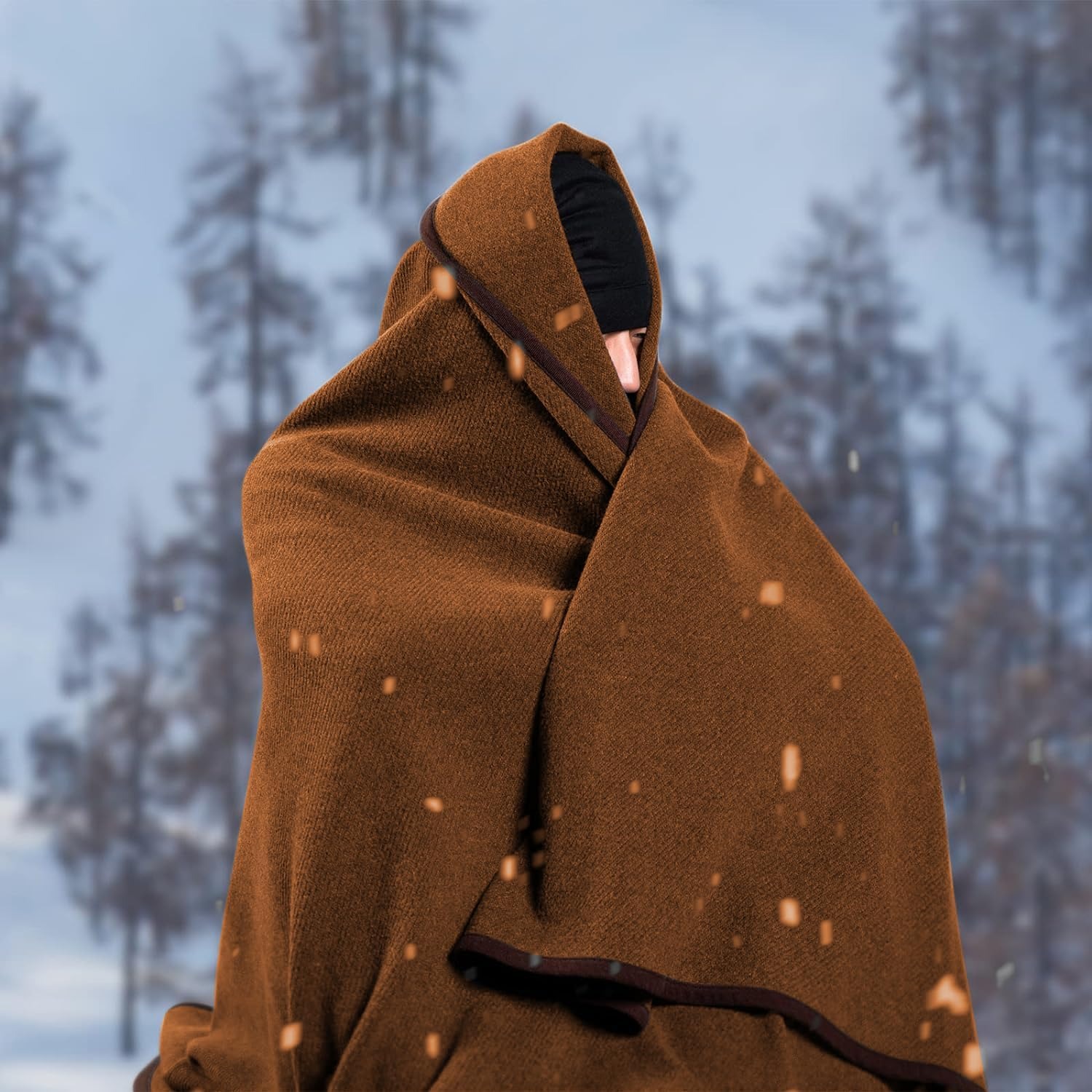
Outdoors. Camping, fishing, stargazing, bonfire nights, football matches. The wool content is what makes it work here rather than indoors-only. Damp air is where cheap synthetic blankets give up.
On picnics. It is a soft blanket rather than a waterproof-backed rug, so on wet ground lay a tarp underneath. On dry grass it makes a practical picnic blanket precisely because it washes at home afterwards.
How to choose between throw types
If you are weighing this up against the alternatives, a few honest comparisons.
Against pure wool: pure wool is warmer per gram and feels richer, but it usually needs hand washing or specialist cleaning, and it shrinks if you make a mistake. If the blanket will be used hard and washed often, a blend is the more practical answer.
Against fleece: fleece is lighter, cheaper and dries fast, but it has no wool in it at all.
Against cotton: cotton throws are lovely in summer and easy to wash, while a wool blend suits cold weather better.
Against a down-filled throw: down is warmer for its weight but useless once it gets damp and far harder to clean. Not a sensible outdoor option.
For a blanket meant to move between the house, the car and a field, the merino blend sits in the right place on every one of those trade-offs.
Looking after it
The care routine is short.
Wash it on a cool, gentle or wool cycle with a mild detergent suitable for wool blends. Skip the fabric softener, which coats the fibres and takes the loft out over time. Wash it separately the first time in case the deep orange releases a little dye.
Do not bleach it. Keep it away from the tumble dryer if you can, because heat is what shrinks wool fibres. Reshape the blanket gently while it is still damp and dry it flat or over a line, out of direct sun and away from radiators.
Between washes, air is your friend. Hang it outside for an hour on a breezy day to freshen it. Wool blends respond well to airing, which is why you will wash this less often than you would a cotton throw.
For storage over summer, make sure it is fully dry, fold it, and keep it in a breathable cotton bag rather than a sealed plastic box. Dry and airy is the rule.
A fabric comb takes care of any early surface pilling in high-friction spots. That tends to settle after the first few weeks of use.
A note on colour
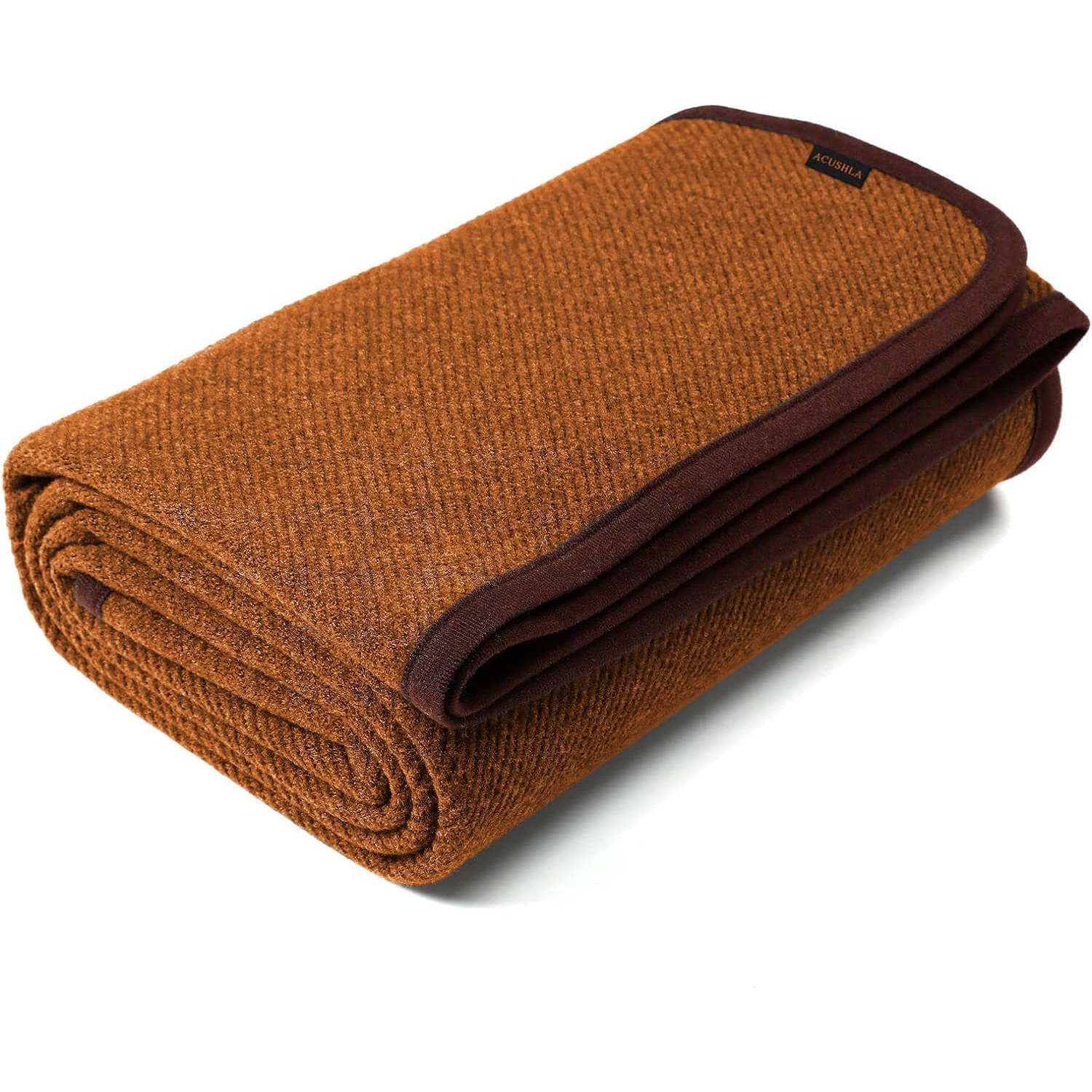
Pumpkin orange is a decision, not a default. The photographs show it framed by a dark brown bound edge. It has a rustic, autumnal warmth that suits wood, leather, stone and natural fabrics. In a room full of neutrals it is the piece that stops everything looking flat.
It is also quietly practical. Grass stains, tea rings, campfire ash and dog paws all show far less on a deep warm shade than on cream, pale grey or oatmeal. If the blanket is going to live a real life rather than sit on a shelf, that counts for a lot.
The short version
This is a 160 x 200 cm throw made from 25% merino wool, 72% polyester and 3% nylon. It is a blend, not pure merino, and the blend is what makes it machine washable. The size is big enough to cover a sofa, a bed foot or two people on a bench, and still fits a normal washing machine.
Buy it if you want one good blanket that moves between the living room, the car and outdoors without needing special treatment. Look elsewhere if you specifically want a 100% wool blanket or a waterproof-backed ground rug.
Wash it cool, dry it flat and air it often.