

The complete guide
How to Choose a Slim Leather Card Holder That Actually Suits Your Pockets
The problem with the wallet you already own
Most wallets fail slowly. You buy one with good intentions, carry four cards, and life adds the rest. A gym card. Two coffee loyalty cards with three stamps each. A receipt for something you returned. A business card from someone whose face you cannot picture. None of it arrives at once, which is why you never notice the moment your wallet stopped being flat.
Then you sit down on a train and feel it. One hip higher than the other. A hard rectangle pressing into your leg. The fix is embarrassingly simple: carry less.
A slim leather card holder enforces that. It sets a hard limit, six card slots and one centre pocket, and refuses to grow past it. That constraint is the feature. You are not being asked to be disciplined forever, you are being handed a container that cannot hold your bad habits.
What this one actually is
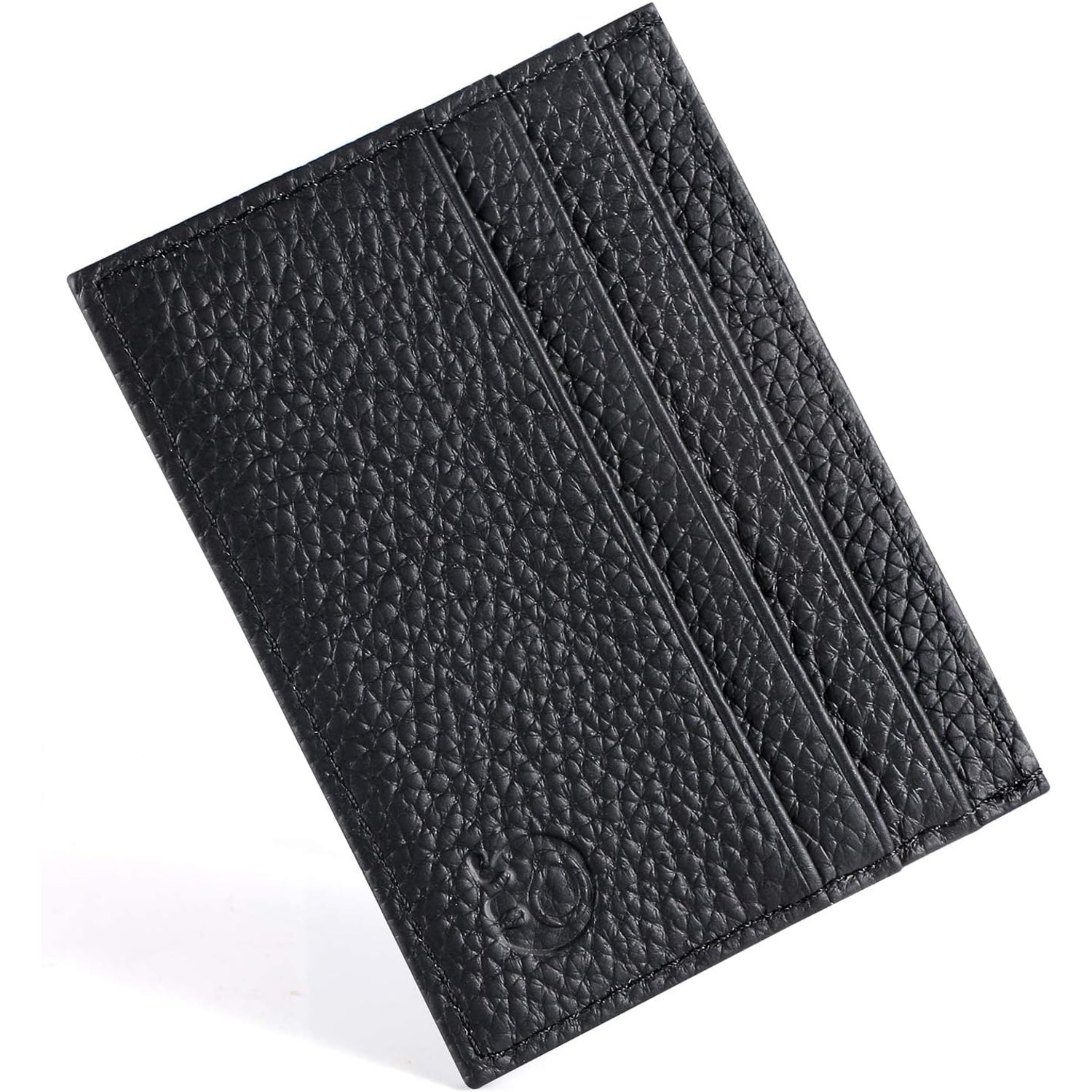
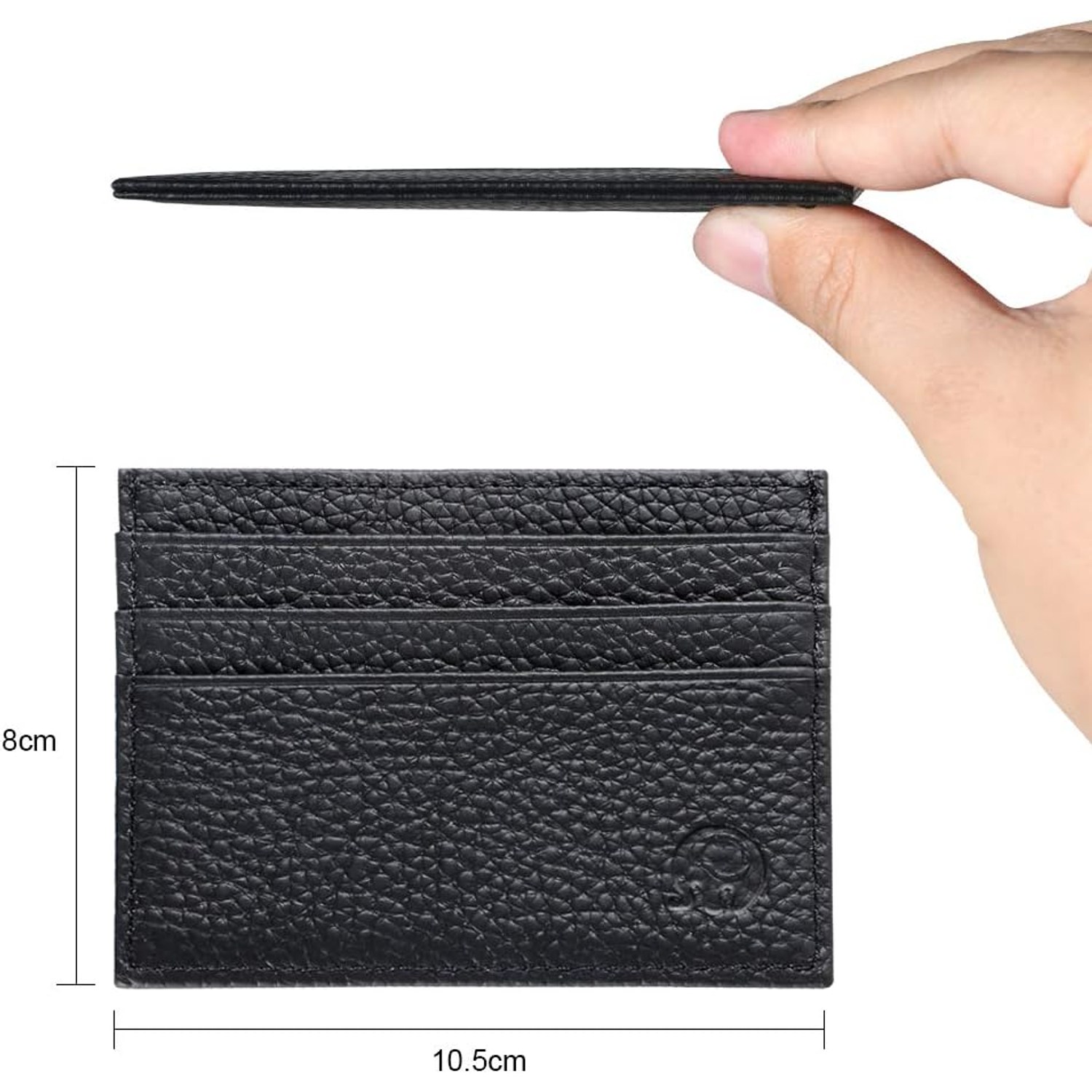
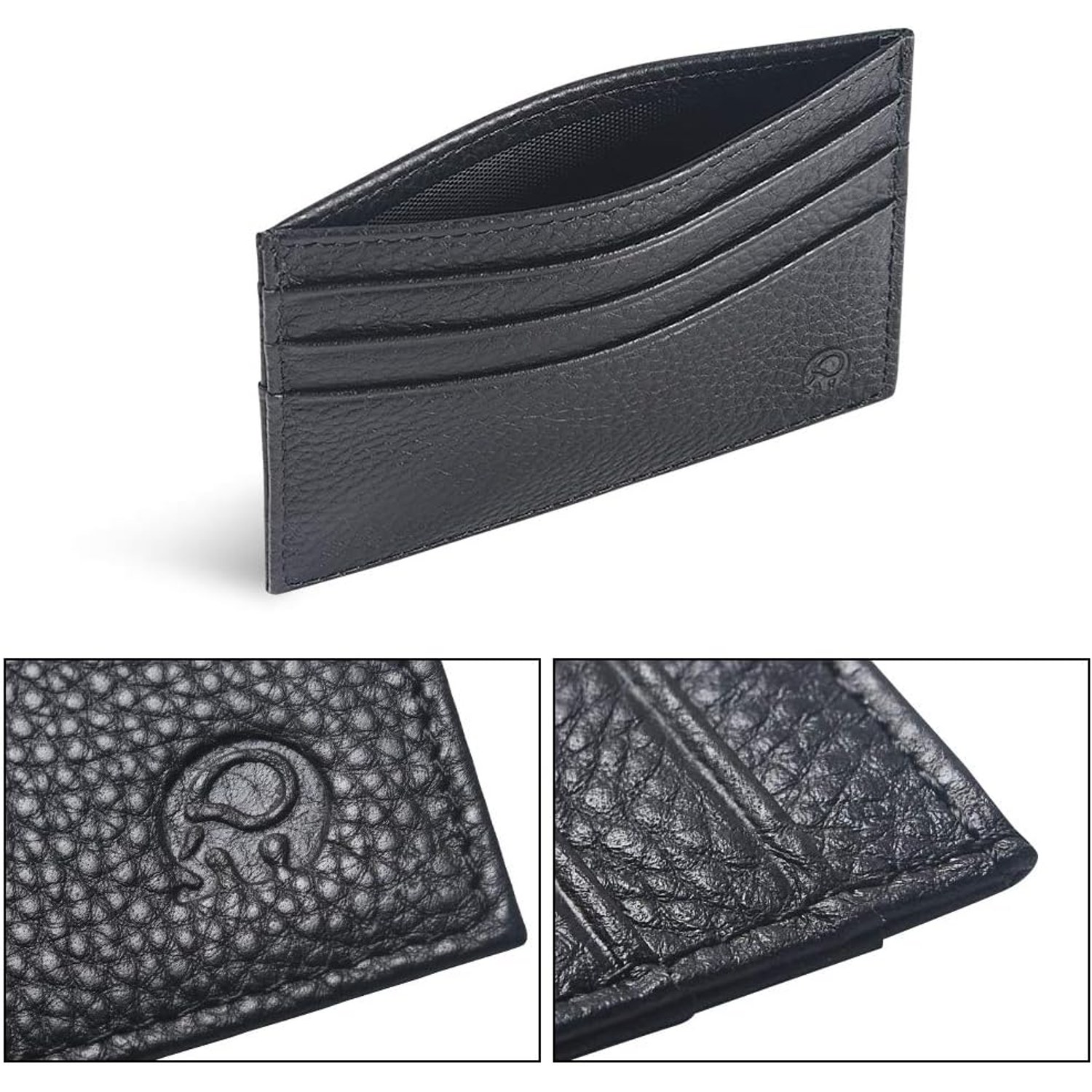
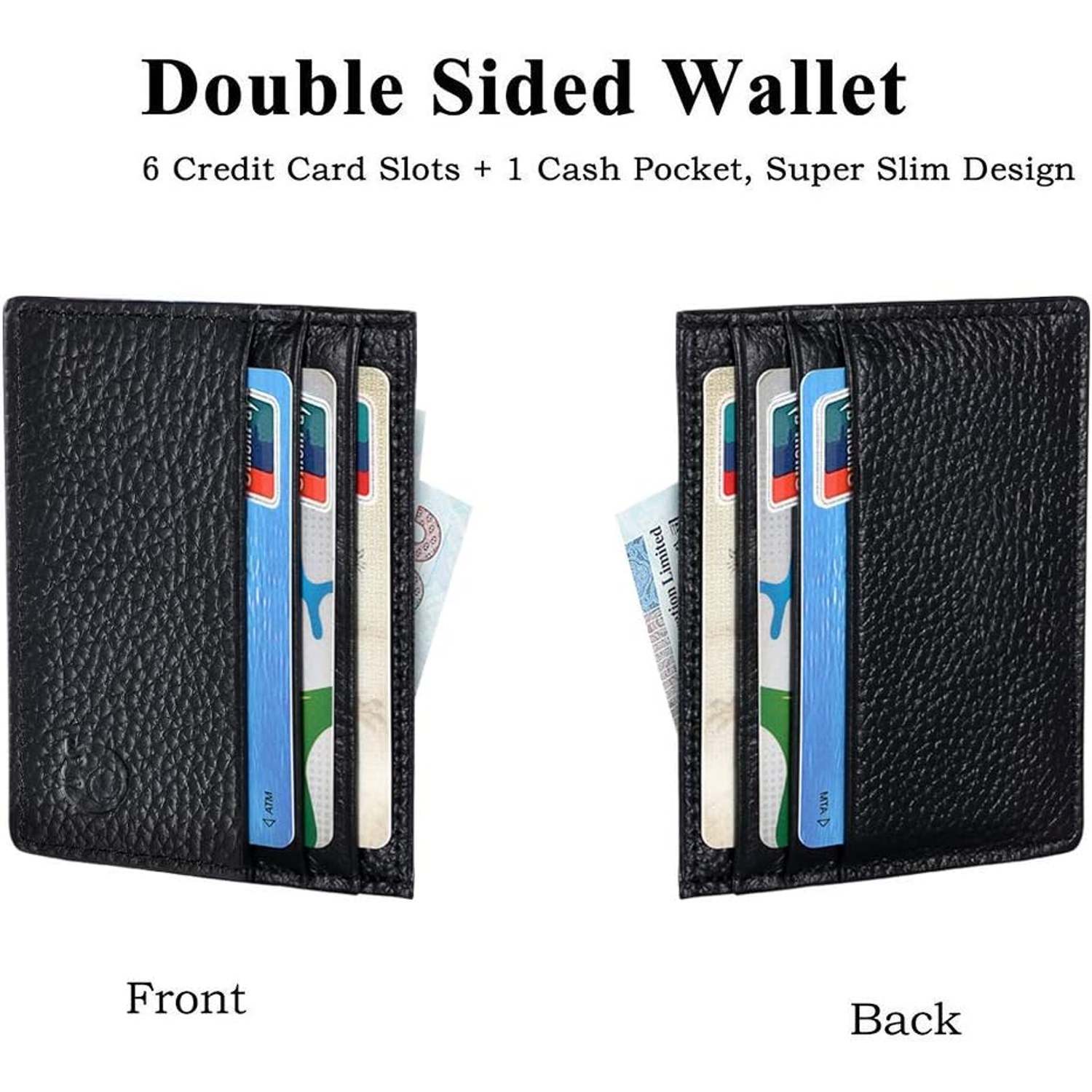
This is a genuine leather card holder, as stated by the maker, finished in plain black with a pebbled grain. It carries six cards across three slots on each side, with each slot taking one or two cards depending on how thick they are. Between the two sides sits a central compartment for folded notes, a receipt or a travel card.
It measures about 0.2 cm thick and weighs roughly 20 g. Those two numbers do most of the explaining. Two millimetres of empty thickness means the leather itself is barely contributing bulk, so whatever thickness you end up with comes almost entirely from the cards you choose to carry. Twenty grams is less than most sets of keys.
The other feature worth knowing about is double-layer RFID blocking, which the maker says is built into the construction to help prevent unauthorised scanning of contactless cards and ID.
How RFID blocking works, in plain terms
Contactless cards contain a small antenna. When a reader sends out a radio signal at the right frequency, the antenna picks up enough energy to wake the chip and send a short reply. That is why tapping works without a battery in the card.
Shielding works by putting a conductive layer between the reader and the card, which absorbs or deflects the signal so the antenna never gets enough energy to respond. A double layer simply means there is material on both faces of the holder rather than one.
Two honest caveats. First, modern bank cards already limit what a casual scan can pull, so shielding is a reasonable extra rather than the only thing standing between you and trouble. Second, shielding does not care which direction the signal comes from, so your hotel key card and office pass may also refuse to read while tucked inside. Take them out and tap. That is the whole workaround.
Treat the shielding as a quiet background layer, not something to test at every door.
Who this suits
It suits anyone whose real card use is smaller than their wallet suggests. Try this: for one week, note every card you actually pull out. The number is often smaller than you expect. If that is you, six slots plus a note pocket is genuinely enough.
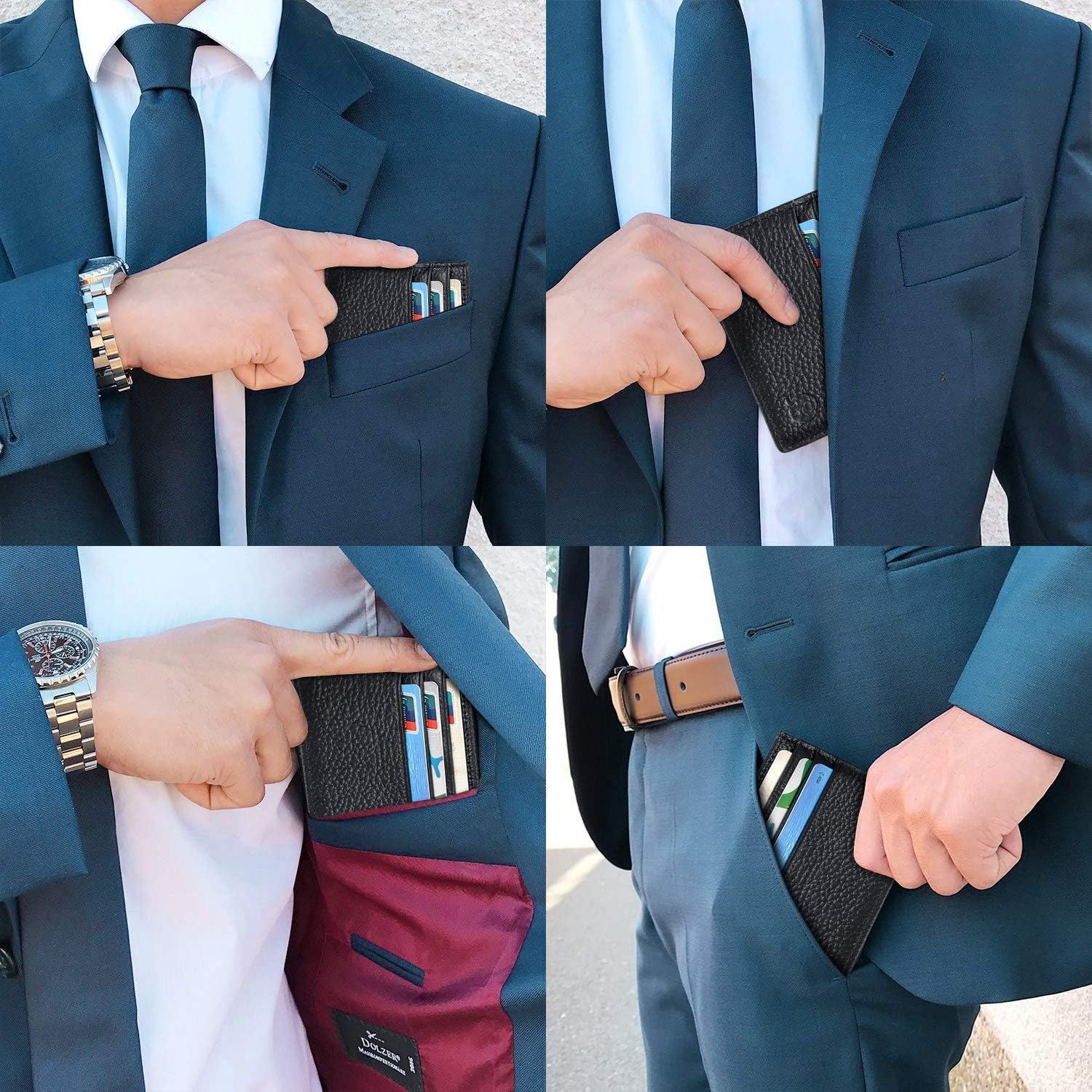
It suits people in tailored clothing. A thin card holder does not break the line of a suit jacket or create a bump in the back pocket of slim trousers.
It suits travellers. Carrying a second, smaller holder with a payment card, some local currency and a travel pass means you can leave the main wallet in the room. That makes it a handy card holder for travel.
It suits people buying a gift and guessing. Black, plain, no loud hardware. It is hard to get wrong.
Who should look elsewhere
If you carry loose change daily, this is not your wallet. The centre pocket has no zip or stud, so coins are not secured. Pair it with a small coin pouch or choose a different design.
If you carry ten or more cards and refuse to cut the list, you will overload the slots and stretch them. Three cards jammed into a slot built for one or two is how leather goes slack early.
If you need to carry folded A4 receipts, tickets, or anything larger than a bank card, a larger bifold or a travel organiser is the right tool.
Reading the numbers before you buy
Card holders are sold on words like compact and minimalist, which mean very little. Numbers mean more.
Thickness is the headline. Anything above roughly half a centimetre empty starts to feel like a small wallet rather than a card holder. At 0.2 cm, this sits firmly at the thin end.
Weight tells you about materials. Twenty grams suggests thin leather with no metal frame and no heavy lining. That is what you want in a front pocket piece.
Slot count tells you the ceiling, but slot depth decides comfort. Six slots that each take two cards is a different product from six slots that only take one. Here, the maker states one to two cards per slot, so your working capacity depends on whether your cards are embossed or flat.
Setting it up well
Where you place cards matters more than people expect. Put the card you tap most often in an outer slot, where a thumb can push it halfway out in one motion. Put rarely used cards in the inner slots. Keep your ID somewhere predictable so you are not fanning through everything at a counter.
If two cards share a slot, pair a flat card with an embossed one rather than two embossed cards. Raised numbers against raised numbers create a wedge that stresses the slot's stitching.
Fold notes once along their length, not twice, before putting them in the centre pocket. A single fold stays flatter and slides out cleanly.
Looking after leather
Leather asks for very little, which people take as permission to do nothing until something goes wrong.
Dust it with a dry cloth when you think of it. If something marks the surface, use a barely damp cloth, wipe gently, and let it air dry at room temperature. Never put it near a radiator or in direct sun to speed things up, because fast drying is what makes leather stiffen and crack.
A few times a year, rub in a small amount of leather balm made for smooth leather, then buff it off. Sparingly is the key word. Too much conditioner leaves a tacky film that picks up dirt.
Avoid washing machines, solvent cleaners and alcohol wipes entirely. And empty it occasionally. Leaving a card holder permanently stuffed to capacity moulds the leather into that shape, which looks fine until you remove a card and find a gap that never closes.
A sensible comparison
Against a standard bifold, you lose capacity and gain comfort. A filled bifold is thicker. You will carry fewer cards and less cash, and you will stop noticing your wallet.
Against a metal cardholder, you gain quiet and flexibility. Metal holders are rigid, they can scratch screens, and they sometimes rattle. Leather conforms slightly to the cards inside and makes no noise.
Against a phone case with card slots, you gain separation. Keeping cards in your phone case means losing both at once. You can run the two together, with payment cards in the holder and a single backup card in the case.
The short version
This is a genuine leather card holder, black, about 0.2 cm thick, around 20 g, with six card slots and one centre pocket, and double-layer RFID blocking built in.
Buy it if your real card use is six or fewer, you want a flat front pocket, and you like the idea of a container that quietly stops you hoarding. Skip it if you need coin storage, carry a thick stack, or want somewhere to keep paperwork.
Count the cards you used this week. If the number is small, this is almost certainly enough wallet.