
The complete guide
The Buyer's Guide to Leather Valet Trays
The small mess that never quite goes away
Everyone has one. A corner of the desk, the end of the kitchen worktop, the top of the chest of drawers near the door. It starts with a set of keys. Then loose change from a coat pocket, a watch taken off before a shower, a spare SIM card you meant to put somewhere safe, two receipts and a guitar pick.
Nothing in that pile is actually lost. It is just that the pile has no edges, so it spreads. And because it spreads, you stop seeing it as a pile and start seeing it as the surface. By the time you need the car key, you are patting the area with one hand while holding a coffee in the other.
A tray solves this in a way that is almost embarrassingly simple. It draws a boundary. Everything inside the boundary is findable, everything outside it looks like mess and gets dealt with. That is the whole mechanism. You are not buying storage so much as buying a rule, and a leather catch-all tray is just the most pleasant version of that rule to live with.
Why leather, and not ceramic or wood
You have options here, and they behave differently.
Ceramic dishes look good in a photograph. In daily use they chip at the rim, and they make a sharp clatter every time keys hit them, which is exactly the noise you do not want at 6am when someone else is asleep. Wood is warmer and quieter, but it can scuff, and a hard-edged wooden tray will scratch a glass tabletop if you slide it. Metal is durable and the loudest of the lot.
Leather sits in a good middle. It absorbs the sound of dropped keys, it does not chip, and it is soft against whatever it is resting on. The sides give slightly under a thumb, then spring back. And handling tends to darken and polish the surface in a way that reads as character.
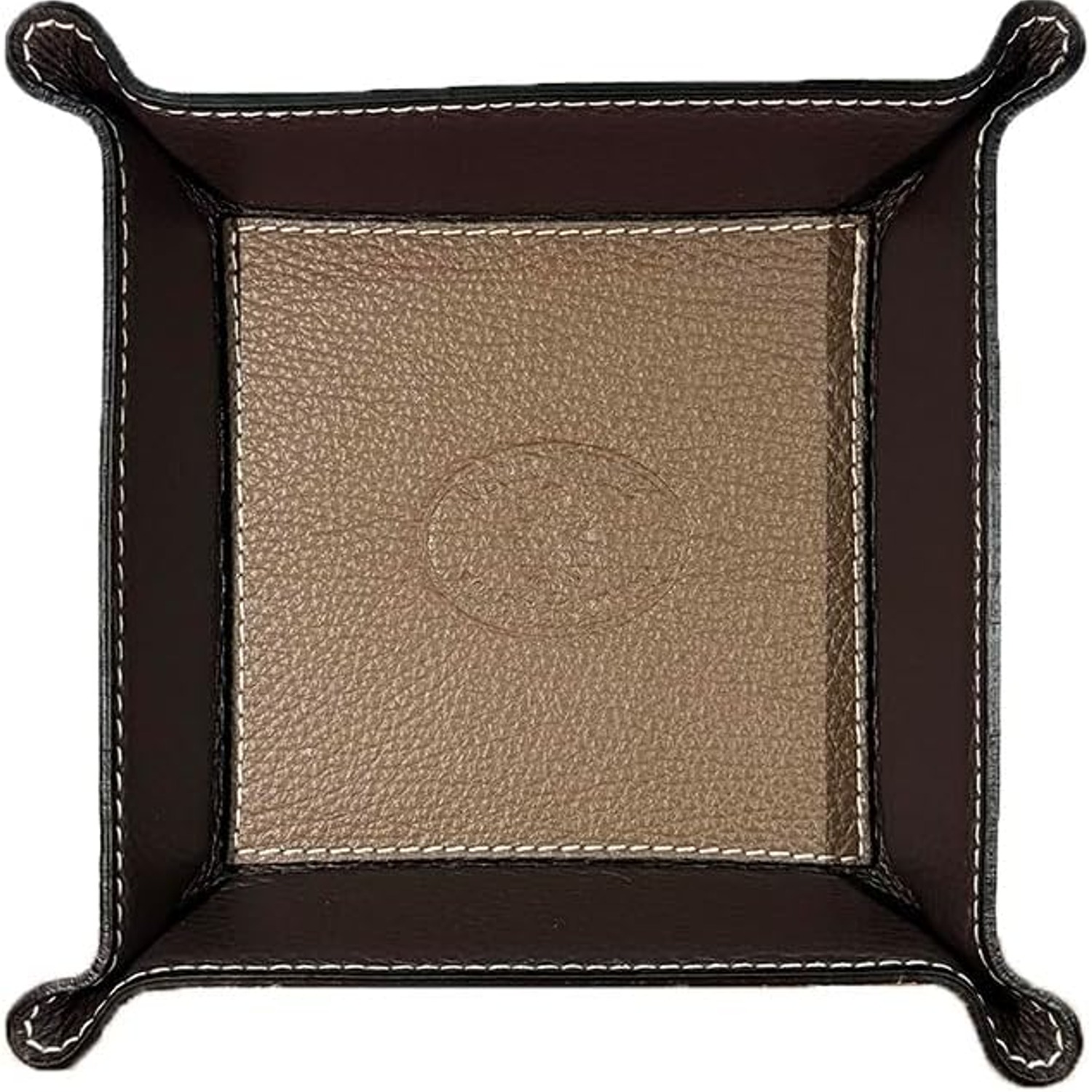
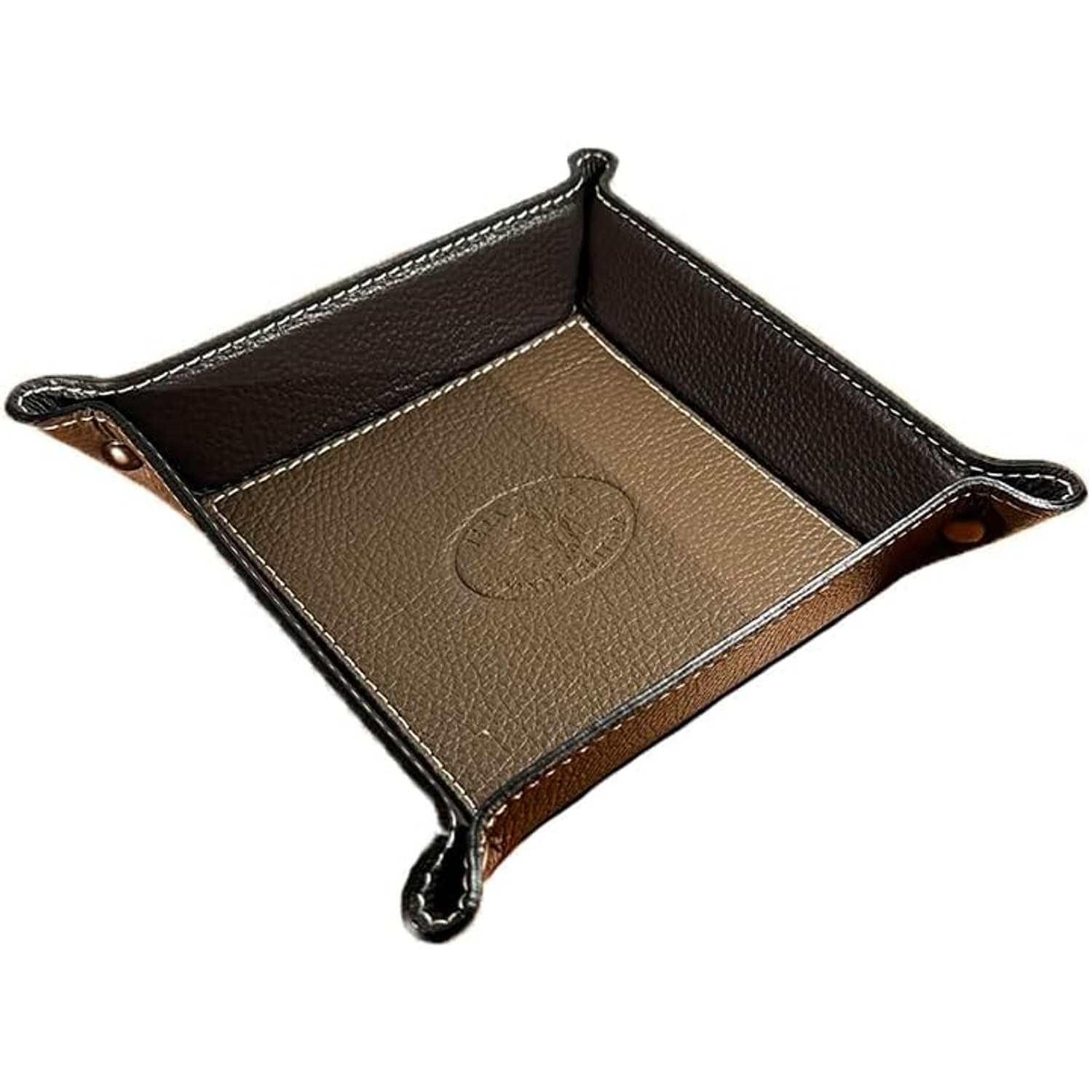
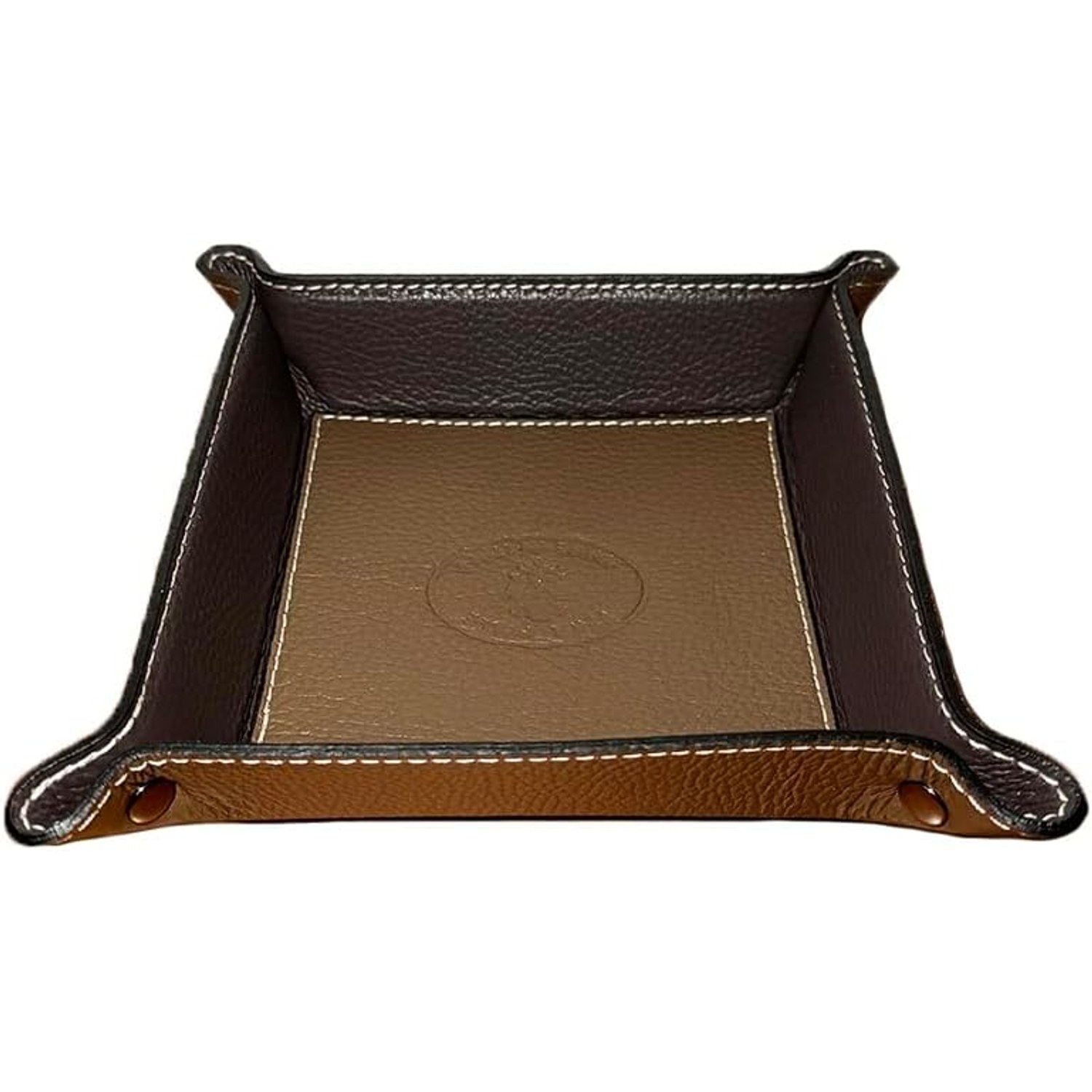
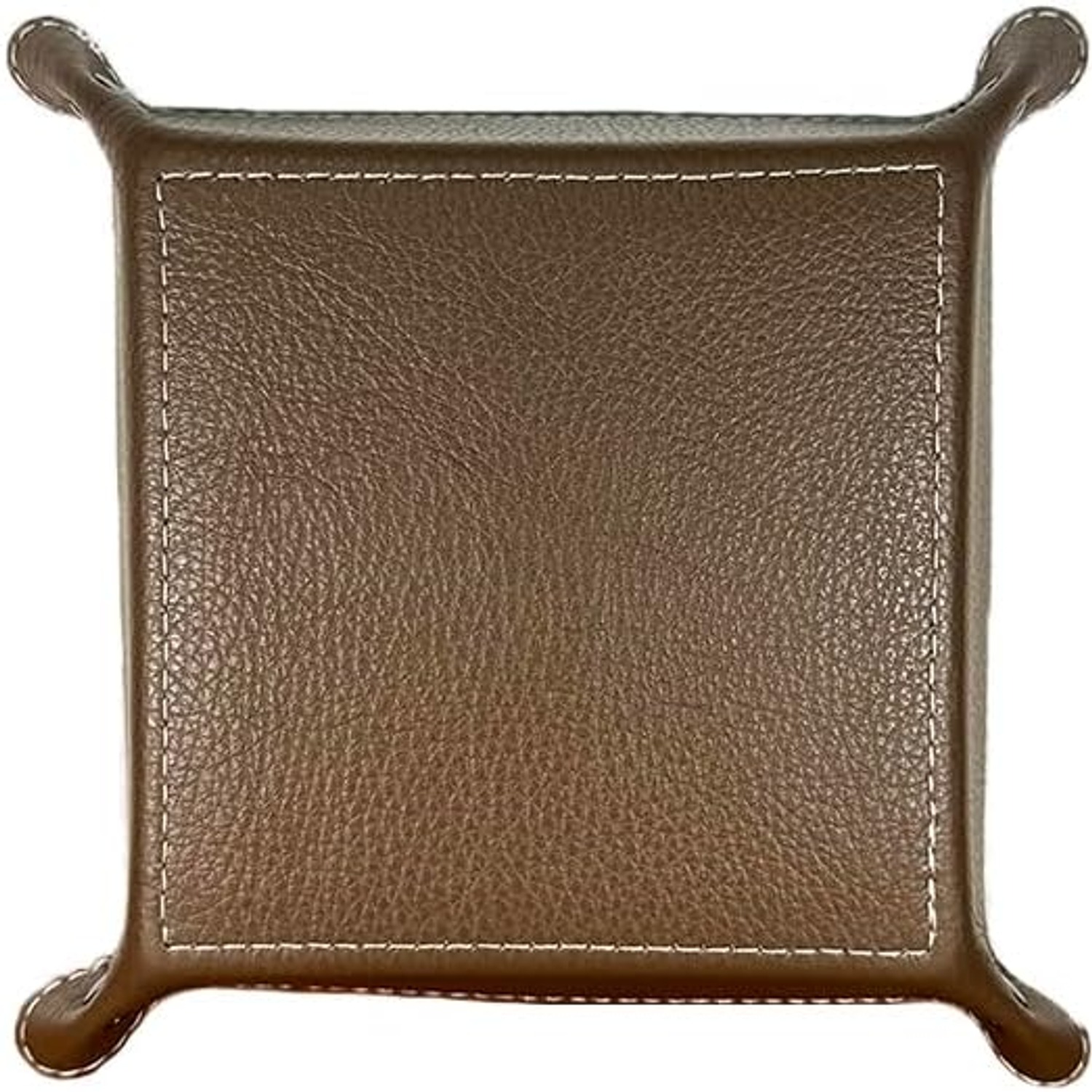
This particular tray is made from genuine leather, and the maker states it is made in Italy. It comes in taupe, which is a deliberately quiet choice. Taupe is one of those colours that disappears into almost any room scheme, warm or cool, dark wood or pale paint. If you are buying for someone else and you do not know their decor, neutral is the safe bet every time.
Getting the size right
The maker gives two sets of measurements. The inner well is 13 cm by 13 cm and 4 cm deep. The outside is 19 cm by 19 cm and 4.5 cm high.
It is worth pausing on what that actually means in practice, because "small tray" covers a huge range. A 13 cm square well is a little larger than a drinks coaster. You can lay a full keyring flat in it, drop in a handful of coins and add a watch. On the surface, allow for the full 19 cm, which is about the width of a side plate.
What it will not do is swallow a wallet, a passport, sunglasses and a phone all at once. If you need that, you are looking for a larger valet tray, probably 20 cm or more. The 13 cm format is for the essential handful, which is arguably the right scope anyway. A tray that holds everything just becomes the pile again, only with walls.
The 4 cm depth matters more than people expect. Shallow trays, the ones with a 2 cm lip, let rings and coins skate over the edge when you set something down carelessly. At 4 cm, things stay in.
Where to put it
There are four spots that work reliably, and it is worth choosing before you buy rather than after.
By the front door. This is the classic use and probably the highest-value one, because the thing you lose most often is house keys. A leather key tray on a hall console or shelf means the keys go down in the same place every time you come in. That habit forms quickly.
On the bedside table. Here it collects a watch, a wedding ring, earrings, maybe a hair tie. The advantage over a dish is that leather is silent when you put things down in the dark. If you share a bed with a light sleeper, that is not a trivial detail.
On the desk. As a desk tidy it handles paper clips, a USB stick, a stamp, your phone when it is charging. It needs about 19 cm of clear desk and keeps the small hardware from migrating under the monitor stand.
On a dressing table. Rings and studs are the items most likely to vanish down the back of furniture. A tray with firm sides catches them.
What to look for when you compare
If you are weighing this against other options, here are the things that actually separate good from mediocre.
Check whether the material is genuine leather or bonded leather. Bonded leather is leather dust bound with adhesive onto a backing, and it can crack and flake. The maker describes this tray as genuine leather.
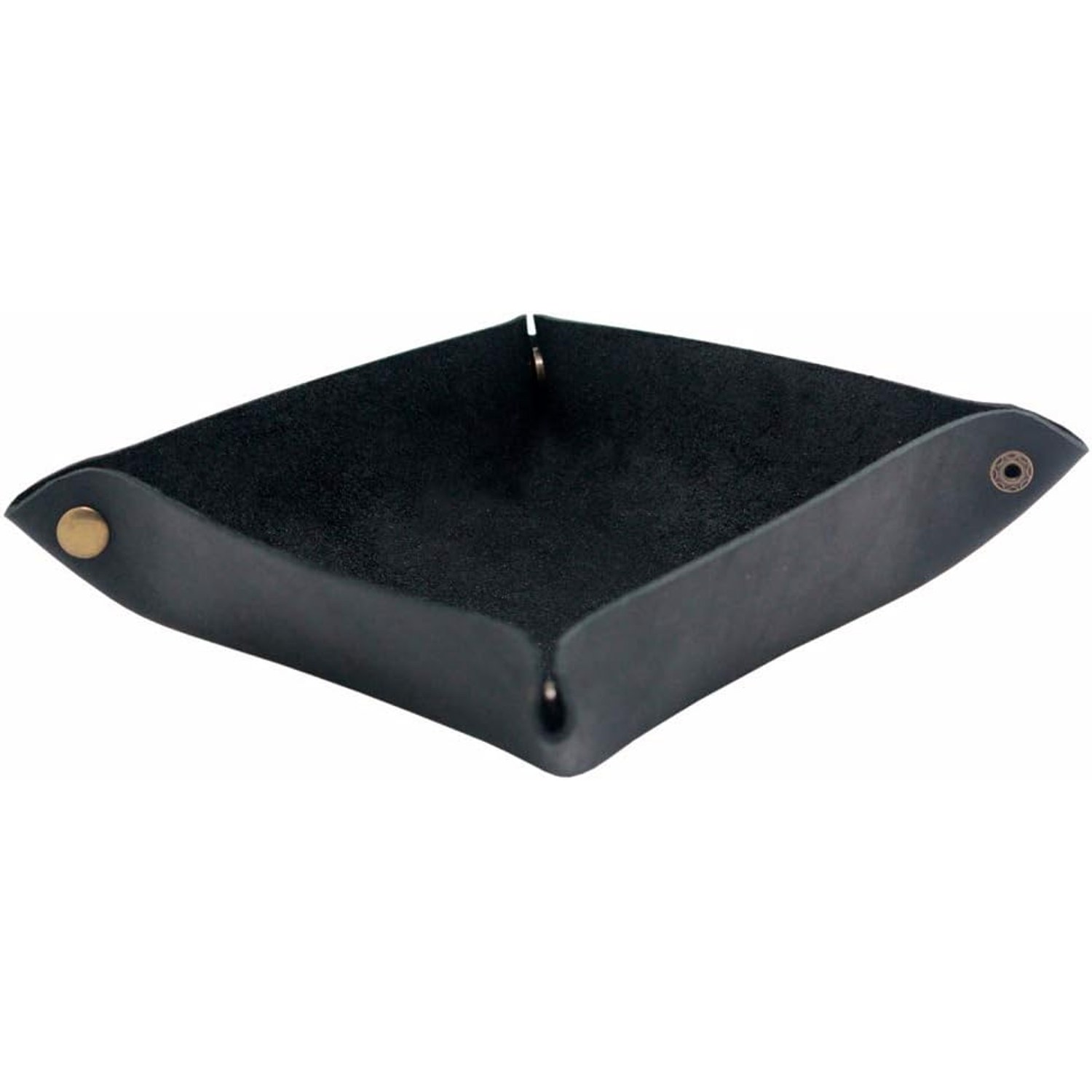
Look at how the corners are made, because that is where a tray takes the most strain. As pictured, this one has a metal press stud at each corner, which draws the sides up into shape.
Consider whether the sides keep their shape or collapse. You want walls that stand on their own when the tray is empty.
Think about colour realistically. Black looks sharp but shows dust and light scuffs. Very pale cream marks easily from hand oils. Mid-tones like taupe are the forgiving middle ground.
Finally, think about whether one is enough. One tray often leads to a second, because once the door keys have a home, the desk clutter starts to look untidy by comparison.
Looking after it
Leather care is mostly about restraint. The instinct is to clean it thoroughly, and that is usually what damages it.
Dust it with a soft dry cloth. That covers ninety per cent of what it will ever need. If something marks the surface, use a cloth that is barely damp, work gently, and then let the tray dry on its own at room temperature. Do not put it near a radiator and do not use a hairdryer, because heat stiffens leather and can shrink it.
Keep household cleaners, alcohol wipes and solvents well away. They strip the finish and leave a dull patch that will not come back.
Once or twice a year, a small amount of neutral leather conditioner keeps the hide supple. Test it on the underside first, apply thinly, and buff off the excess. Less is genuinely more here.
Avoid leaving it in strong direct sunlight day after day, since that can lighten the colour unevenly. And if you spill something, blot rather than rub.
Done properly, none of this takes more than a minute a month.
Giving it as a present
This is one of the more dependable gifts in the leather goods category, and the reason is that it has no sizing, no strong style statement and no requirement that the recipient already owns something specific.
It works for someone moving into a first flat, for a new job, for a father who claims he does not want anything, and for anyone who has mentioned losing their keys more than twice. The taupe finish and plain square shape keep it unisex, so you are not forced to guess.
If you want to make more of it, pair it with something small that lives in it. A keyring, a pair of cufflinks, a set of collar stays. The tray then arrives with a purpose already demonstrated rather than as an empty object.
The short version
A square tray in genuine Italian leather, taupe, handmade according to the maker, with a 13 x 13 cm well that is 4 cm deep and an outside size of 19 x 19 x 4.5 cm.
Buy it if you have a surface that collects keys and coins and you are tired of hunting. Pick where it is going before it arrives, whether that is the hall, the desk or the bedside table, and then put the same things in it every day for a week. After that you will stop thinking about it, which is the sign it is working.
Skip it if you need something big enough for a wallet, sunglasses and a phone together. For the essential handful, this size is the sweet spot.