
The complete guide
Choosing A Marble Ruffle Bowl, A Practical Buyer's Guide
The problem with a bare surface
Most rooms have one surface that never quite looks finished. A coffee table with a remote on it. A hall console with a pile of post. A kitchen island that is spotless but somehow flat. You do not need more furniture, and you probably do not want more clutter. What that surface usually needs is one object with enough weight and texture to anchor it.
That is the job a carved marble bowl does well. It is small, it is quiet, and it gives the eye somewhere to land. Fill it or leave it empty and it still reads as deliberate.
What this bowl actually is
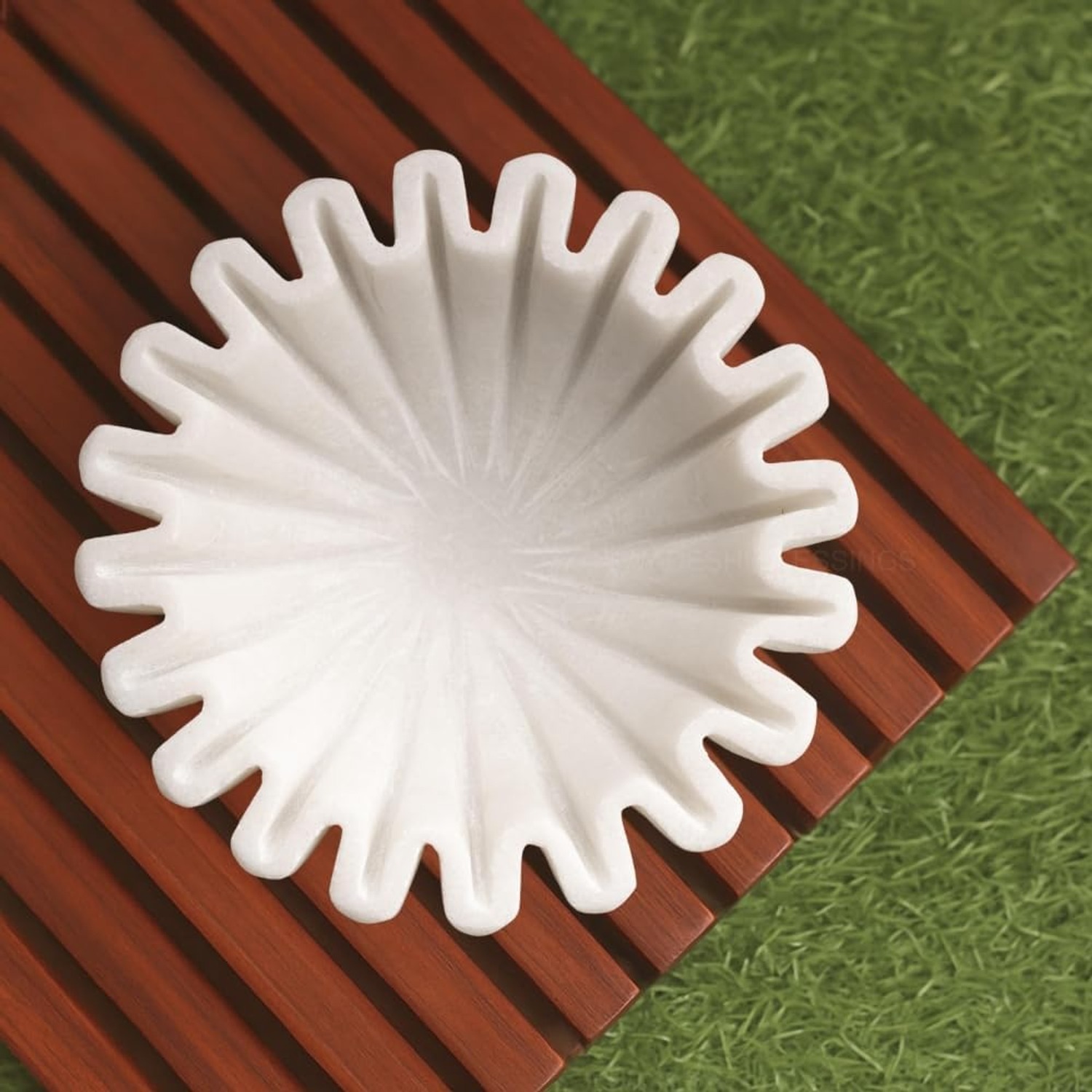
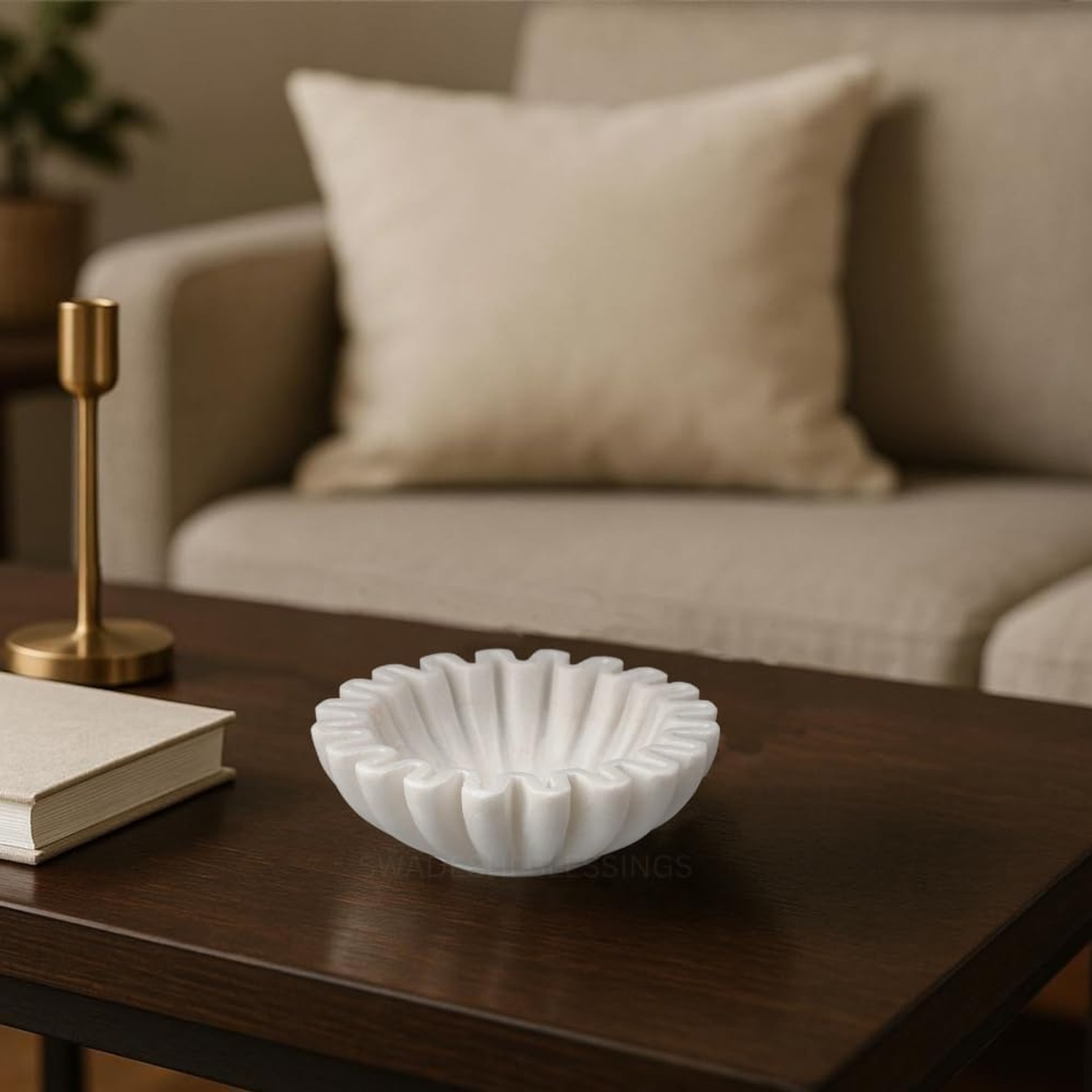
It is a bowl cut from natural white marble, hand carved according to the maker, measuring about 15 cm (6 inches) across. The rim is scalloped into soft ruffles rather than finished as a plain circle. That shaping is what gives the piece its name and most of its character.
Two things follow from the material. First, it is heavy. Marble is dense, and even a modest bowl has a reassuring weight to it that ceramic cannot match. Second, it is unique. Natural marble varies in tone and veining, and no two blocks are alike. The pattern in your bowl is not a printed design that repeats across a production run.
The surface is polished smooth, so it catches light across the ruffles. In a sunny window that reads as bright and almost glossy. In lamplight it softens and the veining comes forward.
How hand carving changes things
Machine-pressed bowls are perfectly symmetrical, which sounds like a virtue until you own a few. Everything matches, and nothing holds your attention.
Hand carving produces small differences. One scallop may sit a touch deeper than the next. The rim may dip very slightly as it travels round. Those variations are not flaws, they are the evidence that someone shaped the stone. If you line up three of these bowls, you can tell them apart, and that is the point.
It also means you should not expect laboratory precision on measurements. About 15 cm across is the figure from the maker. A few millimetres either way is normal with carved stone.
Who it suits
This piece works for people who like a calm, neutral look. If your home leans toward pale walls, natural wood and warm metals, white marble slots straight in. It also works against darker schemes, where the pale stone provides contrast.
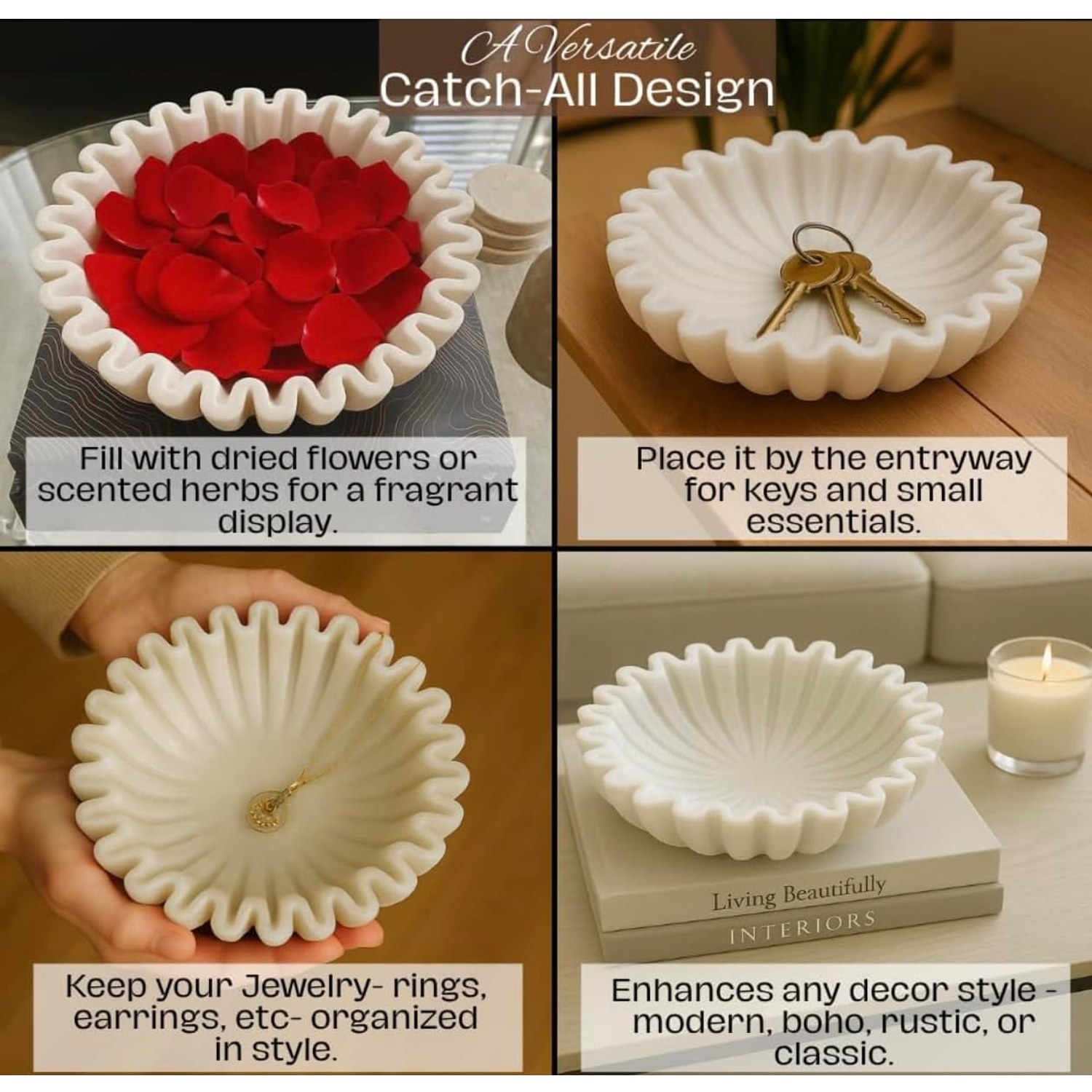
It suits people who want decorative items to do a job. A bowl that just sits there empty will eventually annoy you. This one takes fruit, keys, rings, loose change, wrapped sweets, cotton pads, hair clips, or whatever your household generates. In a small kitchen, a 15 cm bowl holds a few lemons or limes rather than a weekly shop, which is often exactly right for two people.
It is less suited to a few situations. Households with very young children should keep it high up, because it is hard and heavy. If you want something to serve wet food in, stone is not the easiest choice. And if you need a large statement bowl for a long dining table, this one will look undersized.
Where to put it
The hallway is the obvious winner. A bowl by the door solves the universal problem of keys disappearing, and marble is heavy enough that tossing a keyring into it does not send it skidding.
A dressing table or bedside is next. Rings and earrings come off at night and need somewhere to go that is not the edge of a sink. The polished stone is kind to metal, and the ruffled rim keeps small items contained.
On a coffee table, use it to corral the things that already live there. Remotes are too long, but coasters, matches and a small pair of scissors fit neatly. On a desk it collects paper clips, memory sticks and the pen lids you keep losing.
In the kitchen it earns its place on an island with citrus in it, or beside the hob holding garlic bulbs. Just keep it away from the direct splash zone behind a sink.
How to choose between stone, ceramic and wood
If you are weighing options, it helps to know what each material gives you.
Ceramic is lighter, and it comes in any colour you like. It also chips more easily.
Wood is warm and forgiving, and it will not crack if you drop it. It stains more easily than people expect, it needs oiling, and it absorbs odours from anything oily left in it.
Marble is the heaviest of the three. It feels cool and solid, it wipes clean in seconds, and it has a natural pattern you cannot reproduce. The trade-off is that it is porous and reacts to acid, so it needs a bit of care. If you want weight and a natural pattern, stone is the sensible pick.
Caring for natural stone
The rules are short and worth following.
Wipe spills quickly, especially anything acidic. Lemon juice, vinegar, wine and some fizzy drinks will etch marble, leaving a dull patch that no amount of polishing fully reverses. Catching a spill within a minute or two usually prevents any mark at all.
Clean with a soft damp cloth and, if needed, a drop of mild washing-up liquid. Dry afterwards so water does not sit in the grooves of the ruffles. Skip bleach, scouring powder, abrasive pads and limescale removers, all of which are too harsh for a polished surface.
Keep it out of the dishwasher, microwave and oven. Lift it rather than dragging it, so the base does not mark soft furniture. A felt pad or fabric coaster underneath solves that permanently on polished wood.
Finally, respect gravity. Stone is tough but brittle. A bowl pushed to the edge of a worktop and knocked by a passing elbow will chip, and tiled floors are unforgiving. Give it a stable spot.
Thinking about it as a gift
Decorative gifts are hard because taste varies so much. A carved white marble bowl is one of the safer bets, because it does not commit the recipient to a colour scheme or a style. It works in a minimal flat and in a cluttered cottage.
It also handles several gift occasions. Weddings, housewarmings, birthdays and thank-you presents all suit something that is useful and attractive without being personal. If you are shopping for someone who already owns every mug and candle going, a piece of stone is a genuine change of pace.
One practical tip: stone is heavy, so factor packaging into your plans if you are posting it. Wrap it well and keep it upright.
The short version
This is a hand carved bowl in natural white marble, about 15 cm (6 inches) across, with a scalloped ruffled rim and a polished finish. It is sold as a single piece.
Buy it if you want one solid, neutral object that tidies a surface and looks good doing it. The veining is natural, so your bowl will not look exactly like the photographs, and that is the appeal rather than a drawback.
Give it a stable spot, wipe up spills before they sit, and keep harsh cleaners away from it.